.webp)

Written by:
Pierce J
Published:
July 13, 2026
Learn how to move a grandfather clock without damaging its delicate movement, pendulum, or cabinet. A complete step-by-step guide from preparation to reinstallation.
If you're trying to figure out how to move a grandfather clock, you're dealing with one of the most unforgiving pieces in any home. Grandfather clocks look like furniture — a tall wooden cabinet, a glass door, some decorative trim — but they're precision instruments with hundreds of moving parts inside. The clock movement, the pendulum, the weights, the chime rods, and the suspension spring are all calibrated to work together within fractions of a millimeter. A hard bump during a move can bend a suspension spring. A clock transported upright with the pendulum still swinging can crack a chime rod. Weights left hanging and swinging freely in the case will slam into the movement and cause damage that's expensive — sometimes impossible — to repair.
The good news is that grandfather clock moves go smoothly when you work through the right sequence. This guide covers everything: how to understand your clock and its components, how to disassemble it correctly before moving day, what supplies you'll need, how to protect the cabinet and movement in transit, how to transport it safely, and how to reassemble and regulate it at your destination. Whether you're moving a vintage heirloom floor clock or a newer production model, these principles apply.
Not all grandfather clocks are the same, and the first mistake people make is treating this piece like a tall bookcase. A grandfather clock is a mechanical instrument. Before you move a single component, take time to understand what you're working with — the age, the movement type, the number of weights, and how the pendulum attaches.
Most grandfather clocks weigh between 100 and 200 pounds fully assembled. The cabinet itself is relatively light — often 50 to 80 pounds of wood — but the weights, movement, and clock body together add up quickly. More importantly, the weight distribution is odd: most of the mass is in the upper portion of the cabinet where the movement sits, and the weights hang in the lower trunk. This combination makes an assembled grandfather clock dangerously top-heavy. You should never attempt to move a grandfather clock with the weights still hanging inside.
A grandfather clock move requires specific supplies that you should have on hand before you start disassembly. Improvising on moving day — grabbing whatever padding is nearby — is how suspension springs get bent and chime rods get cracked.
This is the most important part of the entire move. The disassembly sequence matters because each step protects the next component. Skipping steps or working out of order is how clocks get damaged before they've left the room.
Open the clock's lower door (the trunk door) and reach in to stop the pendulum from swinging. Gently unhook the pendulum from the suspension leader — the small hook or slot at the top of the pendulum rod that connects to the suspension spring. Lift the pendulum carefully, keeping it vertical, and set it aside flat on a padded surface. Do not swing the pendulum free or let it drop — the suspension spring at the top of the movement is extremely fragile and a sharp jerk can break it. Wrap the pendulum in bubble wrap, paying extra attention to the pendulum bob (the decorative disc at the bottom), and place it in a dedicated box with padding on all sides.
With the pendulum secured, open the trunk door fully and locate the weights. Most grandfather clocks have two or three weights hanging from chains or cables inside the case. Before removing them, note which weight hangs on which side — on many three-weight clocks, the weights are different masses and must return to the correct position for accurate timekeeping. Take a photo before you touch anything. Carefully lift each weight upward slightly to release the tension, then unhook or unclip it from the chain or cable. Lower gently. Each weight can be surprisingly heavy — often 5 to 15 pounds each. Wrap each weight individually in bubble wrap, label them (left, center, right), and pack them in a box with padding between them so they can't knock together in transit.
After the weights are removed, the chains or cables inside the case will hang loose. Carefully tie them off or tape them loosely to prevent them from tangling or jumping off the movement's sprockets during transport. Some clock owners thread a zip tie or a loose loop of tape through the chain links to keep them gathered. Don't pull or yank on the chains — they're connected directly to the movement above.
Open the upper door (the hood door) and gently tape the clock hands against the dial face using painter's tape or a very light strip of masking tape. The goal is to prevent the hands from swinging freely and scratching the dial or glass during the move. Don't use strong tape that could damage the hands or dial finish — just enough to hold them still. If your clock has a moon dial or other rotating disc at the top of the face, note its current position with a photo so you can reset it accurately after reinstallation.
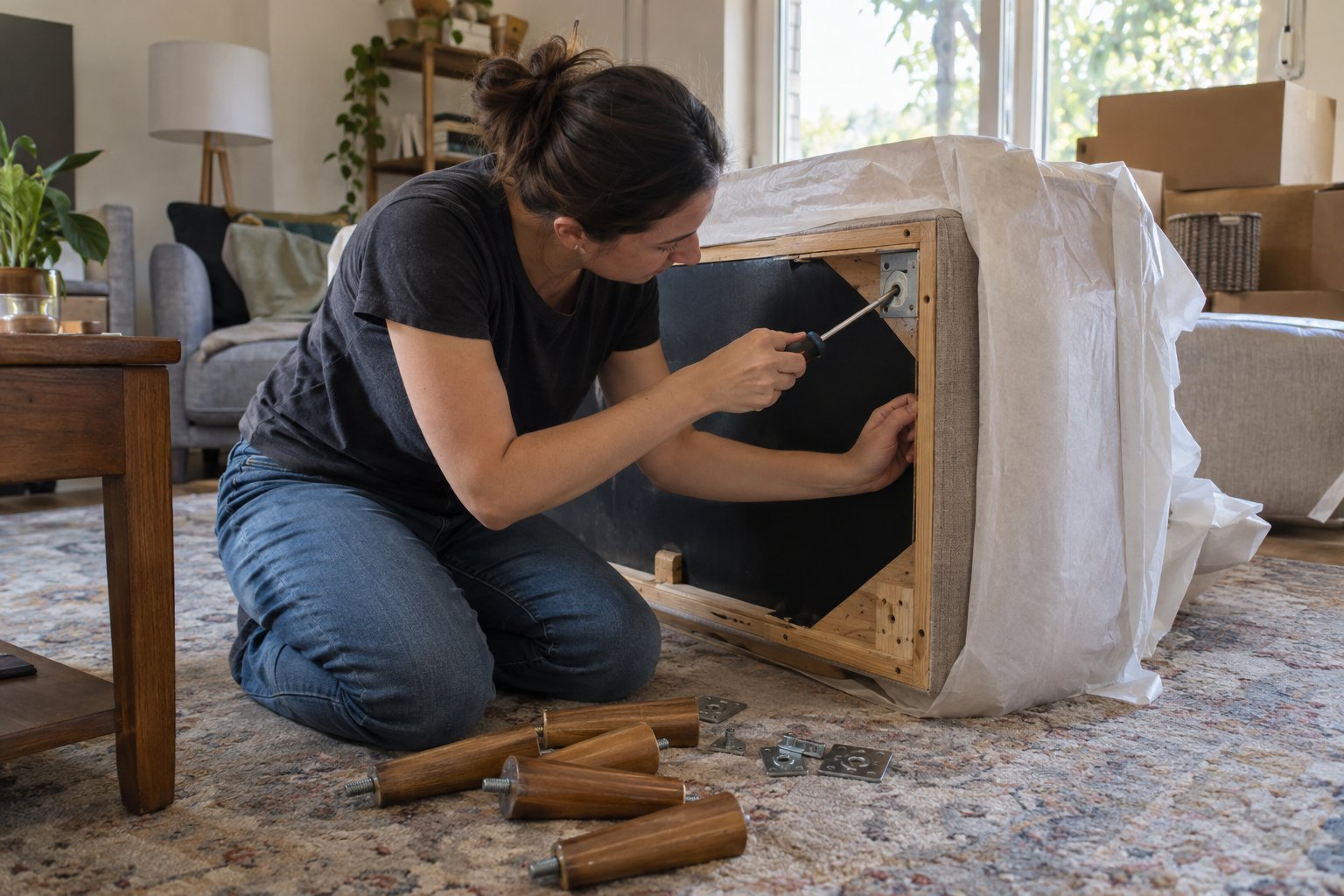
On many grandfather clocks, the hood — the decorative top section housing the dial and movement — is removable. It typically lifts straight up after the trunk door is opened and a set of retaining clips or screws is released. Removing the hood serves two purposes: it lowers the clock's center of gravity significantly, making it easier and safer to carry; and it protects the finials (the decorative pieces on top) from snapping off when the clock passes through a doorway. Wrap the hood separately in a moving blanket. If you can't determine how the hood detaches, don't force it — leave it in place and take extra care at doorways.
With the clock disassembled, it's time to protect the cabinet and move it out. This step is where floor damage, door frame scrapes, and cabinet gouges typically occur — not from carelessness with the movement, but from moving too quickly through the house.
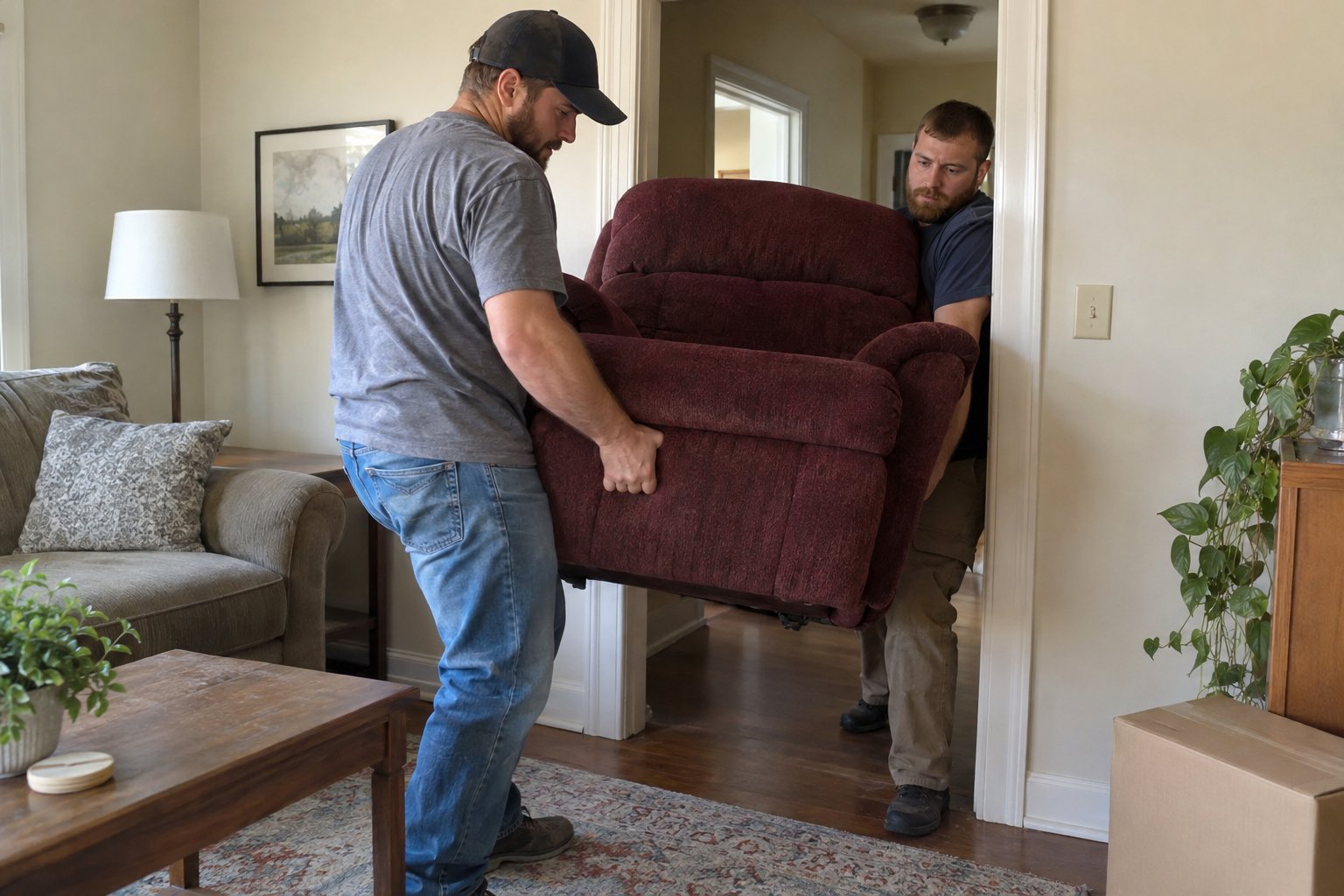
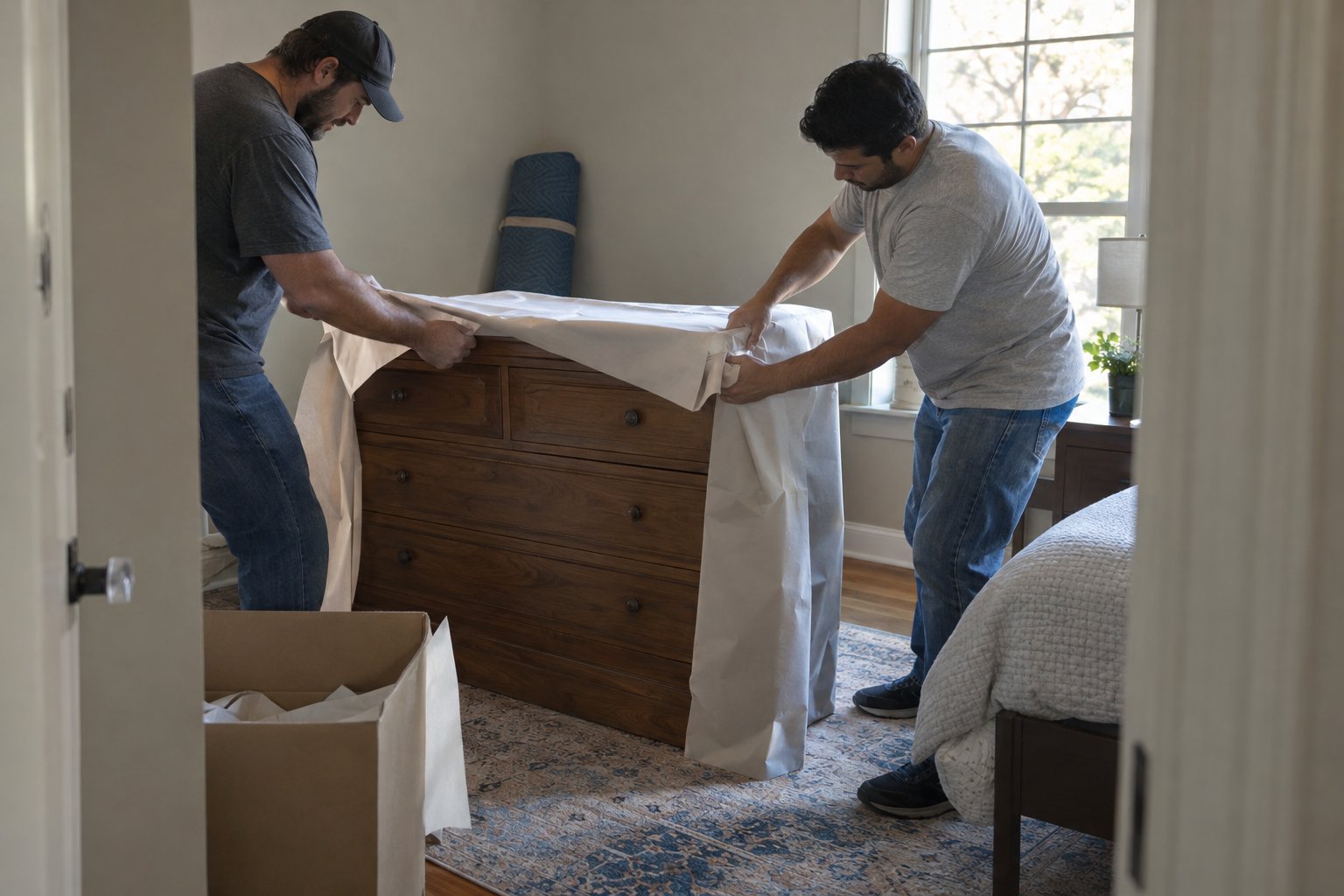
Lay two moving blankets on the floor. With a second person helping, tilt the clock very slightly and slide the first blanket under the base, then wrap it up and around the trunk and lower body. Use the second blanket to cover the upper cabinet if the hood is still attached. Secure the blankets with stretch wrap or moving bands — not tape directly on the wood finish. Pay special attention to the corners of the cabinet base and any carved or decorative trim, which can chip at the slightest contact with a door frame.
Grandfather clocks should be carried upright whenever possible. Tilting them past about 45 degrees can allow oil to migrate within the movement and can stress the suspension spring, even with the pendulum and weights removed. With one person at the base and one steadying the upper portion, walk the clock slowly and deliberately. Call out doorways and steps before you reach them, not when you're already committed to the angle. Lay plywood sheets along the path on hardwood floors to prevent the base from gouging the surface — the same technique used for moving a heavy safe works well here.
The grandfather clock should ride in the truck upright, not on its side. Position it against the front wall of the cargo area where it won't shift. Use two sets of straps — one around the lower trunk and one around the upper body — anchored to the truck's wall anchor points. The straps should be firm enough to prevent swaying but not so tight that they crush the wrapped cabinet. Place soft items like bedding or sofa cushions on either side as additional buffer. The weights box and pendulum box should be stowed flat and secured so they can't slide into the clock cabinet during transit. If you regularly move specialty items and want to understand how professionals approach this kind of load, our guide on specialty moving services explains the equipment and techniques involved.
Getting the clock into the new home is only half the job. A grandfather clock that's been moved but not properly reinstalled will run fast, run slow, or stop entirely within hours.
Before hanging a single weight, position the clock in its final location and level it precisely. Most grandfather clocks have adjustable leveling feet at the base. Use a small bubble level placed on the base of the cabinet — front-to-back and side-to-side. A clock that isn't perfectly level will cause the pendulum to swing unevenly, resulting in a ticking sound that isn't steady (clockmakers call this "out of beat") and timekeeping that drifts significantly.
Replace the hood first (if removed), then rehang the weights in their correct positions using the photos you took during disassembly. Reinstall the pendulum by carefully hooking it onto the suspension leader — insert it gently from the front, guiding the top of the pendulum rod onto the hook without pulling on the suspension spring. Give the pendulum a gentle push to start it swinging. Listen for an even, steady tick-tock. If the beat sounds uneven — one side of the swing is longer than the other — the clock may need beat adjustment, which is typically done by slightly bending the suspension spring bracket or using the beat adjustment lever found on most modern movements. Check the owner's manual for your specific model.
After reinstallation, let the clock run for at least 24 to 48 hours before making any timing adjustments. Mechanical movements sometimes need a settling period after being transported. If the clock is running fast or slow after that window, adjust the pendulum bob — lowering it slightly makes the clock run slower, raising it makes it run faster. Make small adjustments and give it another full day to evaluate the effect.
No — you should always remove the pendulum and weights before moving a grandfather clock, even if the move is just across the room. The pendulum will swing freely and can crack chime rods or damage the movement. The weights will bang against the interior cabinet walls and can break the chains or cables they hang from. Full disassembly of the pendulum, weights, and (ideally) the hood takes less than 30 minutes and prevents damage that could cost hundreds or thousands of dollars to repair.
Transporting a grandfather clock on its side is strongly discouraged. Most mechanical movements are designed to operate and be stored upright, and lying the clock on its side can allow lubricating oil to migrate to parts of the movement where it doesn't belong. It also puts stress on the suspension spring and can cause the internal chains or cables to tangle around the movement's sprockets. If the only way to fit the clock into a vehicle requires tilting it, keep the angle as shallow as possible and consult the manufacturer's guidelines for your specific model.
At minimum, two people are needed to move a grandfather clock safely. One person handles the base while the second person steadies the upper section and watches for doorframes, thresholds, and steps. Because a grandfather clock is tall, relatively light, and easy to tip, a second set of hands isn't just helpful — it's necessary for safe control. For clocks that are unusually heavy, antique, or require navigating multiple flights of stairs, a professional moving crew with experience in specialty items is the safest choice.
First, verify that the clock is perfectly level — even a small tilt can throw off the pendulum swing and cause significant timekeeping errors. Next, listen for an even tick-tock beat. If the beat sounds uneven (one side of the swing noticeably longer than the other), the clock is out of beat and needs beat adjustment, which is covered in most owner's manuals. If the clock is running consistently fast or slow after leveling and beat adjustment, adjust the pendulum bob — lower it to slow the clock, raise it to speed it up. Make small changes and allow 24 hours between adjustments to evaluate the result.
You should seriously consider hiring a professional when the clock is a valuable antique with a hand-made movement, when the move involves stairs, narrow hallways, or tight turns, or when you're not confident you can identify and safely detach the hood and pendulum. Antique movements in particular can have suspension springs and parts that are no longer manufactured — one bent spring can render the clock unrunnable. Professional movers experienced in specialty items have the padding, the straps, and the patience to move a grandfather clock without turning a family heirloom into a repair project.
Whether it’s a full home move or just a few heavy items, Hustle and Muscle Moving is ready to help you sort it out.