.webp)
Written by:
Pierce J
Published:
June 8, 2026
Moving heavy furniture doesn't have to mean scratched floors, dented walls, or a thrown-out back. This guide covers the tools, techniques, and preparation steps that professional movers rely on to get furniture from point A to point B — safely and damage-free.
Whether you're relocating to a new home or just rearranging a room, knowing how to move furniture without damage is one of the most underestimated skills in any move. Scratched hardwood floors, gouged walls, and thrown-out backs are all avoidable — but only if you approach the job with the right technique, the right tools, and a little bit of patience.
This guide covers the practical, proven methods that professional movers use to protect your belongings, your home, and themselves every single time. Whether you're moving a couch down a hallway or hoisting a dresser into a moving truck, these principles apply.
The most common furniture-moving mistakes happen before anything is actually lifted. Skipping the prep phase turns a manageable job into a chaotic one. A few minutes of setup work at the start saves a lot of headaches — and repair bills — later.
Walk the entire route from where the furniture is now to where it's going. Remove rugs, obstacles, and anything on the floor that could cause a trip or slip. If you're moving between rooms or floors, clear doorways, stairwells, and hallways completely. The last thing you want is to be mid-lift with a 200-pound bookcase and realize there's a lamp cord across the threshold.
Pay close attention to door widths. Measure your furniture and compare it to the narrowest doorways and hallways along the route. If it doesn't fit upright, you'll need to tilt, disassemble, or take an alternate path — and it's far better to know that before you're stuck.
Hardwood, tile, and laminate floors are especially vulnerable to heavy furniture being dragged across them. Before you move anything, lay down protective coverings on high-traffic paths. Options include:
Carpet is more forgiving, but it still benefits from protection when heavy furniture drags across it repeatedly — especially if the carpet is newer or light-colored.
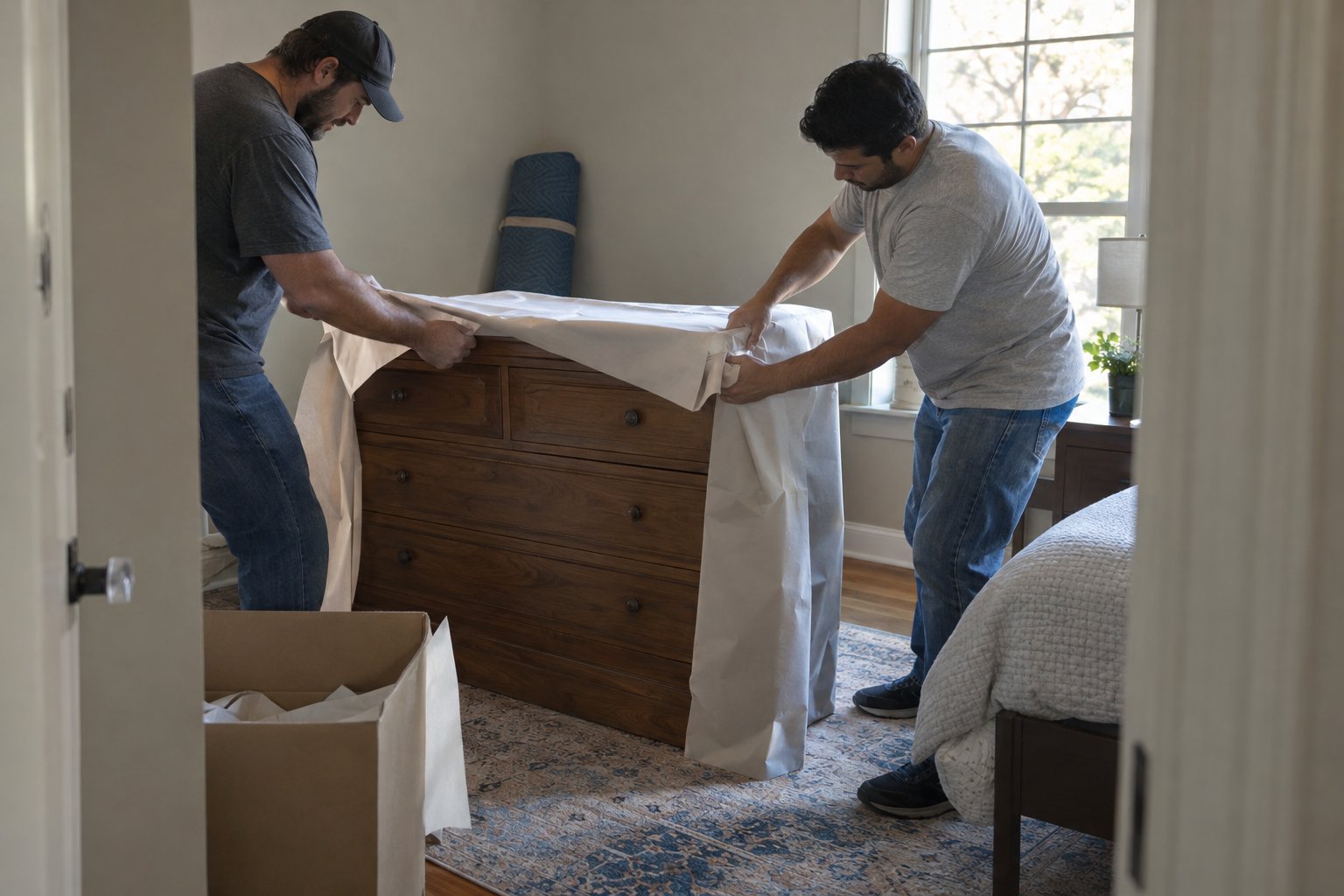
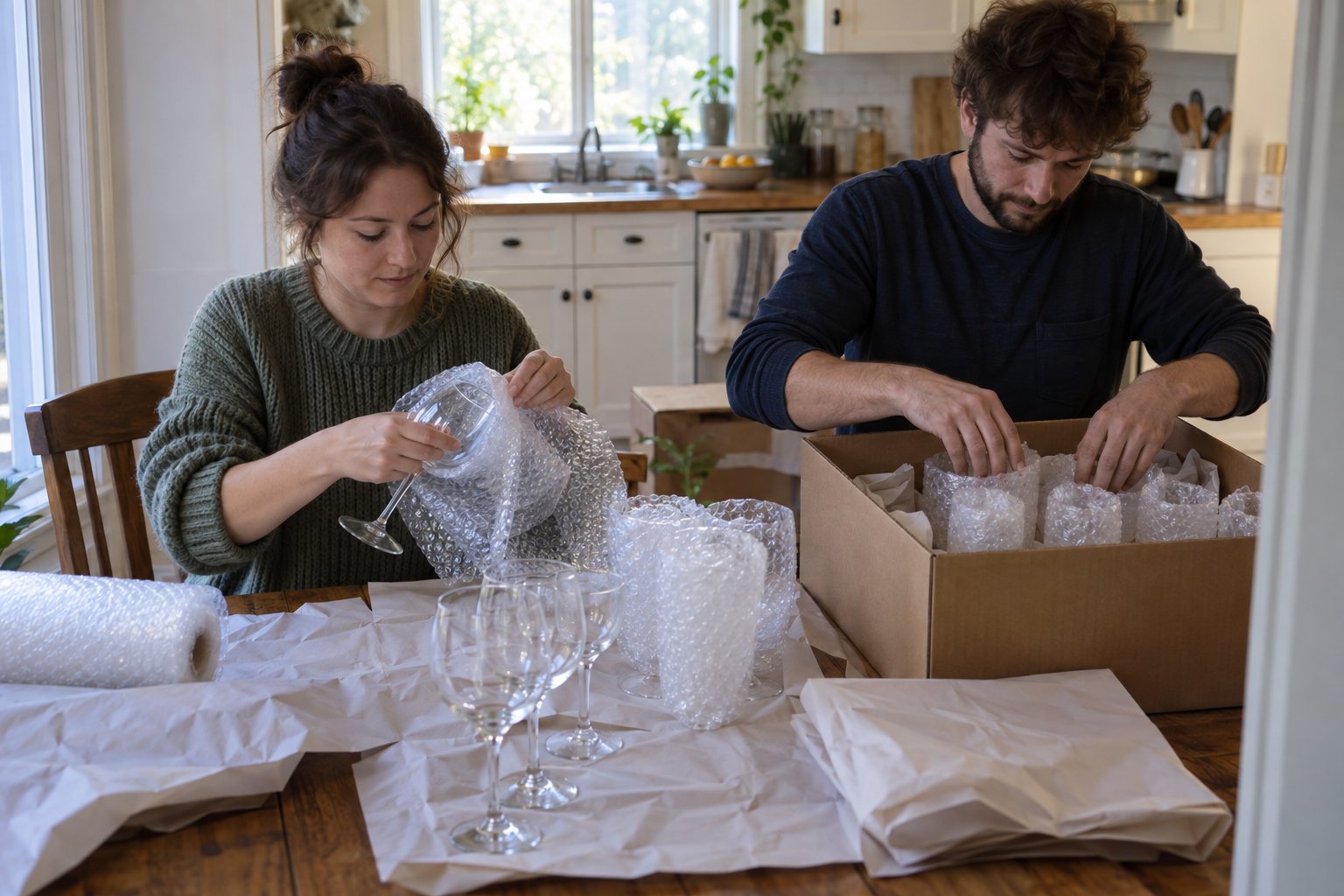
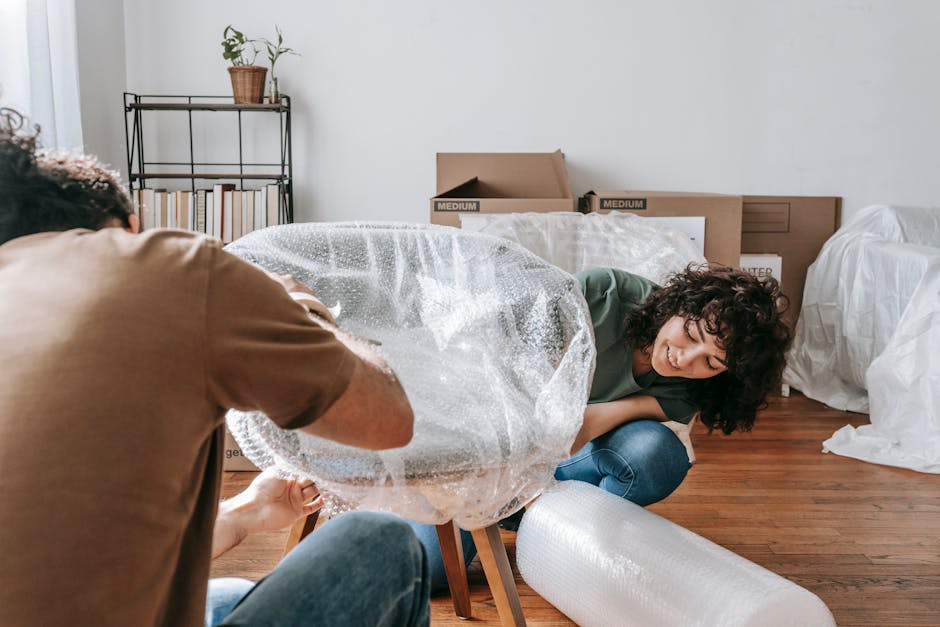
Corners and protruding edges are the parts of furniture most likely to nick a wall or doorframe on the way through. Wrap vulnerable sections in moving blankets, bubble wrap, or foam padding before the piece goes anywhere. Secure the wrapping with stretch wrap or furniture bands — tape applied directly to finished wood or upholstery can leave residue or cause damage.
Drawers should be emptied and either removed or secured. Cabinet doors should be taped shut with painter's tape so they don't swing open mid-move.
You don't need a warehouse full of equipment to move furniture safely, but a few key tools make an enormous difference. Using the right gear is how professional movers protect floors and furniture job after job.
Furniture sliders are flat discs — typically felt on one side, hard plastic on the other — that slide under furniture legs and allow heavy pieces to glide across hard floors with minimal effort and zero scratching. They're inexpensive, widely available, and one of the most useful tools you can have for any furniture move. Use the felt side down on hard floors and the hard side down on carpet.
A furniture dolly is a low, flat platform on wheels that lets you roll heavy pieces rather than carry them. A hand truck (the upright L-shaped cart) is ideal for bookshelves, appliances, and stacked boxes. Both dramatically reduce the physical strain of a move and lower the risk of dropping something on a floor or wall. If you don't own these tools, they're available at most hardware and home improvement stores for rent.
Forearm straps and shoulder moving straps are designed to redistribute the weight of heavy furniture across your body's strongest muscle groups rather than concentrating it in your hands and lower back. They're especially useful for navigating stairs or tight corners where a dolly won't fit. If you're working with a partner, straps allow for better coordination and control throughout the lift.
The furniture isn't the only thing at risk. Back injuries are one of the most common consequences of a poorly executed move, and many of them are entirely preventable with proper technique. Whether you're working with a professional crew or doing it yourself, these principles matter.
This advice is repeated so often it's become a cliché — but it's repeated because it works and because people keep ignoring it. Bend at the knees, keep the load close to your body, and let your legs do the driving as you stand. Keep your back straight throughout the lift. Twisting while carrying a heavy load is one of the fastest ways to injure yourself — if you need to change direction, move your feet, not your spine.
If you're moving with a partner, communication is everything. Agree on a countdown before every lift, call out obstacles as they appear, and confirm before setting anything down. Mismatched timing is how furniture gets dropped on feet or set down unevenly on a doorframe. Assign one person to lead and one to follow — the leader calls the shots and the follower adjusts.
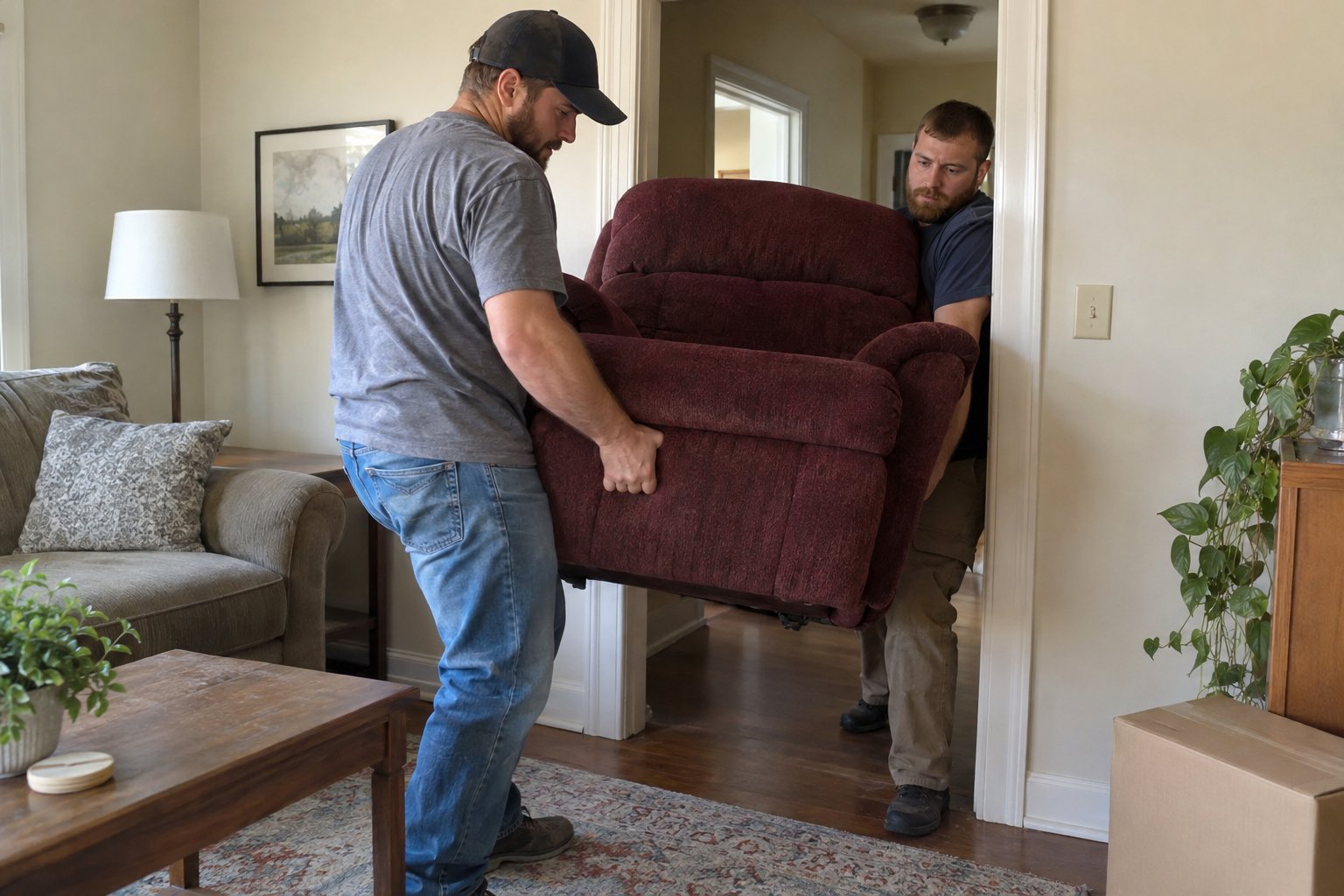
Most furniture pieces — especially sofas, mattresses, and large dressers — need to be tilted or rotated to navigate through doorways and tight turns. The classic couch pivot involves standing the piece on one end and rotating it horizontally through the frame. Before you commit to a full lift, do a dry run at a low angle to see where the piece needs to go. What looks impossible upright often clears easily at a 45-degree angle.
When navigating stairs, keep the heavier end at the bottom and move slowly. One person guides from below, one manages the top. Never rush on stairs — control beats speed every time.
Walls and doorframes are surprisingly easy to damage during a furniture move. A single bump from a heavy piece can leave a dent, gouge, or scuff that requires patching and repainting. A few precautions go a long way.
Foam or cardboard corner guards can be temporarily attached to doorframe edges and wall corners along the move path. They absorb impact and prevent the kind of damage that happens when you misjudge a clearance by an inch. These are cheap and widely available, and professional movers often use them as a matter of routine on every job.
If a doorway is tight and the piece genuinely won't fit through with the door on its hinges, take the door off. Most interior doors can be removed in minutes with a hammer and a flathead screwdriver. The extra few inches of clearance can be the difference between a clean move and a cracked doorframe. Put the door back and rehang it once the piece is through.
Speed is the enemy of a damage-free furniture move. Tight hallways and 90-degree turns require patience and incremental adjustments. Don't force it — if a piece isn't clearing, stop, reassess the angle, and try again. Forcing furniture through a space it doesn't quite fit is how walls, furniture, and people get hurt.
There's no shame in recognizing when a job is beyond what a DIY approach can safely handle. Oversized, antique, or particularly heavy furniture — pianos, pool tables, marble-topped pieces, custom cabinetry — presents risks that go well beyond what furniture sliders and a willing friend can manage. If you're dealing with specialty items like these, specialty moving services exist precisely for this purpose and are worth every dollar to avoid a costly mistake.
Even for more standard moves, if you're short on time, short on help, or short on confidence about navigating a tricky layout, labor-only assistance gives you professional muscle for the heavy work without requiring a full-service move. It's a flexible option that more people should know about. And if you want a full hands-off experience — packing included — professional packing services can handle your belongings from start to finish, so nothing gets broken in transit.
Whatever your situation, the most important thing is to be honest about the job at hand. Moving furniture safely is entirely achievable — but it requires the right preparation, the right tools, and a realistic sense of your own limits. Do it right and your floors, walls, and back will all thank you on the other side.
The most effective method is to use furniture sliders — flat felt-and-plastic discs placed under each leg or corner of the piece. They allow heavy furniture to glide across hard floors with minimal friction and no scratching. You can also lay down floor protection paper or moving blankets along the path for added protection. Never drag furniture directly across hardwood without protection.
Keep the heavier end of the piece at the bottom of the stairs and move slowly, with one person guiding from below and one managing the top. Use moving straps if possible to distribute weight and maintain control. Communicate clearly before every step, and never rush — controlled, deliberate movement is far safer than trying to get through quickly. Remove any obstacles from the stairwell before you start.
In most cases, yes — disassembling large furniture pieces (bed frames, large shelving units, modular sofas) makes them significantly easier and safer to move. Smaller, lighter pieces fit through doorways more easily, and the risk of wall and floor damage is reduced. Keep all hardware in labeled zip-lock bags so reassembly is straightforward. Check whether the piece can actually be disassembled before you start, as some are built as single units.
The most common technique is to stand the sofa on one end and pivot it horizontally through the doorframe — often called 'the couch pivot.' Before you lift, do a trial run at a low angle to confirm the clearance. Removing the sofa legs (if they unscrew) can also help. If the doorframe is still too tight, consider temporarily removing the door itself to gain a few extra inches of clearance.
Any time you're dealing with very heavy items (pianos, pool tables, marble pieces), tight or tricky floor plans, stairways with limited space, or simply not enough helping hands, it's worth bringing in professionals. The cost of professional movers is often far less than the cost of repairing floors, walls, or furniture — or treating a back injury. Labor-only assistance is a flexible option that lets you get professional help for just the heavy lifting without committing to a full-service move.
Whether it’s a full home move or just a few heavy items, Hustle and Muscle Moving is ready to help you sort it out.