.webp)
Written by:
Pierce J
Published:
June 20, 2026
Learn how to pack boxes for moving the right way — from choosing the right box sizes to cushioning fragile items so everything arrives at your new home in one piece.
If you want to understand how to pack boxes for moving, the place to start is this: the box is your first line of defense. Everything that makes it onto the moving truck — from your grandmother's china to a stack of paperback novels — is only as protected as the box it's sitting in and the care that went into filling it. Get this right, and moving day is a lot smoother. Get it wrong, and you're opening boxes at the other end to find broken dishes, crushed lampshades, and items that shifted so badly they damaged everything around them.
The good news is that packing well isn't complicated. It comes down to a handful of principles that professional movers use on every job. This guide walks through all of them — from choosing the right box for the right item to sealing everything securely — so you can pack with confidence and arrive at your new home with everything intact.
Before you pack a single thing, you need to assemble the right materials. Improvised packing — mismatched boxes in questionable condition, not enough tape, no cushioning — is one of the most common reasons things break in transit. A small investment in quality supplies at the start pays off enormously on the other end.
This is one of the most important decisions you'll make, and one of the most frequently botched. The instinct is to grab the biggest boxes available and fill them up. Don't. Here's how professional movers think about box sizing:
If you're not sure where to find quality boxes, this guide on where to buy moving boxes covers free, cheap, and retail options so you can stock up without overspending.
Beyond boxes, you'll need a core set of supplies before you start:
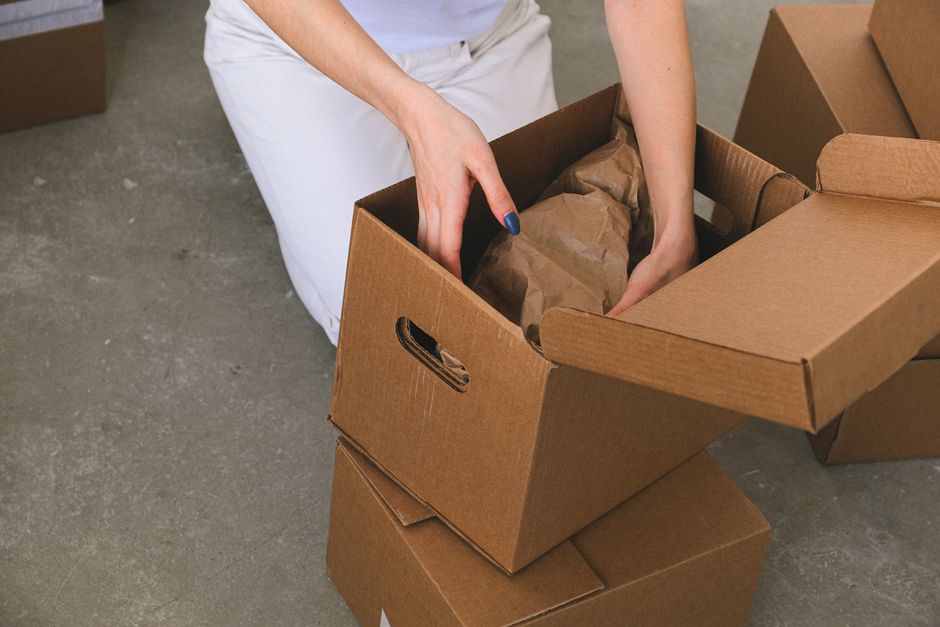
Once you have your supplies, every box you pack should follow the same core structure regardless of what's going inside it. Think of it as three layers: the base, the fill, and the top.
Before anything goes in, reinforce the bottom of your box. Run two to three strips of tape across the seam in a "H" pattern — one strip down the center seam and one across each side. This is the most structurally vulnerable point of any cardboard box, especially once it's loaded with weight. Skipping this step is the reason boxes fail mid-move and contents end up on the floor.
For particularly heavy items, double-box: place the packed box inside a slightly larger one with cushioning material between the two walls. This adds significant protection for items like fragile collectibles or electronics.
Within every box, heavy items go on the bottom and lighter, more fragile items go on top. This isn't just intuitive — it prevents the weight of dense objects from pressing down on delicate ones. A stack of hardback books sitting directly on top of a ceramic bowl is a recipe for breakage. Put the books in first, then build up with lighter items.
Void space is the enemy of a well-packed box. When items can shift during transit — which they will, over bumps and turns — they collide with each other and with the box walls. Fill every gap with crumpled packing paper, bubble wrap, or even clean clothing or linens. The goal is a box where nothing moves when you gently shake it.
At the same time, don't over-pack to the point where the box won't close flat. If the top is bulging, you've put too much in. Remove a few items, fill any remaining gaps, and close it cleanly.
Close the top with the same "H" pattern you used on the bottom — a strip down the center seam and strips across both sides. For heavy boxes or anything you're especially concerned about, add an extra strip or two along the seam. Then label the box clearly on the top and at least one side: room name, a brief description of contents, and whether it contains anything fragile.
Different rooms present different packing challenges. Here's how to handle the ones that trip people up most often.
The kitchen is the most time-consuming room to pack and the one with the most breakage risk. Plates should be packed vertically — on edge, like records in a crate — never stacked flat. Each plate gets wrapped individually in packing paper before going in. Glasses go in cells or get individually wrapped, top-down, with extra paper stuffed inside each glass. Fill every void with crumpled paper.
Pots and pans can nest inside each other but should be separated by packing paper to prevent scratching. Small appliances should be wrapped and placed in boxes with plenty of padding. If you still have the original boxes for appliances, use them — they're already designed to protect that specific item.
Clothing that's hanging can go directly into wardrobe boxes — these are tall, narrow boxes with a hanging rod built in. They make closet packing extremely fast and arrive at the destination ready to hang. Folded clothing packs well in medium boxes and can double as cushioning material around fragile items.
For shoes, pack pairs together wrapped in paper and fill a medium box. Bedding — comforters, pillows, duvets — goes in large boxes since it's all volume and very little weight.
Books should always go in small boxes. Pack them flat or spine-down — never spine-out, which can crack bindings. Alternate the direction of stacks if you're layering. Documents and files should go in filing boxes or small boxes, clearly labeled. Never put important papers at the bottom of a large mixed box where they can get damaged or overlooked.
Artwork, mirrors, and framed photographs should go in specialty mirror or picture boxes, not in regular cartons. Each item gets wrapped individually with paper and bubble wrap before boxing. Label these boxes "FRAGILE" on every side and the top, and let your movers know they need extra care. If you have particularly valuable or irreplaceable items, consider whether professional packing services make sense — professional packers have materials and techniques specifically designed for high-value goods.
Labeling is one of those steps that feels optional when you're in packing mode and becomes absolutely essential on the other end. At minimum, every box should have the destination room and a general description of contents written on the top and one side. Boxes that are labeled only on top are invisible once they're stacked in a pile.
A few additional labeling tips that make a real difference:
Taking the extra 30 seconds per box to label thoroughly is one of the highest-return investments you can make in an easier moving day. And if you want to think about how box packing fits into the broader picture of moving costs, this guide to building a moving budget can help you estimate what to expect across the whole move.
Even with the right materials and good intentions, a few packing habits consistently cause problems on moving day. Here's what to watch out for:
Match box size to item weight and density. Small boxes are for heavy items like books, tools, and canned goods. Medium boxes handle most household items — kitchen goods, clothing, small appliances. Large boxes should be reserved for light, bulky items like pillows and comforters. Specialty boxes (wardrobe, dish pack, mirror) are worth using for the items they're designed for.
Wrap each fragile item individually in packing paper or bubble wrap before placing it in the box. Pack plates vertically on edge rather than flat. Fill all void space with crumpled paper so nothing can shift. Label every side of the box FRAGILE, and load these boxes last on the truck so they ride on top rather than under heavier items.
More than you think. Use the 'H' pattern on both the bottom and top of every box — one strip down the center seam and one strip across each side. For heavy boxes, add extra strips along the seam. Use proper 2-inch packing tape with a dispenser. Masking tape, painter's tape, and duct tape are not strong enough for loaded moving boxes.
Yes, every single box — no exceptions. Write the destination room and a brief description of contents on the top and at least one side. Boxes labeled only on top become unreadable once stacked. Mark time-sensitive boxes 'OPEN FIRST' and fragile boxes on all sides. Good labeling is one of the highest-return investments you can make in a smoother moving day and unpack.
It depends on your timeline, the volume of your home, and whether you have fragile or high-value items. Professional packers work quickly with materials designed to protect specific items, and they're especially useful for kitchens, art, and electronics. If you're short on time or concerned about breakage, professional packing services can be a worthwhile addition to your moving plan.
Whether it’s a full home move or just a few heavy items, Hustle and Muscle Moving is ready to help you sort it out.