.webp)
Written by:
Pierce J
Published:
June 2, 2026
Just moved in? Here's a practical checklist of everything you should do in your new home before you unpack a single box — from safety checks to utilities.
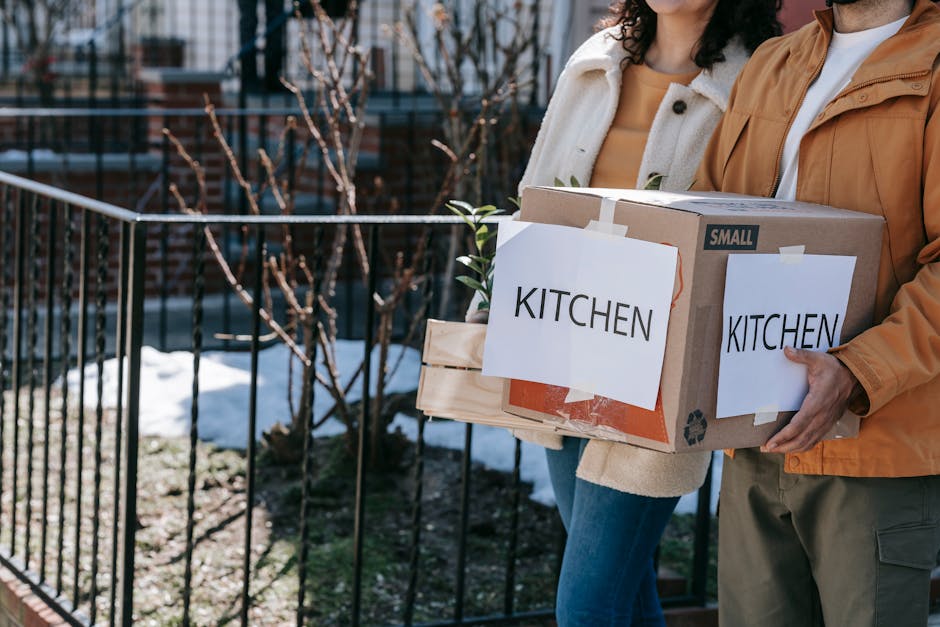
You made it. The truck is unloaded, the boxes are stacked in every room, and you're standing in your new home for the first time as its actual occupant. Knowing what to do when you move into a new home in those first hours and days can make a significant difference in how smoothly you settle in — and how safe and functional your space is from the start.
A lot of people treat moving day as the finish line. In reality, it's the starting line for a different kind of work. The decisions you make in the first 48 to 72 hours — before you get too comfortable — will shape how organized, secure, and stress-free your new space becomes. This guide covers exactly what to prioritize and in what order.
It's tempting to dive straight into unpacking, but a handful of tasks are worth completing first — especially if you're moving into a previously occupied home. These aren't optional nice-to-haves. They're foundational steps that protect your family and your belongings.
This is the single most important thing to do on day one. You have no way of knowing how many copies of your new home's keys exist. Previous owners, tenants, contractors, neighbors — any number of people could have a working key. Rekeying or replacing the locks is inexpensive, takes less than an hour with a locksmith, and eliminates a real security risk. Don't put it off.
While you're at it, test every window latch and sliding door lock in the home. Make sure everything closes and locks properly before you assume it does.
Before a pipe bursts or an electrical issue arises, you want to already know where your main water shutoff, circuit breaker panel, and gas shutoff are located. Walk through the home specifically to find and document these. If anything goes wrong, you won't have time to search — you need to know immediately.
Label the breakers in your panel if they aren't already. It takes fifteen minutes and will save you real frustration down the road.
Press the test button on every smoke and carbon monoxide detector in the home. If any don't respond, replace the batteries immediately. If the units are older than ten years, replace the detectors entirely. This is not a task to defer.
An empty home is the easiest home to clean. Cabinets, drawers, inside closets, bathroom fixtures, and kitchen appliances are all infinitely more accessible before your belongings fill the space. Even if the previous owners left the place spotless, a thorough cleaning before you settle in is worth the effort — and gives you peace of mind.
Moving day logistics often overshadow the administrative side of a new home, but getting your accounts sorted early prevents headaches later. Here's what to address in the first week.
You likely arranged utility transfers before move-in day, but verify that everything is working as expected: electricity, gas, water, internet, and trash pickup. If anything is still in the previous owner's name or hasn't been transferred correctly, call the provider immediately — before you're a week in and realize your billing is a mess.
If you haven't already, submit a change of address with the U.S. Postal Service and update your address with every account that matters: your bank, employer, insurance providers, subscriptions, the DMV, and any government agencies you interact with. It's a tedious list, but missing one can cause real problems — forwarded mail only goes so far and doesn't last forever.
Every home has its own quirks. Take time in the first week to locate and understand the HVAC filter and its replacement schedule, the water heater settings, the sprinkler system controls if applicable, and any appliances left behind by the previous owner. If you received a homeowner's manual or appliance documentation at closing, put it somewhere you'll actually find it later.
Once the safety and administrative tasks are handled, you can focus on unpacking. The biggest mistake people make here is unpacking reactively — grabbing whatever box is closest without a plan. That approach leads to kitchen items ending up in the wrong room, essentials buried under non-essentials, and a home that feels chaotic for weeks.
Start with the rooms you need functioning first. For most people, that means the bedroom (you need to sleep), the bathroom (you need to function), and the kitchen (you need to eat). Living rooms and home offices can come after the basics are in place.
If you planned ahead during your move and read up on how to pack for a move, your boxes should already be labeled by room and priority. If they are, great — let that system guide your unpacking. If not, take a few minutes to triage your boxes before you start tearing them open.
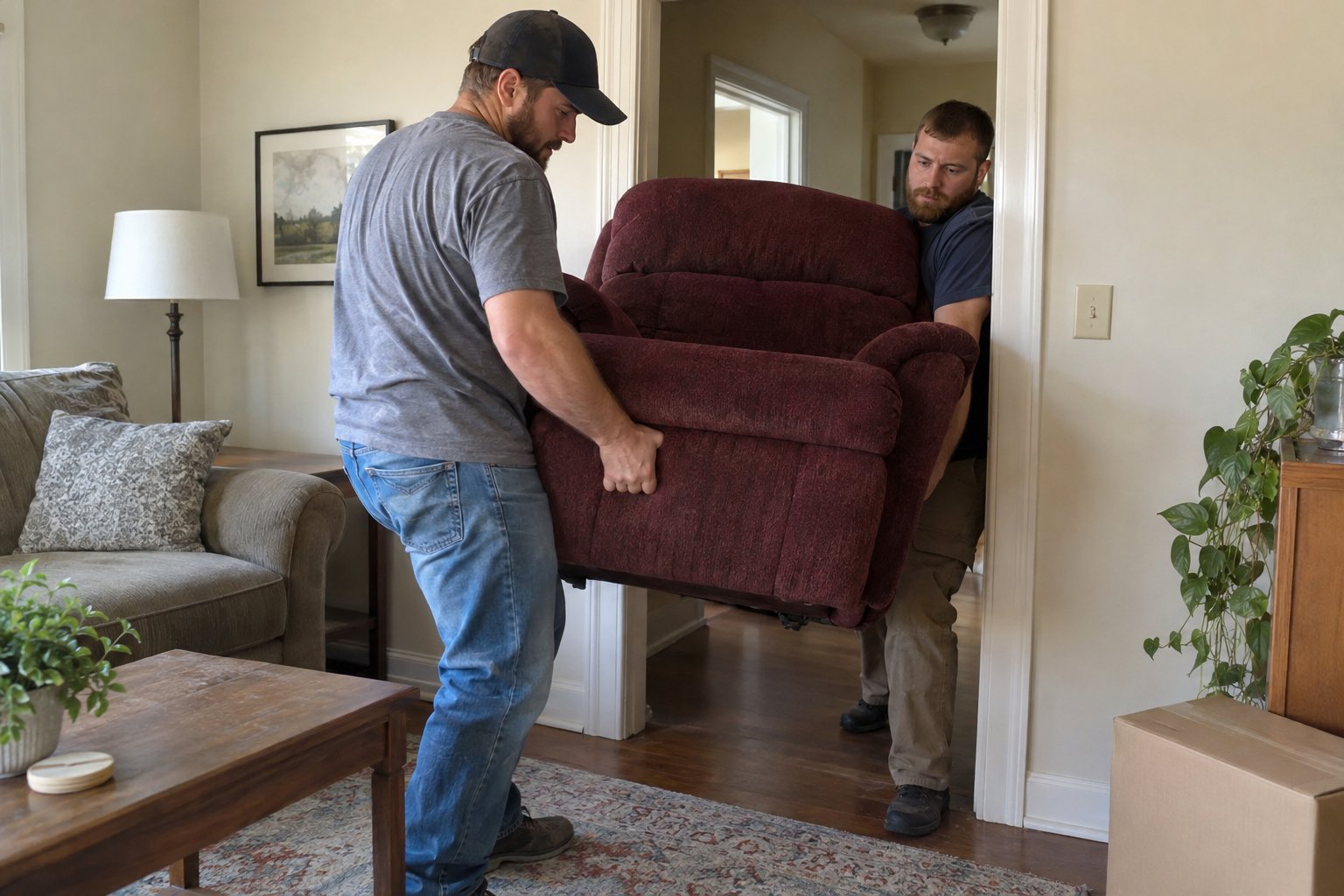
Before you unpack shelves and drawers, make sure your furniture is where you want it. It's significantly easier to place a bookshelf before it's full of books. If you used a moving crew and they placed furniture for you, do a quick walkthrough before they leave and make any adjustments while you have the help.
If you find yourself overwhelmed with boxes and aren't sure where to start, labor-only moving assistance is an option worth considering — a crew can help you with heavy lifting, furniture placement, and box staging so you can focus on the details.
There's no rule that says everything has to be unpacked within 48 hours. Trying to do it all at once leads to exhaustion, poor decisions about where things should live, and clutter that just gets relocated rather than properly organized. Give yourself a realistic timeline — most people take one to two weeks to feel fully settled, and that's completely normal.
Once the fundamentals are covered, a few smaller tasks are worth taking care of in the first couple of weeks. They're easy to defer indefinitely if you don't address them early.
A simple knock-and-hello with your immediate neighbors goes a long way. You don't need to become best friends, but knowing who lives next door — and having them know you — creates the kind of casual trust that makes a neighborhood feel like a community. Neighbors also tend to notice things: packages on a porch, unfamiliar cars, anything out of the ordinary. That informal network has real value.
Walk through the home with fresh eyes and document anything that needs attention — a leaky faucet, a sticking door, a cracked tile, a light fixture that doesn't work. If you had a home inspection before purchase, pull out that report and compare it to what you're seeing. Address items in order of urgency: anything involving water, safety, or functionality should come before cosmetic fixes.
Boxes, packing paper, bubble wrap, and foam peanuts accumulate fast. Flattened boxes can often be recycled curbside, and many moving supply retailers accept returns on unused materials. If your move generated a large volume of packing debris or items you're leaving behind, a junk and trash removal service can handle the cleanup quickly so you're not living in a sea of cardboard for weeks.
There's a lot that happens in the days and weeks after a move, and it's easy to feel behind before you've even started. The key is to prioritize ruthlessly: safety and security first, functionality second, comfort and aesthetics third. Not everything has to happen at once.
Every new home comes with a learning curve. You'll figure out where the sun hits in the afternoon, which closet works better for what, and how your new neighborhood operates — all in good time. The moves that go smoothly aren't the ones where everything was perfect from day one. They're the ones where the homeowner showed up with a plan, handled the basics with intention, and gave themselves room to breathe.
If you're still in the planning stages of your move and haven't nailed down the logistics, take a look at local and long-distance moving services from Hustle and Muscle Moving — a team that handles the heavy lifting so you can focus on what happens next.
Change the locks. This is the single most important first step in any move-in, whether you're buying or renting. You have no way of knowing how many copies of the previous keys exist, and rekeying or replacing the locks is a simple, inexpensive way to make sure your home is actually yours from day one.
Most people take one to two weeks to unpack the essentials and feel functionally settled, though truly making a new space feel like home can take a month or more. There's no right timeline — prioritizing safety tasks and high-use rooms first (bedroom, bathroom, kitchen) helps the process feel manageable rather than overwhelming.
At a minimum, you'll want electricity, gas (if applicable), water, and internet active before or on move-in day. If you arranged transfers in advance, verify that everything is working and in your name before the first billing cycle. Also confirm your trash and recycling pickup schedule with your local municipality.
It's strongly recommended, even if the home looks clean. Cabinets, drawers, appliance interiors, bathroom fixtures, and closets are all much easier to clean before your belongings fill the space. A pre-unpack cleaning also gives you peace of mind and helps you start fresh in your new environment.
Flattened cardboard boxes can typically be recycled curbside or dropped off at a recycling center. Packing paper is also generally recyclable. If you have a large volume of packing debris, foam materials, or unwanted items left over from the move, a junk and trash removal service can handle the cleanup quickly and efficiently so you can focus on settling in.
Whether it’s a full home move or just a few heavy items, Hustle and Muscle Moving is ready to help you sort it out.