.webp)
Written by:
Pierce J.
Published:
August 26, 2026
Not sure how many movers to book? See recommended crew sizes by home size, stairs, and heavy items so your move stays on budget and on schedule.
Most homes need a two to four person moving crew, and the right number comes down to how much furniture you own, how many stairs are involved, and how fast you want the job done. A one-bedroom apartment usually moves fine with two movers, while a four-bedroom house with a garage full of boxes often needs four or five to avoid an all-day slog. Booking too few people does not save money the way it seems to; it just trades labor cost for a longer, more expensive hour count.
This is one of the first questions people ask when they get a quote, and it is also one of the easiest to get wrong. Crew size affects your total price, your timeline, and whether anything gets damaged squeezing a couch through a doorway with only one person on each end. Here is how professional movers actually size a crew, and how to figure out the right number for your own move.
As a starting point, studios and one-bedrooms typically need 2 movers, two and three-bedroom homes need 3 to 4, and four-bedroom-plus homes need 4 to 6. These numbers assume a reasonably average amount of furniture and a single truck; heavier loads or multiple stops push the number up.
These are baselines, not rules. A minimalist 3-bedroom with little furniture might move fine with 3 people, while a 2-bedroom packed with a home gym and a piano could need the crew size of a much bigger house.
Square footage is a rough guide at best; stairs, distance to the truck, and specialty items usually matter more than the number of bedrooms on the listing. A single flight of stairs can effectively add the workload of an extra bedroom, since every trip takes longer and tires the crew faster.
Walk-up apartments above the second floor, or a long path from the door to the truck, slow every single trip. Adding one more mover to a stairs-heavy move often shortens the job more than adding two movers would on a ground-floor home.
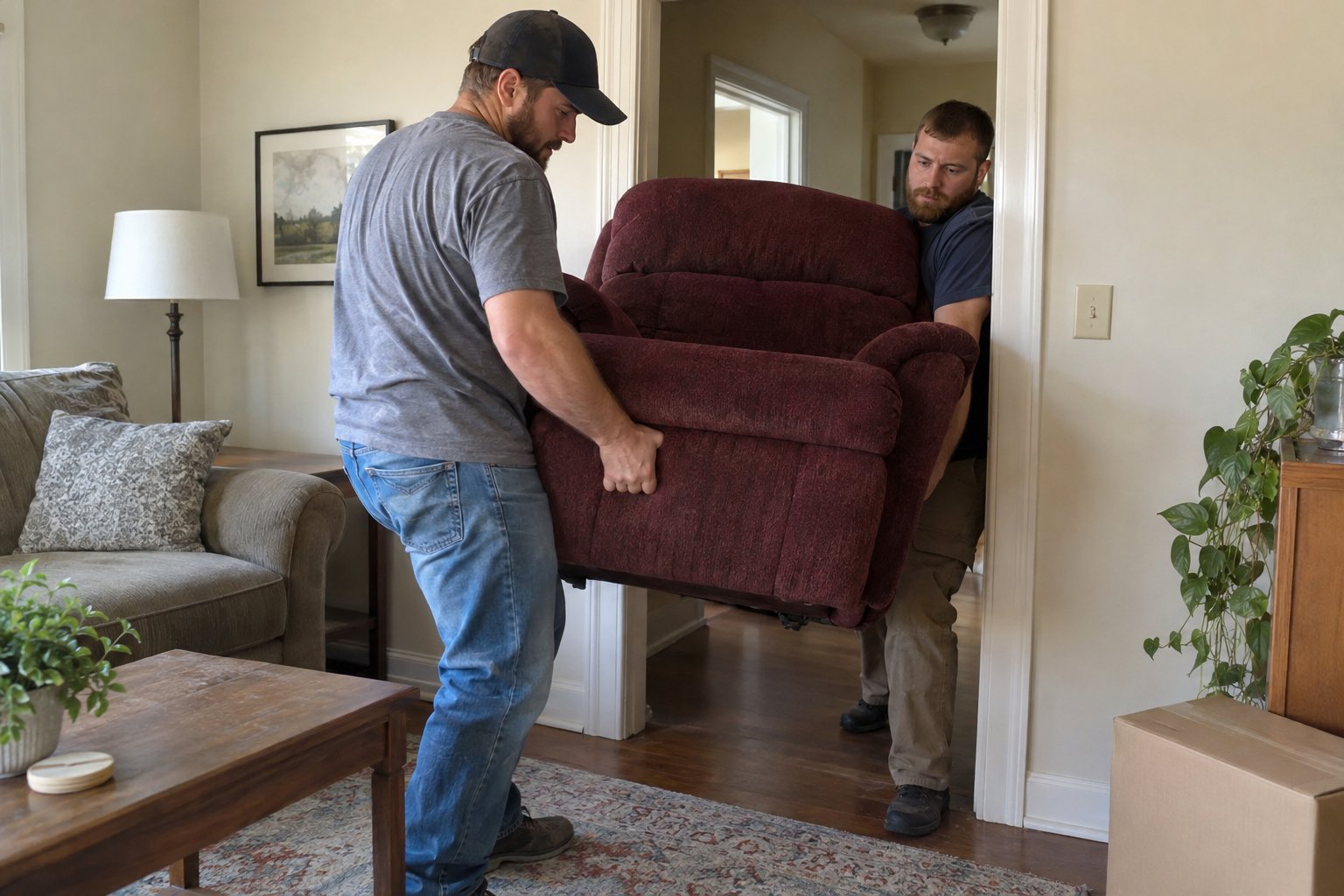
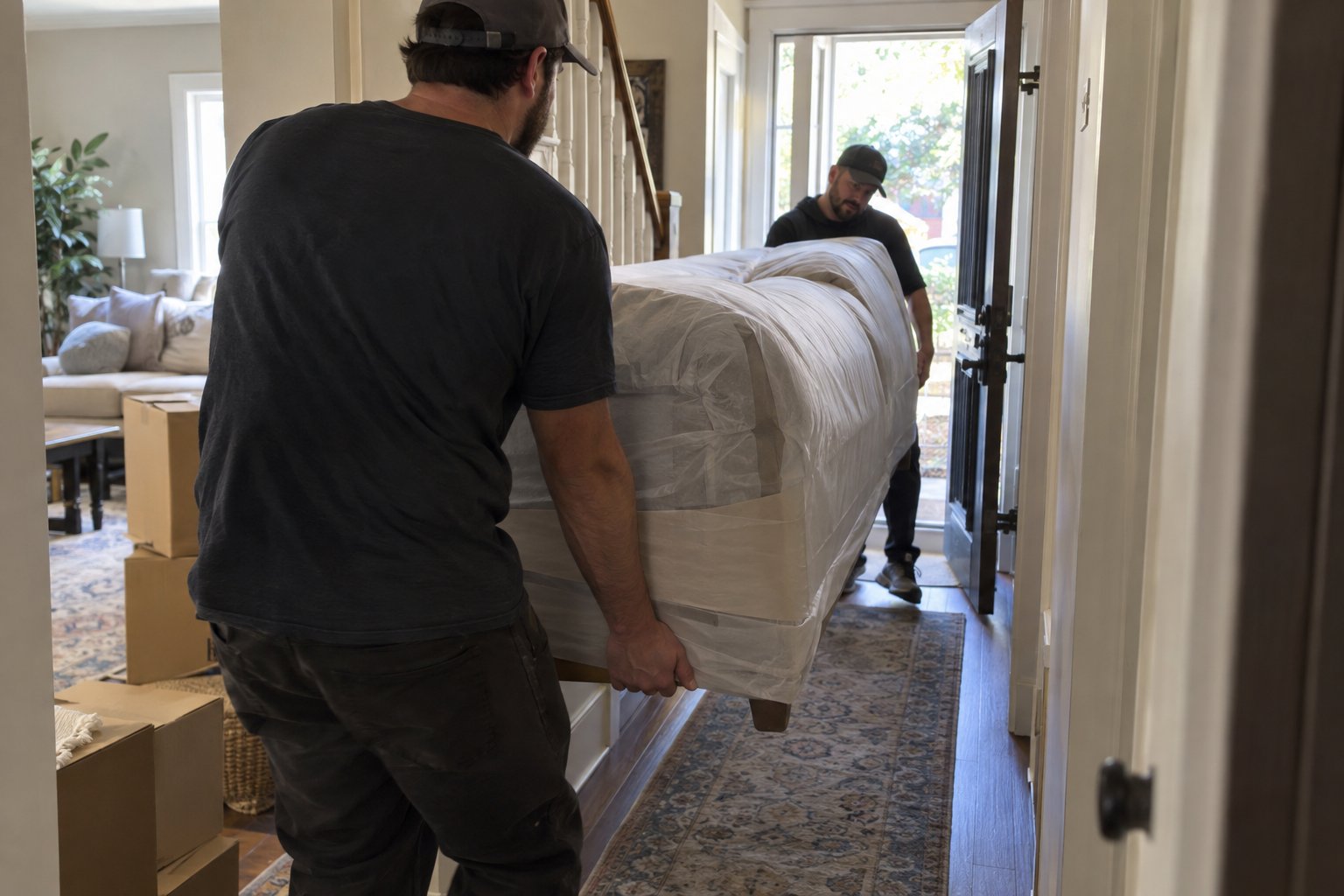
A washer, dresser, or sectional sofa needs at least two sets of hands no matter how small the rest of the home is. If your move includes a few genuinely heavy pieces, plan the crew size around those items first and the boxes second.
An unpacked home does not need more movers, it needs more time, or a crew that also offers packing services to get boxes ready before loading day. Throwing extra people at an unpacked house often just means more people standing around waiting for boxes to fill.
If your move requires two loads because of truck size or distance, you may need enough crew to keep one group loading while another unloads, rather than simply doubling the headcount on a single truck.
Usually not. Most moving companies charge by the hour per mover, so a smaller crew multiplies a longer job instead of a shorter one at a higher rate. Two movers working eight hours often costs about the same as four movers working four, but the four-person crew leaves you with your whole evening back and less risk of an exhausted team dropping something in hour seven.
The math only favors a smaller crew when the home is genuinely light on furniture, or when you are supplementing your own labor with a couple of professionals for just the heavy lifting. That is the scenario labor-only assistance is built for: you handle the boxes and driving, and a crew shows up just to load and carry.
The clearest sign is a moving estimate that assumed a full truck load but only staffed two people for a three-bedroom home with stairs. If your inventory includes multiple large furniture pieces, a garage, or more than one flight of stairs, ask your mover directly whether the quoted crew size matches that scope before moving day arrives.
A reputable company will ask about your home size, stairs, and any specialty items like a piano or safe before recommending a number, not just default to the smallest crew possible to win the quote. If a quote seems to assume less labor than your inventory suggests, it is worth a follow-up call rather than finding out on the day.
The safest approach is to walk through your home room by room, note the stairs and any oversized pieces, and share that with your mover before booking rather than guessing at a number yourself. Companies offering full local and long distance moving services will typically size the crew as part of the quote once they know your inventory and floor plan.
If your timeline is tight or you are already deep in packing, pairing the right crew size with a clear moving day timeline and checklist keeps everyone, movers included, working toward the same schedule instead of improvising room by room.
When in doubt, it rarely hurts to size up by one person, especially for homes with stairs or several heavy items. The cost difference is usually small, and the time saved is not.
Two movers is standard for a studio apartment. That is enough to safely carry a mattress, a couch, and boxes without excessive trips, and most studios can be fully loaded in a few hours with a two-person crew.
Yes, stairs are one of the biggest factors in crew size, often more significant than square footage. A walk-up above the second floor or a long staircase can justify adding one extra mover compared to a ground-floor move of the same size.
For most moves, a larger crew working fewer hours costs about the same as a small crew working a full day, but finishes earlier with less fatigue-related risk to your furniture. A smaller crew only makes sense for lighter, mostly-packed homes.
It is possible but usually slow, often stretching into a ten-plus hour day depending on stairs and how much is packed. Most 3-bedroom homes move more efficiently with three to four movers rather than two.
A labor-only crew can be booked just to handle lifting and loading while you manage boxes and driving yourself, which is often more cost-effective than a full-service crew when most of the home is already packed.
Whether it’s a full home move or just a few heavy items, Hustle and Muscle Moving is ready to help you sort it out.