.webp)
Written by:
Pierce J.
Published:
October 2, 2026
Learn how to transport wine glasses and stemware safely during a move, from the right box and wrap to loading order that prevents chips and cracks.
Wine glasses break for one reason more than any other: the bowl and the stem move independently inside a box that was not built to stop that motion. Learning how to transport wine glasses safely comes down to three things: a cell-divided box instead of a generic carton, wrap that cushions the bowl, stem, and base separately, and a loading position that keeps weight off the glass entirely. Do those three things and stemware survives a cross-country move about as reliably as anything else in your kitchen.
Most of the damage we see on move-in day is not from a dropped box. It is slow crush damage: a stack of books set on top of a box of glasses, or stems clinking against each other for three hours on the highway until the thinnest point finally gives. The steps below are built around preventing both.
Use a glassware cell box, sometimes labeled a "dish pack" or "cell kit," which has corrugated dividers that create a separate compartment for every glass. A plain box with crumpled paper on the bottom is not enough for stemware; the dividers are what stop glasses from knocking into each other in transit.
If you cannot get a true cell box, a doubled-wall box with a thick layer of packing paper between every single glass is the fallback, but expect a higher breakage rate. Cell boxes are sold at most moving supply retailers and many hardware stores, and they are worth buying specifically for this job rather than reusing a box that held something else.
Size matters too. A box that is taller than your tallest glass lets you add a cushioning layer on top before closing it; a box that is exactly glass-height means the lid presses straight down on the rims.
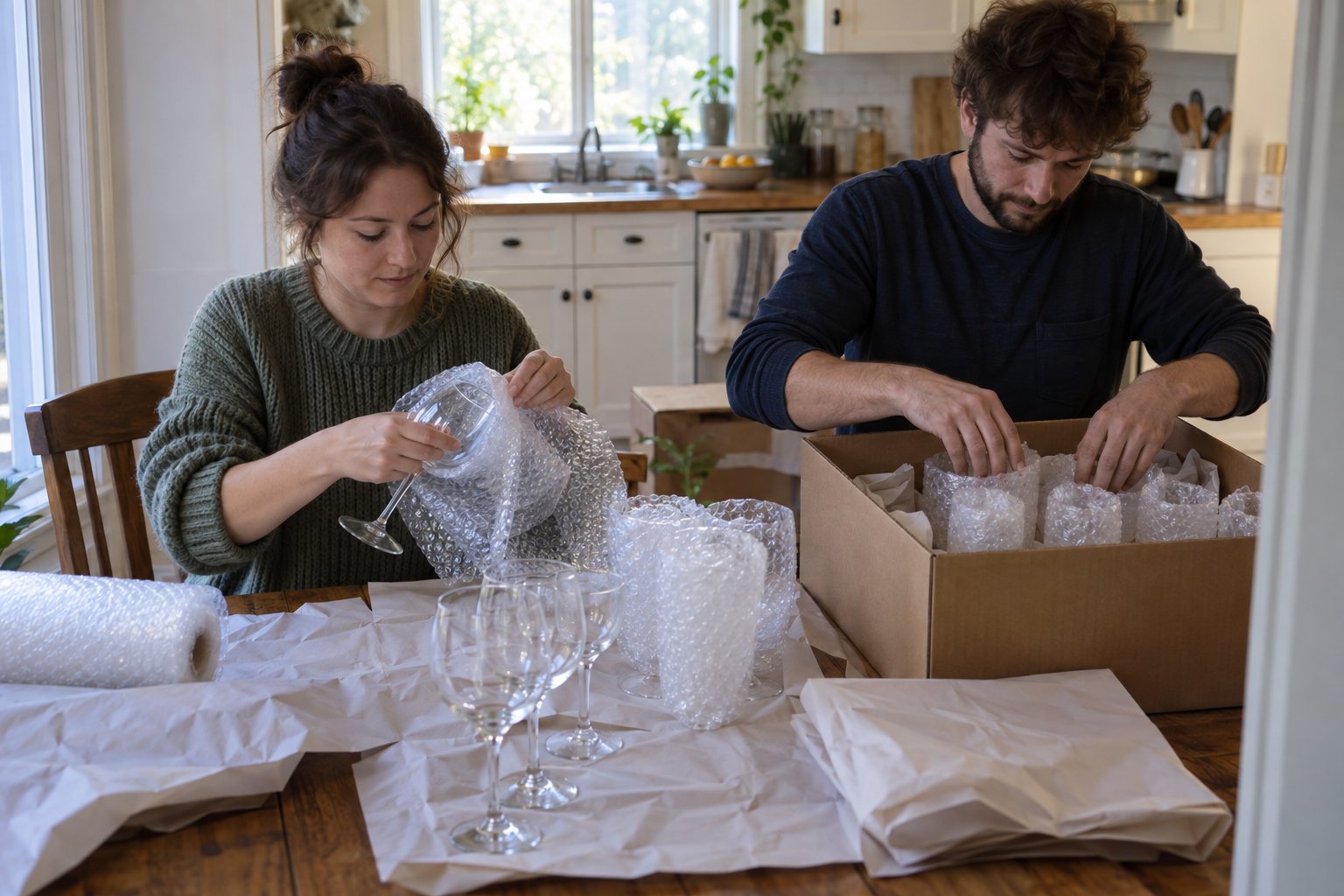
Wrap the bowl and the stem as two separate steps, not one sheet wound around the whole glass. Start by stuffing a small wad of packing paper inside the bowl so it holds its shape, then wrap two sheets of paper around the bowl, then wrap the stem and base with an additional layer before setting the glass in its cell.
The stem is the weak point on almost every design, especially long-stemmed red wine glasses. A single sheet wrapped loosely leaves the stem free to flex against the box wall every time the truck brakes or turns. Wrapping the stem on its own, snug enough that it cannot wobble inside the outer wrap, is what actually prevents the snap. Avoid newspaper against the glass itself; the ink can transfer, and plain packing paper or bubble wrap holds up better over a long haul.
For crystal or especially delicate stemware, add a second layer of bubble wrap around the entire glass after the paper, with the bubbles facing in.
Painted or gilded rims chip from friction, not impact, so wrap those glasses with the painted band fully covered and avoid letting paper edges drag across it as you set the glass down. Place these glasses in the top layer of the box rather than the bottom, since they tend to be older or more valuable pieces worth extra caution.
Stand glasses upright in their cells with the rim facing up, never upside down on the rim and never on their side. The rim is the thinnest, most chip-prone edge on the entire glass, so it should never bear the glass's weight or touch another surface directly.
Fill every gap between the wrapped glass and the cell wall with crumpled paper so nothing can shift during the drive. Once all cells are filled, add a thick layer of crumpled paper or a sheet of bubble wrap across the top of the entire box before closing it, so the lid never makes contact with a rim.
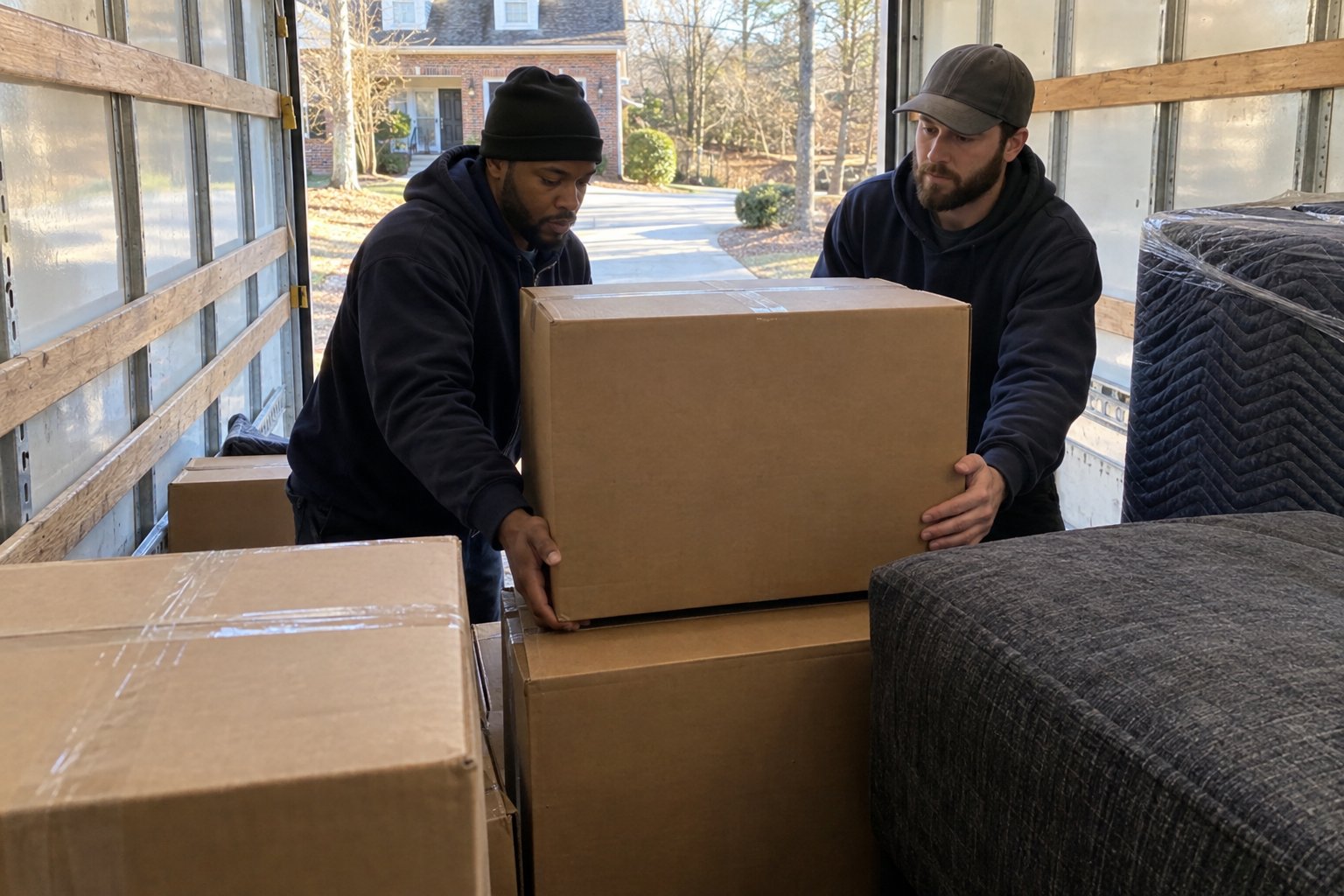
Mark the box "FRAGILE" and "THIS SIDE UP" on at least two sides, and keep these boxes out of any stack that will carry weight. They belong on top of sturdier boxes, never underneath them, and should be some of the last items loaded into the truck so nothing gets stacked on top later.
For a local or regional move with a crew handling the truck, packing wine glasses into the load is usually fine as long as they are boxed correctly and placed where nothing sits on them. For long-distance moves, especially ones involving a shared truck or multiple transfer points, shipping valuable or irreplaceable stemware separately through a specialty glass shipper is worth considering.
The deciding factor is really value and sentiment, not distance. A set of everyday glasses from a home goods store can travel with the rest of your kitchen boxes. A wedding registry crystal set or anything irreplaceable deserves the extra protection of being hand-carried in your own vehicle if that is an option, or flagged clearly for your moving crew so it gets handled with the same care as other fragile, high-value items.
If your move includes other breakables like framed art or dinnerware, it is worth reading our guide on moving fragile artwork and framed photos for the same careful-handling principles applied to a different category of item.
Pack your wine glasses in one focused session rather than squeezing them in between other tasks. Rushed packing is where corners get cut, like skipping the stem wrap or stacking a box too soon after sealing it.
If glassware is just one piece of a bigger fragile-items challenge in your move, a full room-by-room packing guide can help you sequence the kitchen alongside everything else so nothing gets packed in a hurry. And if the idea of wrapping every stem yourself sounds like more time than you have, our packing services team handles exactly this kind of detail work, including glassware, china, and other breakables that need more than a box and some tape.
Once your fragile boxes are packed and labeled, the next risk is how they get loaded. Keep them for last, keep them light-stacked, and if you are unsure your crew has a plan for handling them, it is worth asking before moving day arrives. You can also get a moving quote and mention your glassware specifically so the team can plan for it.
Yes, bubble wrap works well as an outer layer, but wrap the bowl and stem in plain packing paper first. Bubble wrap alone can let the glass shift inside its pocket, while paper conforms tightly to the shape and holds the glass still.
Most cell boxes hold 12 to 18 standard wine glasses, depending on the cell size and glass height. Check that tall or oversized glasses actually fit the cell depth before packing a full box, since forcing a glass in crooked increases breakage risk.
You can, but keep them in a clearly labeled, separate box rather than mixed in with plates or cookware. Glassware needs its own cushioning and should never have heavier kitchen items stacked against it.
For everyday glassware, standard mover's liability coverage is usually sufficient. For crystal, antique, or irreplaceable sets, ask about additional valuation coverage or consider a specialty shipper, since standard coverage may not reflect the glass's true value.
Place wrapped glasses upright in a sturdy box on the floor of the back seat rather than the trunk, where temperature swings and road vibration are more pronounced. Wedge the box with blankets or towels so it cannot slide or tip during the drive.
Whether it’s a full home move or just a few heavy items, Hustle and Muscle Moving is ready to help you sort it out.