.webp)
Written by:
Pierce J.
Published:
September 2, 2026
Learn how to move fragile artwork safely, from packing framed pieces and canvases to loading them so glass, frames, and canvas stay crack-free in transit.
Moving fragile artwork safely means building a rigid, cushioned box around each piece so nothing can flex, shift, or press against the glass or canvas during transit. Framed art and paintings do not fail because the truck hits a bump; they fail because a corner takes a direct hit, or because the piece was stacked flat under something heavier and the frame slowly warped. The fix is mostly about how you box and load each piece, not how careful the driver is.
If you have ever unwrapped a picture frame after a move and found the glass starred in one corner, you already know the usual cause: cardboard corner protectors that were an afterthought instead of the first thing that went on. This guide covers how to prep, box, and load paintings, framed photos, and mirrors mounted in frames so they survive the trip in the same condition they left in.
Most art damage happens from pressure and flex, not drops. Glass cracks when a frame is squeezed from the sides or corners in a box that is too loose, and canvas can develop dents or separate from its stretcher bars when something heavier rests against the face for hours in the truck.
Bubble wrap alone does not stop this. It cushions against impact but does nothing to keep a frame rigid inside its box, so if the box gets squeezed in a stack, the wrap just compresses along with the art. The real fix is a snug, rigid outer box (or a purpose-built picture box) that holds the piece so it cannot shift, plus corner protection that takes the hit instead of the glass.
Start by taping an X of masking tape across any glass to hold shards in place if it does crack, then slide rigid cardboard corner protectors onto all four corners of the frame before anything else touches it. That single step prevents the most common failure point.
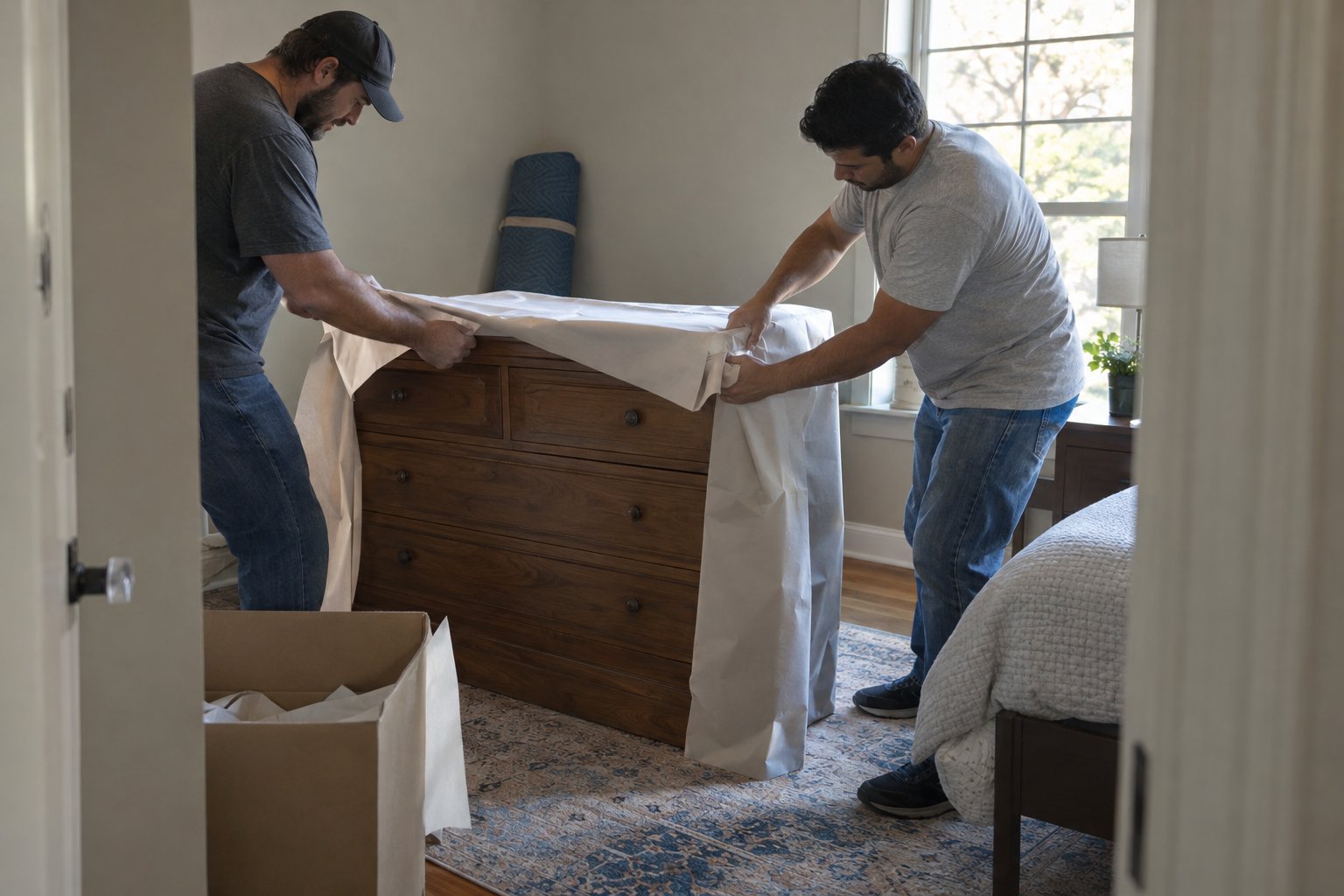
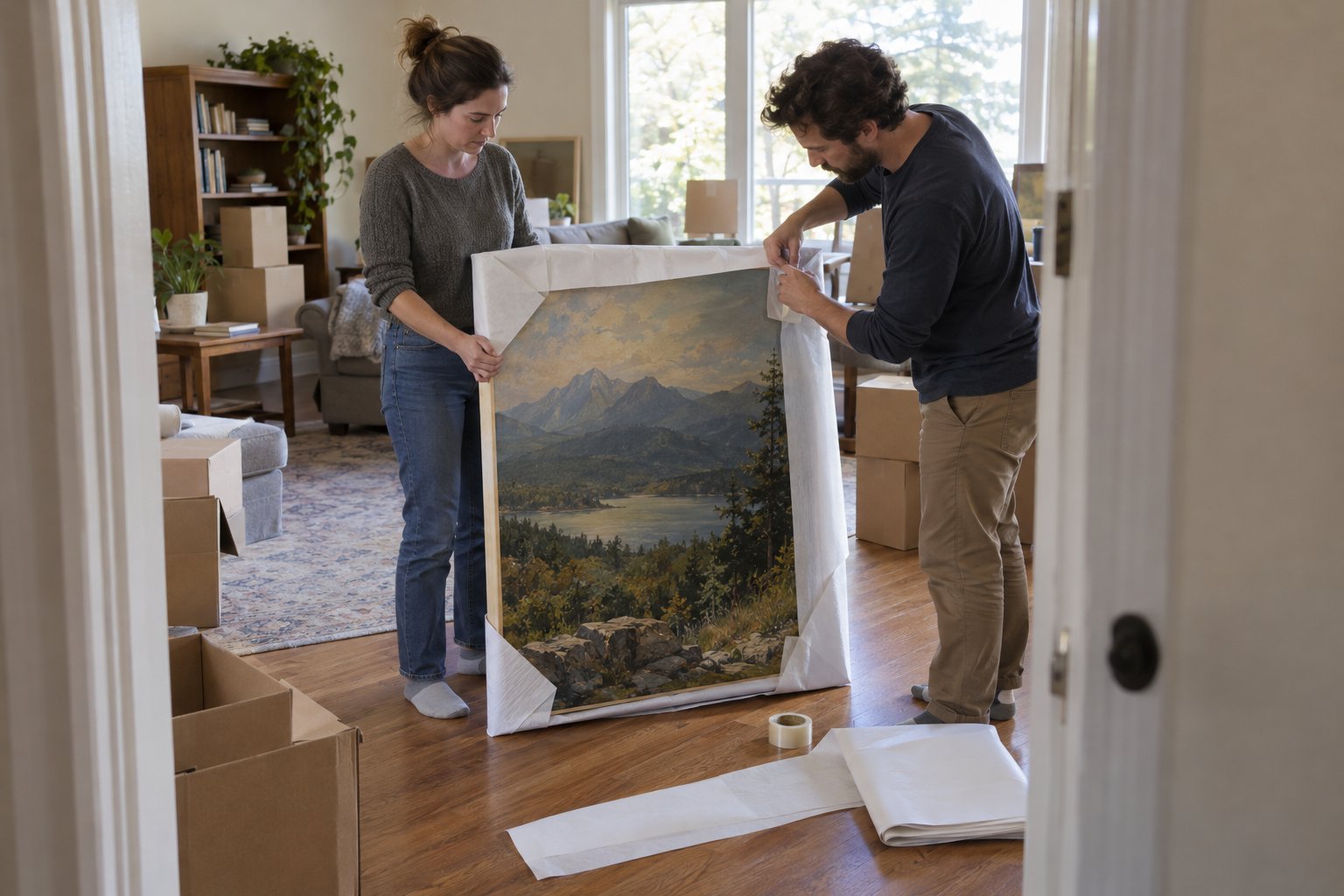
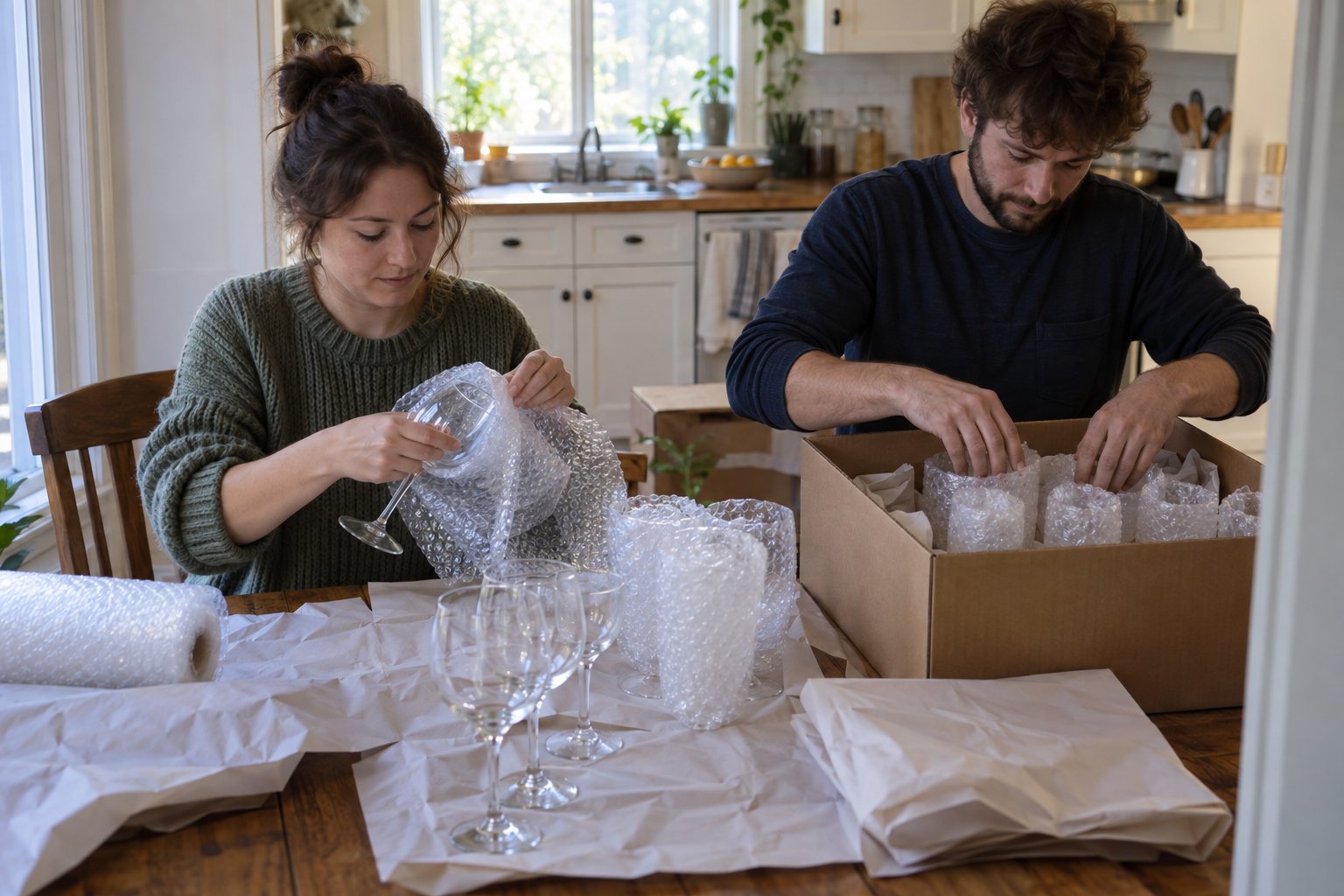
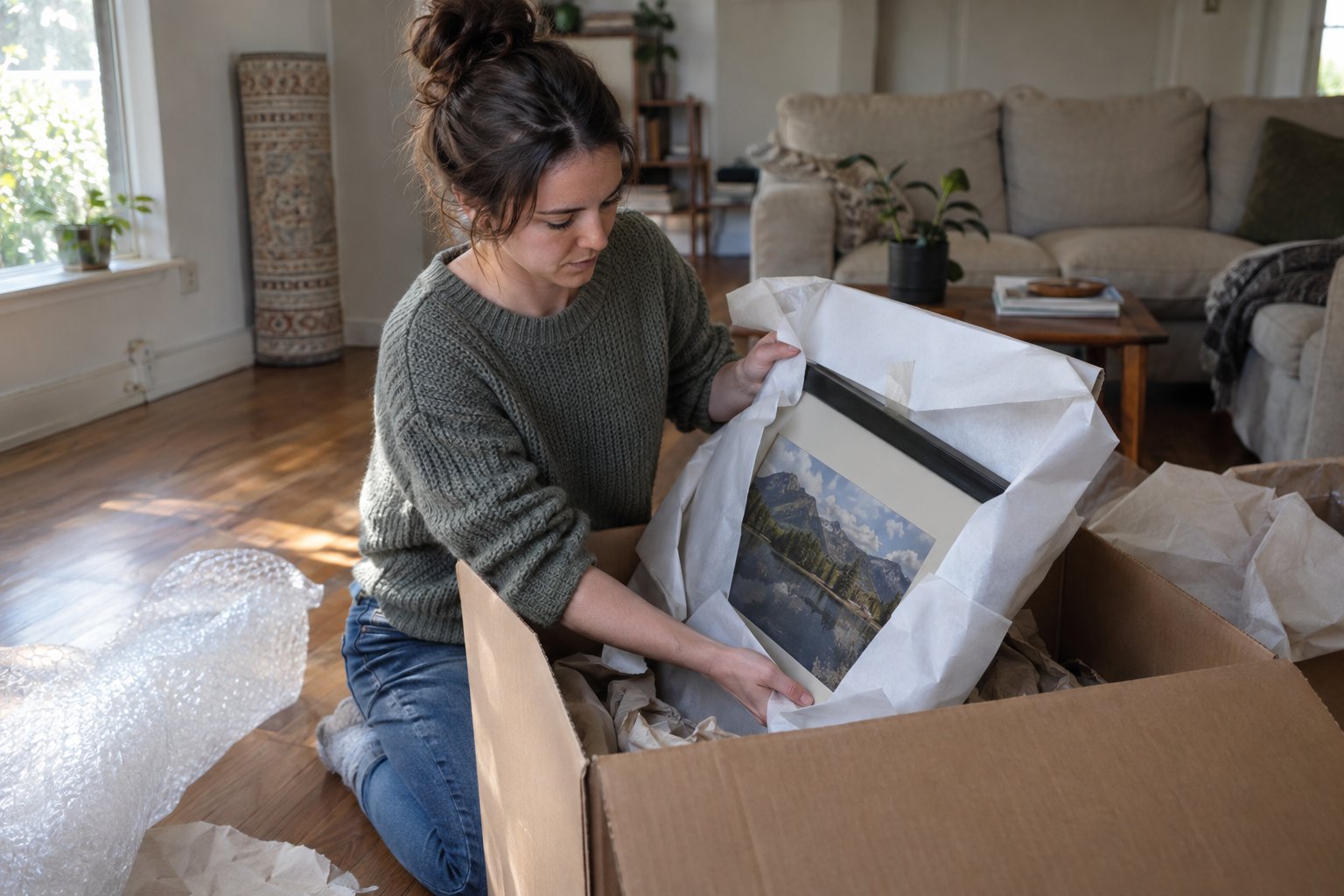
From there, wrap the whole piece in a layer of packing paper or a thin moving blanket, then a layer of bubble wrap with the bubbles facing in toward the art. Use a telescoping picture box (a flat, adjustable box sold specifically for framed art and mirrors) sized to the piece, and fill any gap inside the box with crumpled paper so the frame cannot slide or rattle. If you do not have a picture box, two flattened cardboard boxes taped together around the wrapped piece work as a rigid substitute. Label the box "fragile, glass, do not lay flat" on every side, not just the top.
Unframed or gallery-wrapped canvas needs a different approach because there is no glass, but the canvas surface itself can dent or tear. Cover the painted face with a sheet of clean glassine or acid-free paper before wrapping, since regular packing paper or newsprint can transfer ink onto the surface over time. Cardboard corner guards still matter here to keep the stretcher bars from bending if the piece gets bumped on an edge.
Artwork should always travel on edge, never flat, and never on the bottom of a stack. Standing pieces upright, framed art can flex under its own weight if something presses down on the face, and flat storage is how canvases end up with permanent dents in the center.
Load picture boxes upright between soft items like mattresses or folded moving blankets rather than against hard furniture edges. If you're transporting several pieces at once, a cardboard divider or a stack of flattened boxes between each one keeps frames from touching directly. Larger paintings and mirrors should go in last, near the truck's cab wall, where there's less shifting during the drive, and never underneath boxes of books or anything with real weight.
Small to mid-size framed pieces are usually fine to pack and move yourself if you follow the steps above. Large canvases, gallery-framed pieces with UV glass, or anything with real sentimental or appraised value are worth handing to movers who pack specialty and fragile items for a living, especially for a long-distance trip where the piece sits in a truck for days.
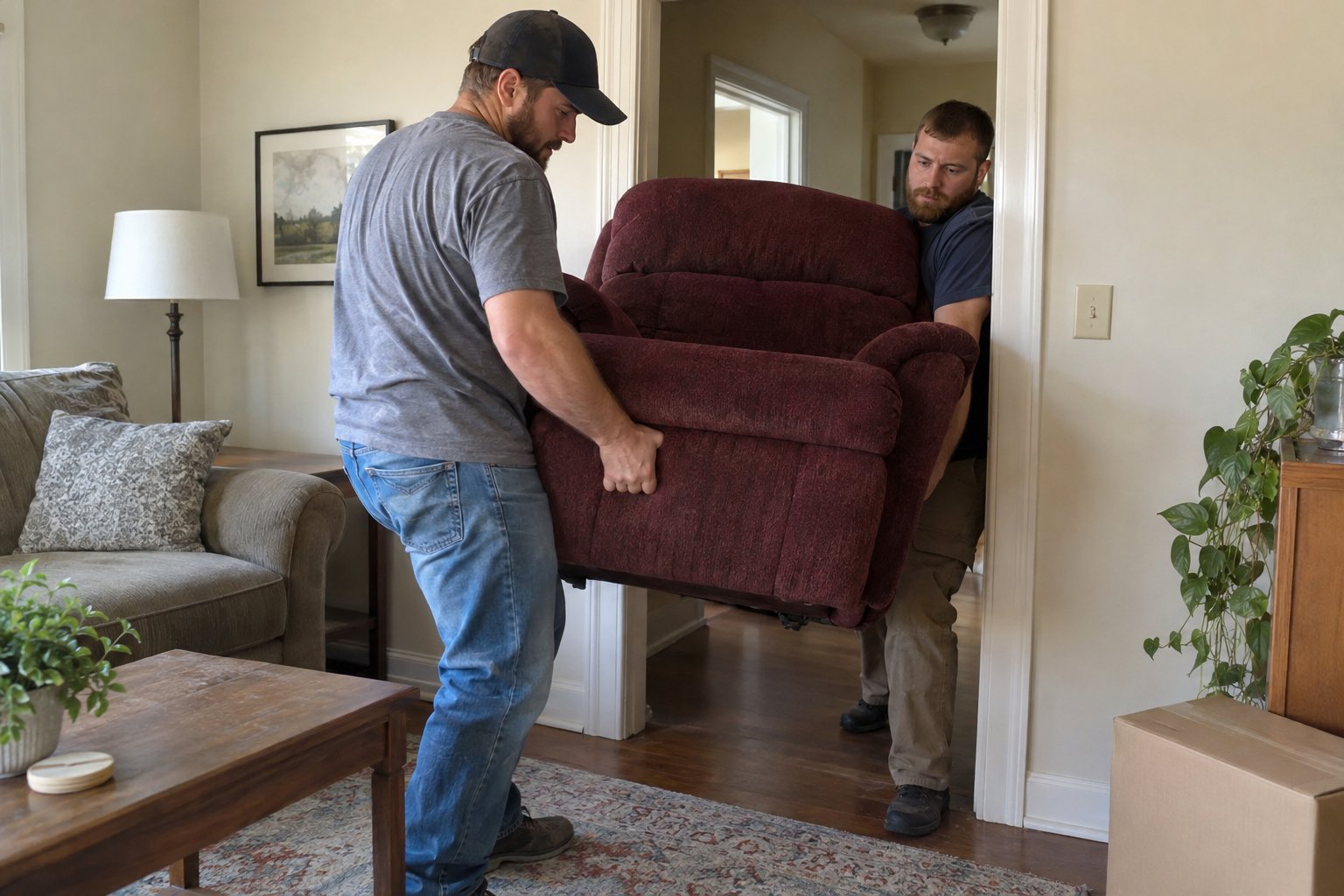
The risk with valuable art is not usually the drive itself, it's the handling: lifting a large framed piece in and out of a stairwell, or squeezing it through a doorway at an angle, is where corners get bumped and glass gets cracked. If you're already booking help for the rest of your move, ask whether the crew has experience with specialty moving for oversized or fragile items like art, mirrors, and glass pieces specifically, rather than assuming general movers will pack it the same way.
Before packing day, walk through your home and pull every framed piece, mirror, and canvas off the wall first, separately from general packing. Mixing art into general room-by-room boxing is how pieces end up wrapped in a hurry with whatever paper is left over.
Photograph anything with existing damage, scuffs, or a chip in the frame before it's boxed, so you have a record if something changes in transit. If you're working through a room-by-room packing plan for the rest of the house, treat wall art and mirrors as their own category with their own supplies, bought or set aside before the truck arrives rather than pulled together at the last minute.
The pieces that survive a move are the ones that were boxed rigidly, corner-protected, and loaded upright rather than flat. Skipping any one of those steps is usually where the crack happens, even when everything else about the move goes smoothly.
If your move includes a lot of framed art, mirrors, or canvas alongside heavier specialty items, it's worth getting a full picture of what the crew will need to handle before moving day. Get a moving quote and mention the fragile items up front so the right supplies and crew size are booked from the start.
A telescoping picture box is worth using if you have more than one or two pieces, since it's designed to stay rigid and fit snugly around a frame. For a single small piece, two flattened boxes taped together around the wrapped art work as a rigid substitute, but a loose, oversized regular box is the most common cause of glass cracking in transit.
Cover the painted surface with glassine or acid-free paper, add cardboard corner guards to protect the stretcher bars, and transport it standing on edge rather than flat. Avoid regular packing paper directly on the paint, since it can stick or transfer over time.
No. Framed art and canvases should never sit under other boxes, even briefly, because sustained weight on the face can crack glass or dent canvas. Load art upright and near the front of the truck, away from anything that will be stacked on top of it.
Tape an X across the glass, add corner protectors, wrap in paper and bubble wrap with bubbles facing the mirror, then box it the same way you would framed art: rigid box, upright orientation, labeled fragile on every side.
If you have the supplies and time, small to mid-size pieces are manageable yourself. For large, valuable, or antique pieces, professional packing reduces the risk that comes from handling during loading and stairwell turns, which is where most damage actually happens rather than during the drive.
Whether it’s a full home move or just a few heavy items, Hustle and Muscle Moving is ready to help you sort it out.