.webp)
Written by:
Pierce J.
Published:
September 30, 2026
Learn how to disassemble a couch step by step, from removing legs to unclipping sectional pieces, so it fits through doorways and stairwells safely.
Most couches are not one solid piece, and treating them like one is how people end up wedging a sofa sideways into a stairwell and scratching up the wall on both sides. Learning how to disassemble a couch before moving day means removing the legs, unclipping sectional sections, and pulling any removable back cushions or arms so the frame shrinks down to something that actually clears your doorway. It takes fifteen to thirty minutes with basic tools and saves you from the classic moving day standoff at the front door.
Not every sofa comes apart the same way, and not every sofa needs to come apart at all. This guide walks through how to tell the difference, what tools to have ready, and the actual steps for the two most common designs: standard sofas with removable legs and sectionals built from separate connected modules.
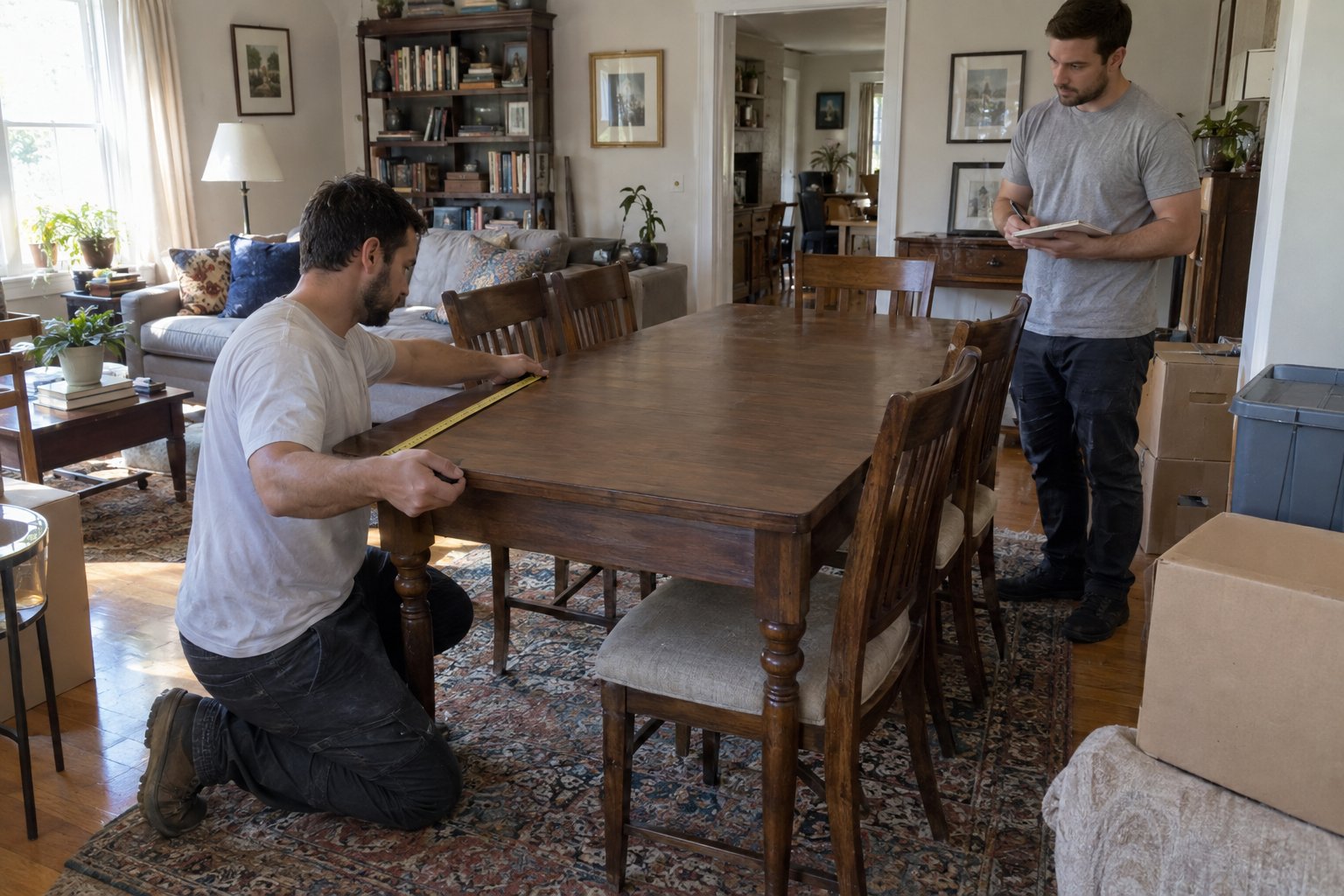
Measure before you unscrew anything. If your couch, doorway, and hallway pass a simple measurement check, you can often skip disassembly entirely and save yourself the reassembly work later.
Measure the couch at its widest point (usually the depth from front to back of the arms) and compare it to the width of every doorway, hallway turn, and stairwell landing it has to pass through. Add a few inches of buffer for maneuvering room. If the numbers are close, tilting the couch on its end or angling it through on a diagonal sometimes clears a doorway without removing anything. If the couch is wider than the passage even at an angle, or if there is a sharp turn partway through, disassembly is the only realistic option. Sectionals almost always benefit from splitting into individual modules regardless of doorway size, since carrying five smaller pieces is safer for your back than wrestling one L-shaped unit.
You need a Phillips or flathead screwdriver, an adjustable wrench, and possibly an Allen key, since most couch legs attach with one of these three fastener types. Keep a small bag or container on hand for hardware so bolts do not disappear into the carpet.
A cordless drill with a screwdriver bit speeds up leg removal significantly if you have several couches or a large sectional to break down. You will also want a permanent marker or masking tape to label each piece and its hardware, plus plastic wrap or old moving blankets to protect exposed fabric and wood once the frame is apart. If your couch has a removable back panel held on with zip ties instead of screws, add a pair of scissors or a utility knife to your kit.
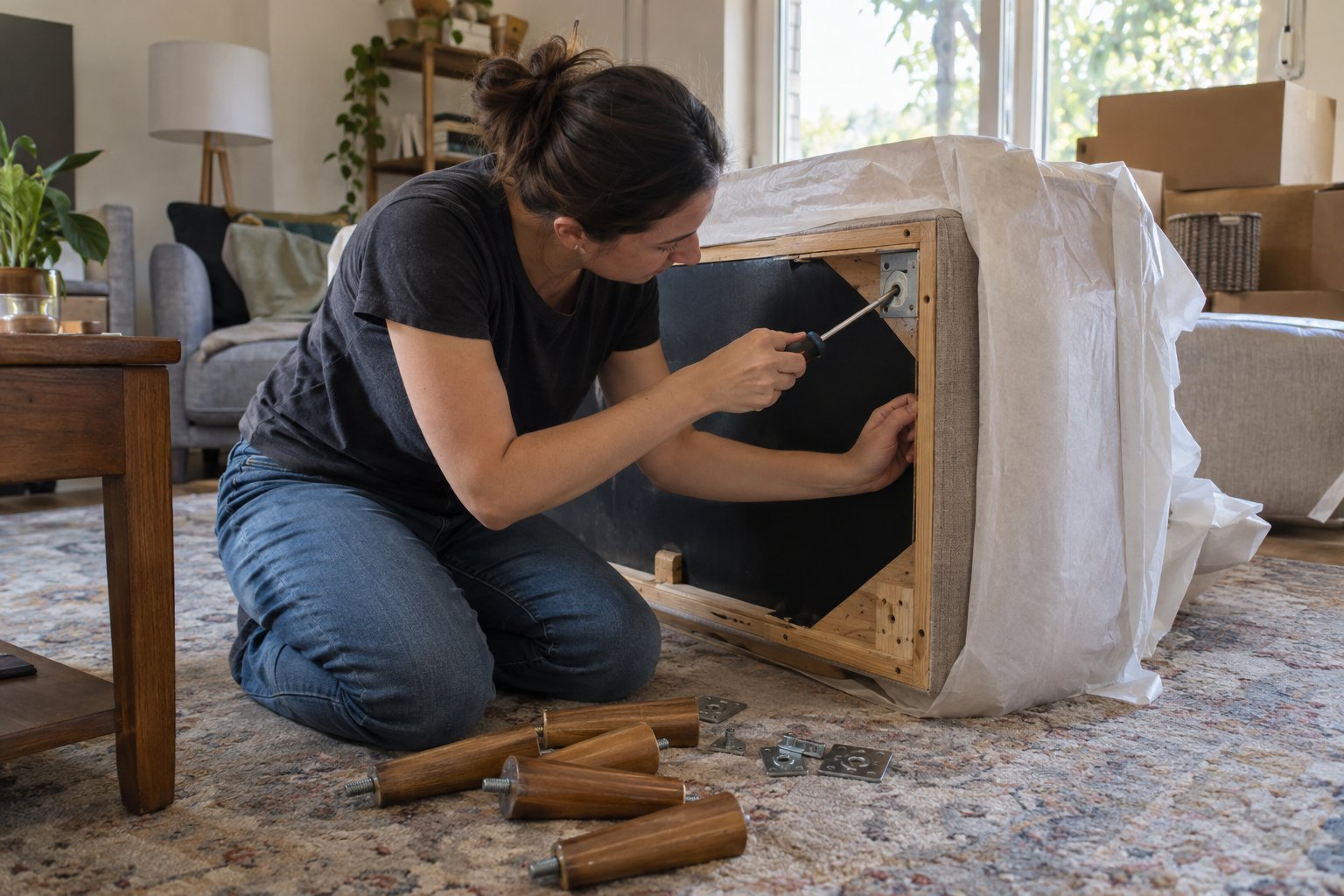
A standard sofa comes apart by removing the legs first, then any add-on parts like armrests, chaise attachments, or a detachable back panel. Start from the bottom and work up, since the legs are almost always the fastest win and immediately make the couch easier to tip and maneuver.
Flip the sofa onto its back or side on a soft surface like a blanket to expose the base. Most legs either unscrew directly by hand, twist off a threaded bolt, or require an Allen key to loosen a hex bolt running through a bracket. Turn each leg counterclockwise and set the hardware aside in your labeled bag. If your sofa has a chaise or ottoman section attached with locking pins or a cam-lock mechanism (common on modular pieces sold as one unit), look for a small lever or a screw-covered plate along the seam where the two sections meet. Removing that connector splits the piece in two without any cutting or forcing. Once the legs and any add-on sections are off, the remaining frame is usually light enough for two people to angle through a doorway that would have stopped the intact couch.
A sectional comes apart at the seams where individual modules connect, usually held together with a cam lock, a bracket and bolt, or heavy-duty clips hidden underneath the cushions or along the back. Removing these connectors turns one oversized L-shaped or U-shaped couch into several manageable armchair-sized pieces.
Start by pulling off all loose cushions and setting them aside, since they hide most connector hardware. Run your hand along the underside of the seam between two sections to find the bracket or lock; some sectionals use a simple hook-and-loop or Velcro strap that separates by hand, while others need a screwdriver to release a bolted bracket. Work section by section rather than trying to separate the whole unit at once. Label each module (Section A, Section B, and so on) with tape as you go, and photograph how they connect before you pull them apart completely. This matters more for sectionals than for any other furniture type, because reassembling five identical-looking gray modules in the wrong order is a common and entirely avoidable headache on the other end.
Wrap each disassembled piece separately in moving blankets or plastic furniture wrap, and tape all loose hardware into a labeled bag attached directly to the matching piece so nothing gets separated during transport. Stand sofa sections on end rather than laying them flat when loading, which protects the frame and saves floor space in the truck.
Keep legs, bolts, and brackets together in one clearly labeled bag per section rather than combining hardware from multiple pieces, even if they look identical. Slide a furniture blanket or moving pad between any two disassembled sections that will be stacked or leaned against each other to prevent scuffing. If a section will not be reassembled right away, such as when a couch is heading into short-term storage, wrap it snugly enough to prevent shifting but avoid sealing it in plastic completely, since trapped moisture can cause mildew on upholstery.
Call in professional movers when a couch's disassembly mechanism is unclear, when the frame is unusually heavy (leather sectionals and sleeper sofas with hide-a-bed frames are common culprits), or when the path out of your home involves a narrow stairwell with a sharp turn that leaves no margin for error. A crew that handles this daily will recognize connector types faster and know how to angle a stubborn piece without gouging a wall or straining a back.
If you would rather not deal with any of this yourself, our specialty moving team handles awkward and oversized furniture, sectionals included, as part of a full move. For moves where you just need extra hands to lift and carry without a full-service package, labor-only assistance covers that gap. And if your sectional is one of several sofas in the home giving you trouble on a tight staircase, our guide to moving a couch through tight stairwells covers the maneuvering techniques that pick up where disassembly leaves off. When you are ready to book help for the heavy lifting, you can get a moving quote and let a crew handle the parts that are hardest to get wrong.
Some couches with hand-twist legs or Velcro-connected sectional pieces can be taken apart without tools, but most standard sofas use screws, bolts, or Allen-key fittings that require at least a screwdriver or wrench. Check the underside of the couch before assuming you can skip tools entirely.
A standard sofa with removable legs usually takes 10 to 15 minutes to disassemble. A multi-piece sectional can take 30 minutes or more, depending on how many sections it has and whether the connectors are hidden under cushions.
Removing factory-installed legs or separating sectional modules at their designed connection points typically does not void a warranty, since manufacturers expect these pieces to be taken apart for moving. Cutting into fabric, foam, or a frame that was not designed to separate is a different situation and could affect coverage.
Remove all cushions first, since most connectors sit underneath them along the seam, and run your hand along that seam to feel for a bracket, cam lock, or clip. If nothing is visible or reachable, check the manufacturer's website for an assembly diagram before forcing a seam apart.
Tipping a couch on its side works fine for doorways that are only slightly too narrow, but tight stairwell turns, low ceilings, or sectionals usually require disassembly regardless of angle. Measure the tightest point in your path first to decide which approach actually applies.
Whether it’s a full home move or just a few heavy items, Hustle and Muscle Moving is ready to help you sort it out.