Written by:
Pierce J.
Published:
November 4, 2026
A moving day timeline covering the night before, crew arrival, loading, transit, and the final walkthrough, with a checklist for each stage.
A moving day timeline breaks the day into stages, from the night before through the final walkthrough, so nothing gets missed when you're tired and the clock is running. Most moving day stress comes from skipped prep, not the actual carrying. Knowing roughly what happens when, and having a short list ready for each stage, keeps the day moving instead of stalling at the first surprise.
This timeline is built around a local move with a loading crew, but the same stages apply whether you're doing it yourself or working with hired help. Treat the times as a rough shape for the day, not a schedule to defend.
The night before is for finishing packing, charging devices, and setting aside the things you'll need before the truck arrives in the morning. The goal is to wake up with nothing left to pack and a clear path for the crew to walk through.
Getting this done the night before matters because the morning of a move moves fast, and decisions you're not ready to make (where does this go, is this coming or getting donated) eat the time you need for loading.
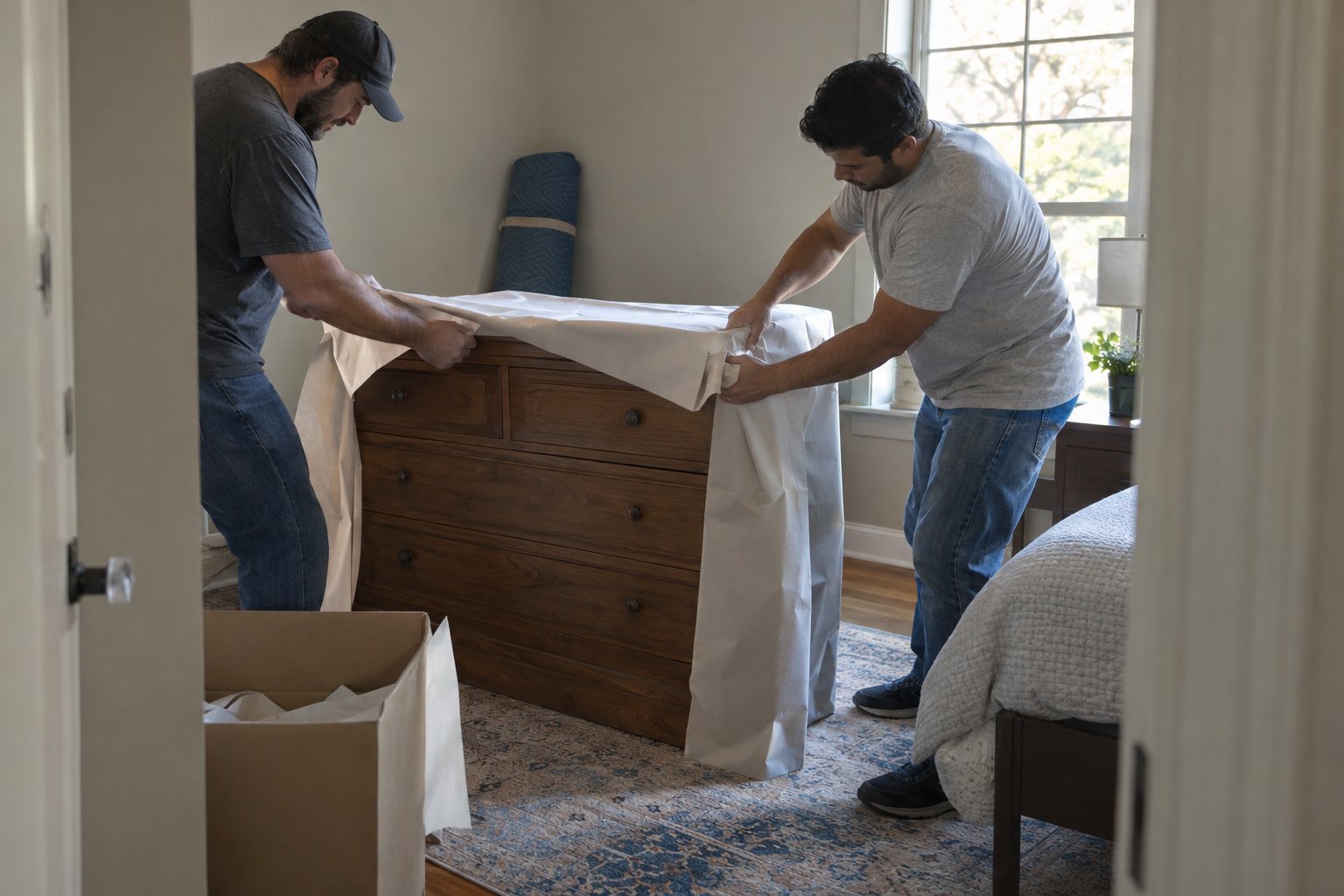
The morning usually starts with a short walkthrough where you point out fragile items, anything not moving, and any access issues before loading begins. This sets the pace and order for the rest of the day.
As a rough rule of thumb, allow about an hour for this walkthrough and setup phase before loading starts in earnest, longer for a larger home.
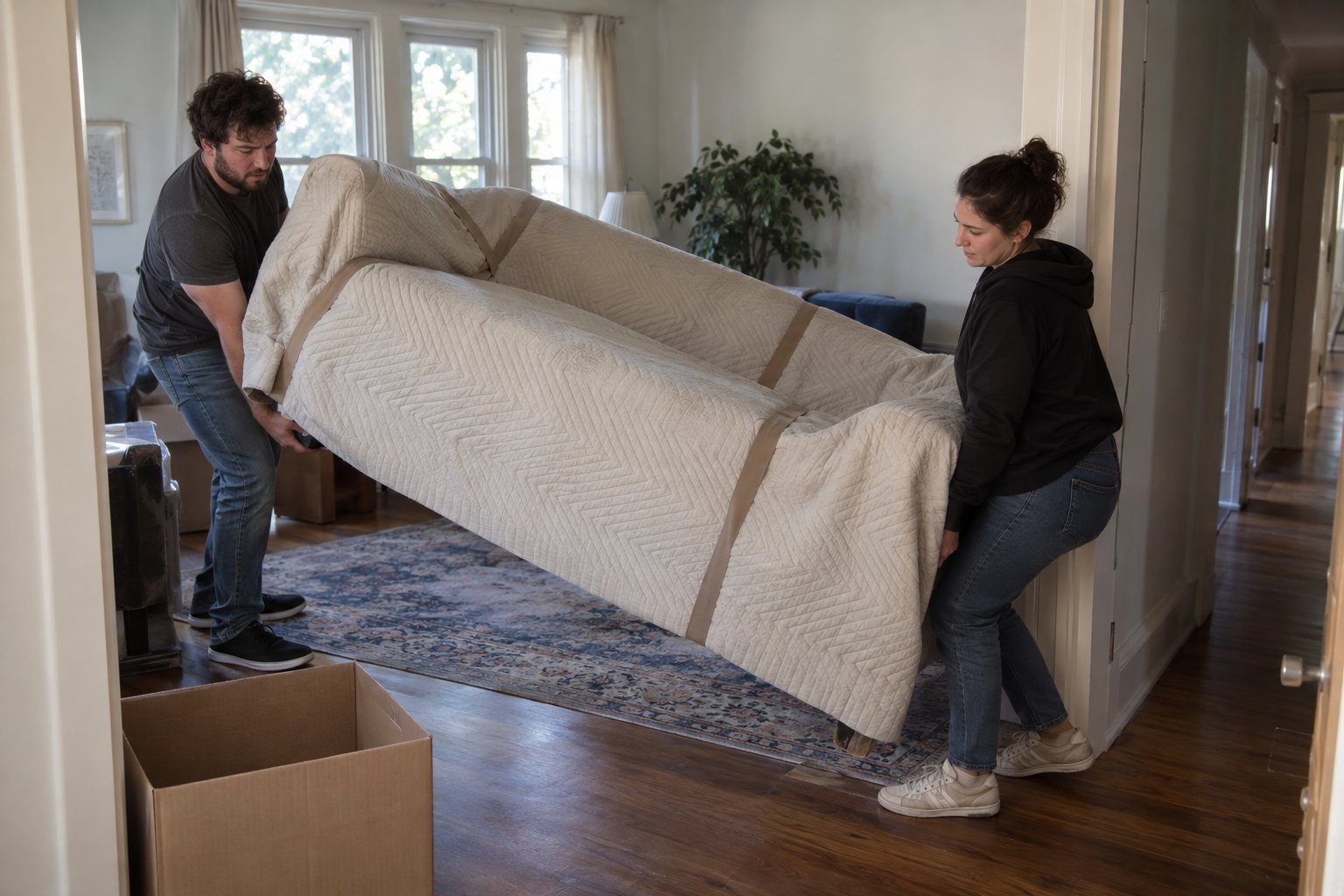
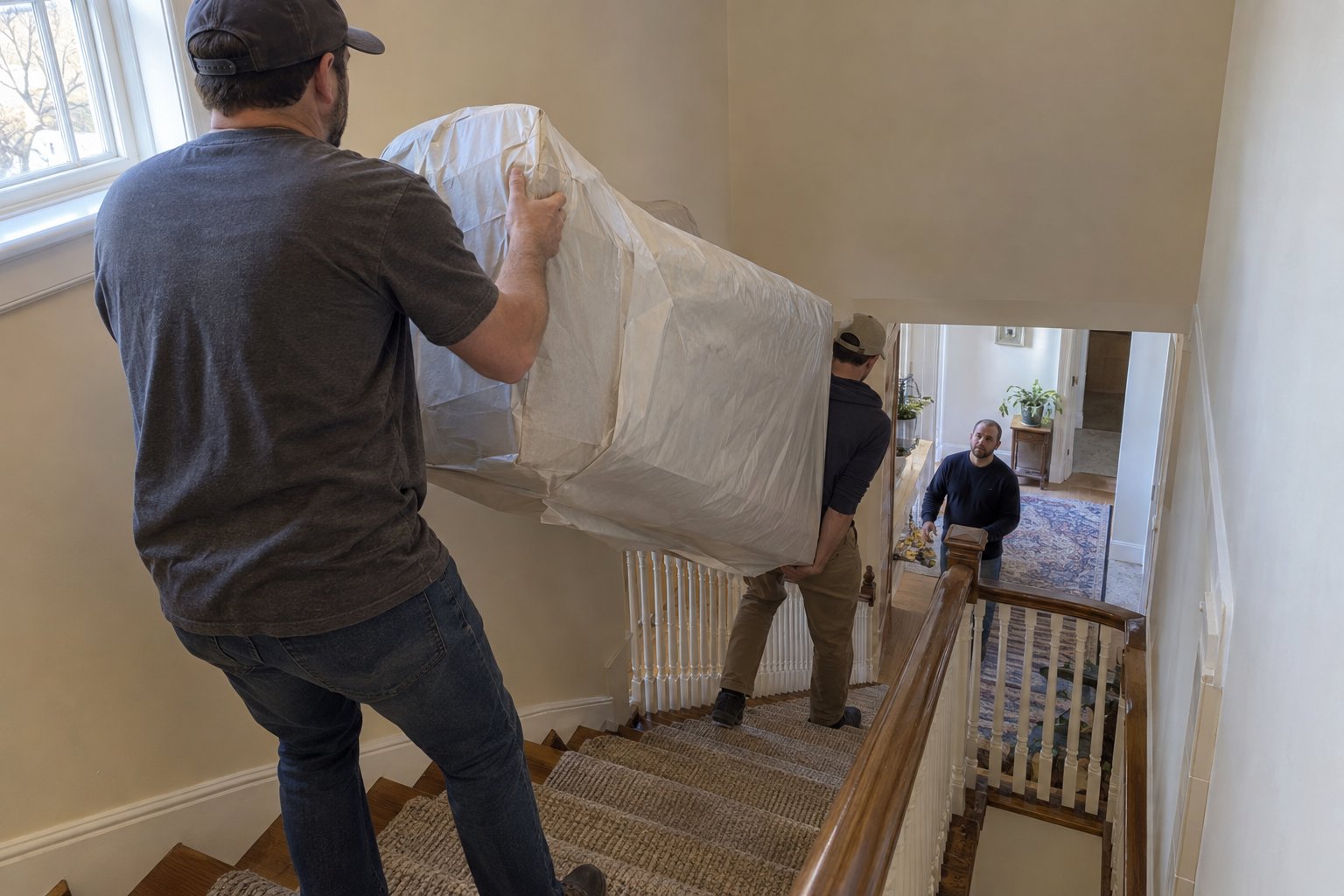
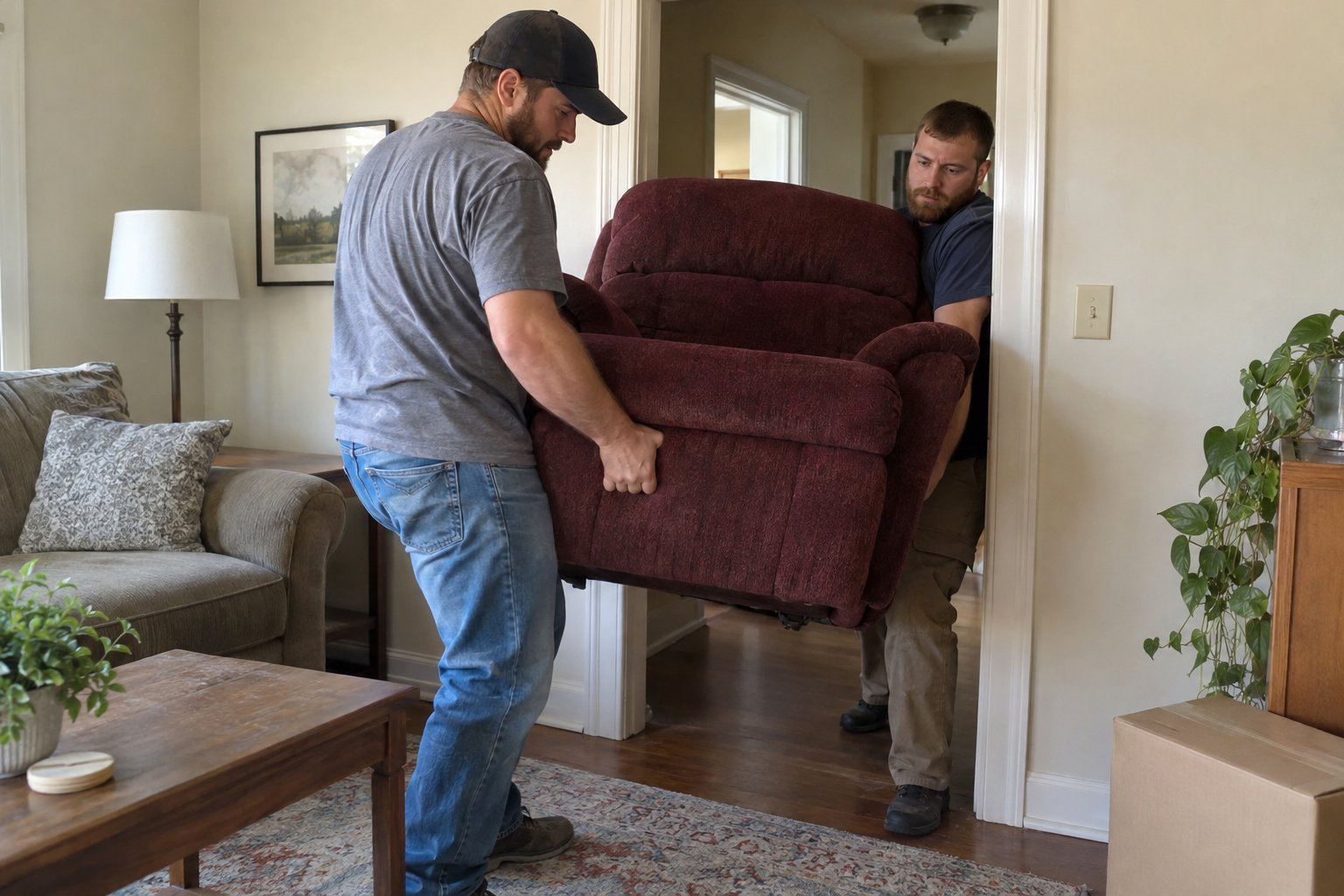
Loading is the physically demanding middle of the day: furniture gets wrapped and carried out in a planned order, then the truck heads to the new address while you handle any remaining errands or paperwork. Staying out of the direct path while keeping yourself reachable is the most useful thing you can do during this stretch.
If you packed boxes yourself ahead of time and only need help with the heavy lifting and the truck, a loading crew can come in at this stage without you having to run the whole move yourself. Labor-only assistance covers exactly this kind of loading and unloading support.
The final walkthrough is your last chance to catch anything left behind, confirm utilities are handled, and make sure the home is in the condition you're leaving it in. Do this room by room with the doors fully open, not from a glance down the hallway.
This is also the point to confirm your mail forwarding is set up with USPS if you haven't already, since it's easy to forget once the house is empty and attention shifts to the new address.
Arrival is about getting the truck unloaded efficiently and the essentials bag open before anything else. Unpacking in full can wait; getting beds set up and the kitchen box found cannot.
If your new home needs protection for floors or doorways before furniture starts coming in, our guide on how to prepare for movers covers what to set up in advance at either end of the move.
Planning your move? Request a quote from Hustle and Muscle Moving.
Most moves start early, often before the heat or traffic builds up, since early starts give the crew and the loading process more daylight to work with. If you're coordinating with a loading crew, confirm the arrival window the day before so your morning walkthrough lines up with when they show up.
Pack medications, chargers, a change of clothes, basic toiletries, important documents, and snacks for the day. Keep this bag with you rather than on the truck, since it's the one thing you'll want access to immediately at either end of the move.
It helps to be available for questions about placement and fragile items, especially early on, but you don't need to watch every box go onto the truck. Staying reachable while letting the crew set the loading order keeps things moving faster than hovering over every step.
Label boxes by room before moving day and do a quick room-by-room sweep as each one empties, checking closets, cabinets, and behind doors. This catches anything left behind before the crew moves on to the next room.
The same timeline applies, you'll just want to build in buffer for commute traffic near your old and new addresses during the morning and afternoon. Confirming parking and arrival windows ahead of time matters even more when the schedule is tighter around work hours.
Whether it’s a full home move or just a few heavy items, Hustle and Muscle Moving is ready to help you sort it out.