Written by:
Pierce J.
Published:
October 21, 2026
Learn how to move books the right way: box sizing, weight limits, and loading order that protect your spine and keep bindings from warping in transit.
Books are one of the few household items that turn into a physical hazard before they ever touch the truck. Learning how to move books safely comes down to two things: keeping individual boxes light enough to lift without strain, and packing them so the bindings and pages do not warp or crease in transit. It sounds simple until you have forty boxes of hardcovers and a moving day deadline.
Books cause more strained backs than almost any other category of household goods because they are deceptively dense. A box that looks half full can weigh as much as a fully packed box of linens or clothing, and most people pack by volume instead of weight.
A standard large moving box filled edge to edge with hardcovers can easily exceed 50 pounds, which is past the point where most people can lift it safely from a bent position. The injuries that follow are almost always lower back strains from lifting an overloaded box, not from the books themselves. The fix is not stronger boxes. It is smaller ones.
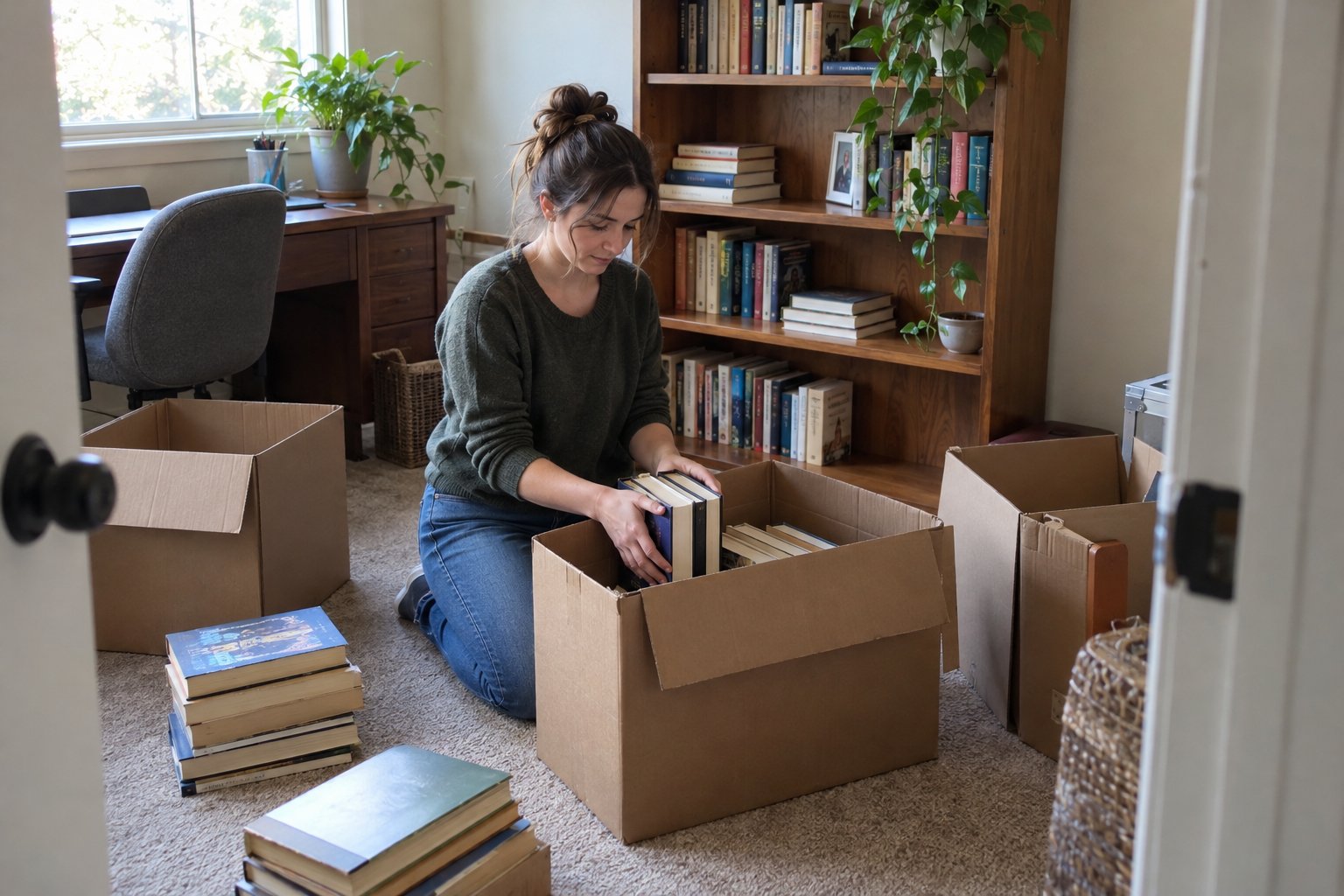
The best boxes for moving books are small, heavy-duty boxes, not the medium or large boxes you would use for pillows or clothes. A small box (roughly 1.5 cubic feet) keeps the total weight manageable even when it is packed solid, because books simply do not leave room for the box to get dangerously heavy before it is full.
Look for double-walled cardboard if you are packing hardcovers or a large collection, since single-wall boxes can bow or split under sustained weight over a multi-hour move. Avoid reusing thin retail boxes or printer paper boxes that have already been through a few open-and-close cycles; the corners are usually the first place they fail.
A packed box of books should land somewhere between 30 and 40 pounds, not the 50-plus pounds a box can reach if you fill a large box completely. If you can comfortably lift the box with both hands from a slight squat without feeling it in your lower back, it is sized right. If you have to brace against a wall or ask someone to help lift a single box, it is too heavy and should be split across two boxes instead.
Pack most books flat, spine down, in stacked layers rather than standing them upright with the spine facing out. Standing books on their spines for an extended period, especially in a hot truck, puts constant strain on the binding glue and can cause pages to loosen or the spine to crack over time.
For hardcovers, alternate the direction of the spines every other layer (bindings facing opposite ways) so the stack sits flat and doesn't rock inside the box. Paperbacks can go in the same orientation, but keep them in their own boxes separate from hardcovers when possible, since mixing weights and shapes creates gaps that let books shift and corners bend during transit.
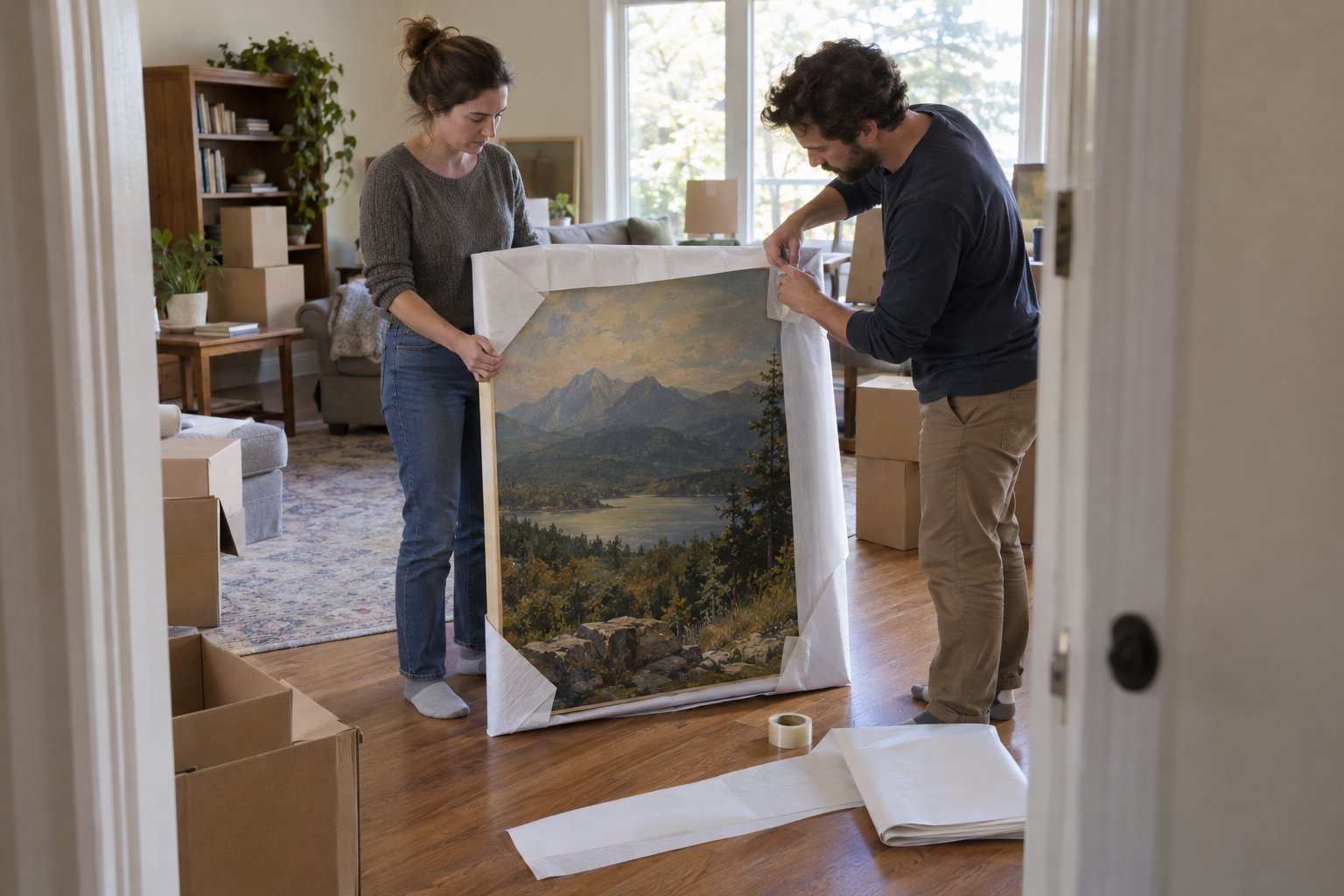
Wrap individually valuable books in packing paper before boxing them with the rest of your collection, and keep them away from the bottom of the box where the weight of everything above will press down on the cover. For a small number of genuinely rare or collectible volumes, it is worth setting them aside entirely and transporting them yourself rather than loading them with general boxes, the same way you would handle fragile artwork or framed photos that can't be replaced.
Always empty a bookcase completely before moving day. A loaded bookcase is far too heavy to lift safely and the uneven weight distribution makes it likely to tip or have shelves pop loose mid-carry. Clear every shelf into labeled boxes first, then move the empty bookcase on its own.
Work in sections rather than trying to empty an entire wall of shelving at once. Pack shelf by shelf, left to right, and label each box with the shelf number or general subject matter. This matters more than it sounds: when you're unpacking later, reconstructing a library from a pile of identical "BOOKS" boxes is far more tedious than sorting from boxes labeled "fiction, top shelf" or "cookbooks, kitchen hutch."
Packing books yourself is reasonable for a small to medium collection if you have enough small boxes on hand and the time to do it in stages over a week or two rather than the night before. Books don't need special climate controls or custom crating the way a piano or a fish tank does, so the barrier to DIY packing is mostly time and box supply.
Where it makes sense to bring in help is volume: if you're clearing out a home office, a library wall, or years of accumulated textbooks, the sheer number of boxes and repetitive lifting adds up fast. A crew booked through professional packing services can get an entire book collection boxed, labeled, and ready to load in a fraction of the time it takes to do alone, which matters most when moving day is already packed with other tasks. If you just need extra hands to carry and load what you've already packed, labor-only assistance covers that without paying for full packing service.
Before the boxes go on the truck, do a quick weight and seal check rather than assuming everything is ready. A few minutes here prevents split boxes and sore backs later.
Get these basics right and your book collection will arrive in the same condition it left, with your back intact to help unpack it. If the volume of boxes has you reconsidering a full DIY pack, request a free moving quote and let a crew handle the heavy lifting instead.
A small moving box typically holds 15 to 25 average hardcovers or more paperbacks, depending on size. The goal isn't to maximize how many fit, it's to stop filling once the box starts to feel heavy, usually well before it's visually full.
Yes, rolling suitcases work well for books because the wheels remove the lifting problem entirely. A hard-sided suitcase can hold a surprising number of books and simply gets rolled to the truck instead of carried.
Most everyday books don't need individual wrapping, just snug packing so they don't shift. Wrapping is worth the extra time only for books with dust jackets you want to protect, or for rare and sentimental copies.
Extended heat exposure can warp covers, soften glued bindings, and yellow pages faster than normal aging. For a long-distance move in hot weather, keep particularly valuable books with you in a climate-controlled vehicle rather than the truck if possible.
If you haven't opened a book in years and it has no sentimental or resale value, donating it before the move saves on both box count and lifting. It's one of the easiest categories to downsize since most collections include books nobody plans to reread.
Whether it’s a full home move or just a few heavy items, Hustle and Muscle Moving is ready to help you sort it out.