Written by:
Pierce J.
Published:
October 30, 2026
Comparing a fully DIY move to hiring labor-only help for loading and unloading? See how they stack up on time, effort, risk, and who each one suits.
There's a middle option between renting a truck and doing everything yourself, and hiring a full-service mover: you drive or rent the truck, and bring in a labor-only crew just to load and unload it. Moving yourself vs labor-only help comes down to how much of the physical work you want to hand off, not just how much of the whole move you're paying someone else to run. Both approaches put you in charge of the truck and the route. They split sharply on who does the lifting.
This comparison looks at a fully DIY move, where you and whoever you can recruit handle every box and every piece of furniture, against a hybrid move where you keep control of the logistics but bring in trained help for the loading and unloading. We'll compare them on time, physical effort, risk of injury or damage, and which situation each one actually fits.
A fully DIY move means you recruit friends, family, or whoever answers your group text, and your crew handles every stage: packing, carrying, loading, driving, unloading, and placing furniture. A DIY move with labor-only help means you still rent the truck and own the schedule, but a trained two- or three-person crew shows up to load it and meets you at the other end to unload it.
The dividing line is who's doing the lifting and who's taking on the risk of a dropped dresser or a strained back. Everything else, the truck rental, the driving, the boxes, stays the same in both scenarios.
A labor-only crew generally loads and unloads a truck faster than a group of non-professional helpers, simply because they do it repeatedly and know how to sequence heavy items first and fill gaps efficiently. As a rough rule of thumb, a trained two-person crew can often load a one-bedroom apartment's furniture and boxes in under half a day, while a group of friends doing the same job might take most of a full day once you count breaks, confusion about where things go, and trial-and-error with awkward pieces.
That time difference compounds if you're trying to keep a truck rental within a tight window, or if you have a flight, a closing appointment, or a tight turnaround between leaving one home and arriving at another.
A fully DIY move asks the most of you and your helpers, since every box, every dresser, and every mattress goes through your own hands and your own back. Labor-only help removes the physical burden of the loading and unloading specifically, but you're still responsible for everything else: packing boxes, disassembling furniture if the crew doesn't handle it, driving, and unpacking at the new place.
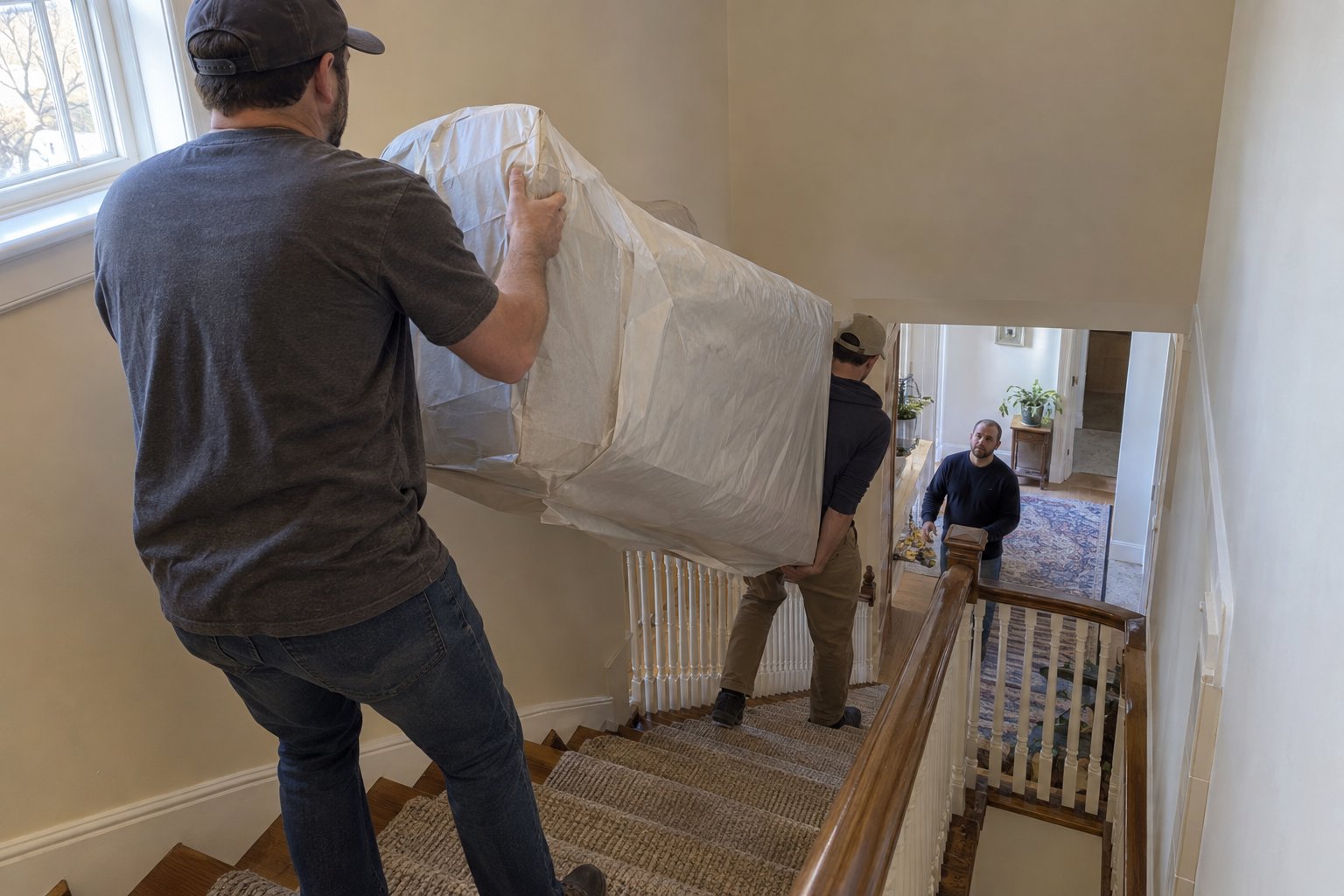
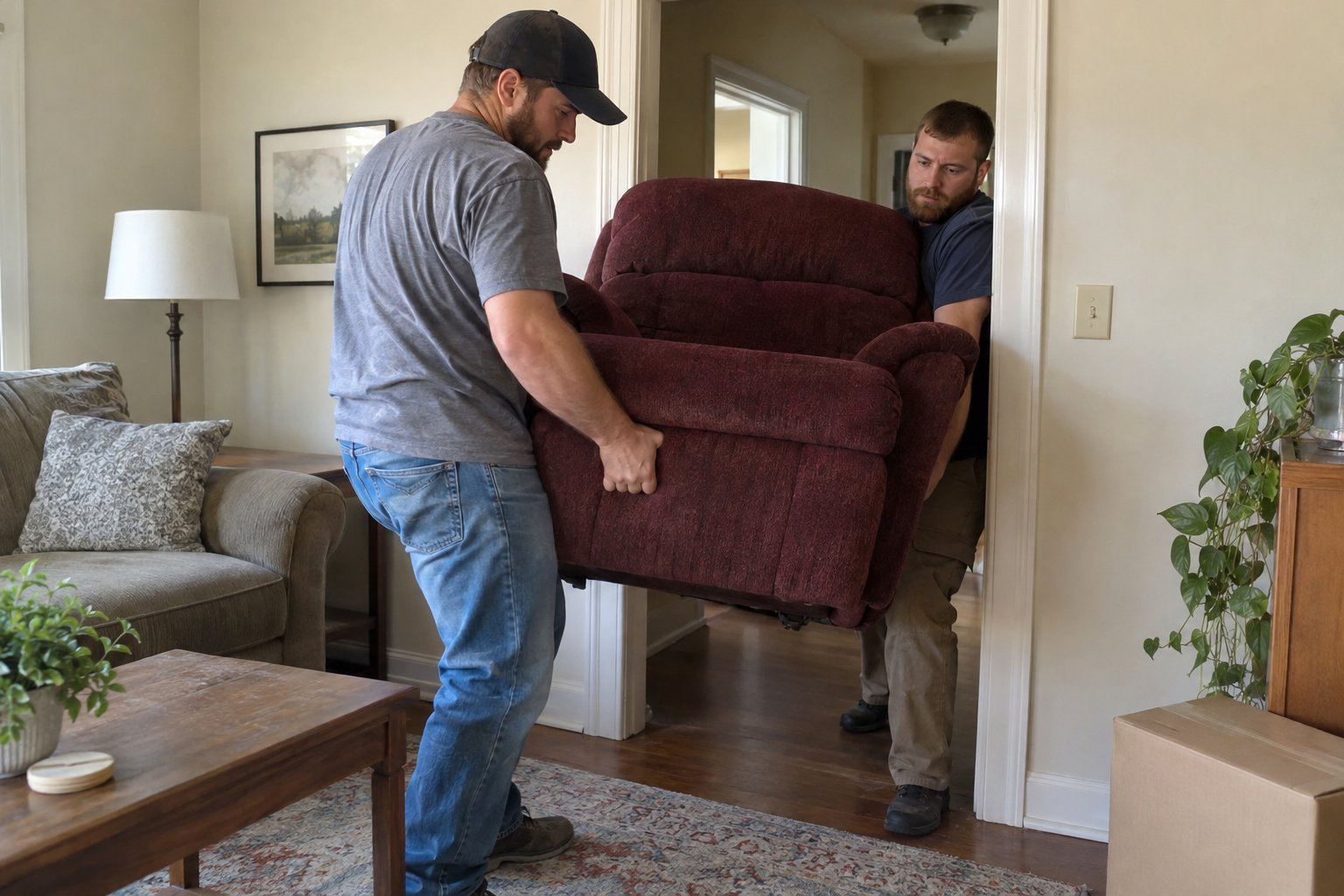
If you have a home gym, a lot of stairs, or several people in the household who can't safely lift heavy furniture, that's usually the point where a fully DIY move stops making sense. Helpers who aren't used to carrying furniture on stairs are also the most common source of injuries and gouged walls.
A fully DIY move carries more risk of both injury and property damage, because the people doing the lifting usually haven't done it enough times to have built the habits that prevent it. Scraped walls, dinged doorframes, and strained backs are common outcomes when a well-meaning group tackles a couch or a dresser without the right technique or equipment.
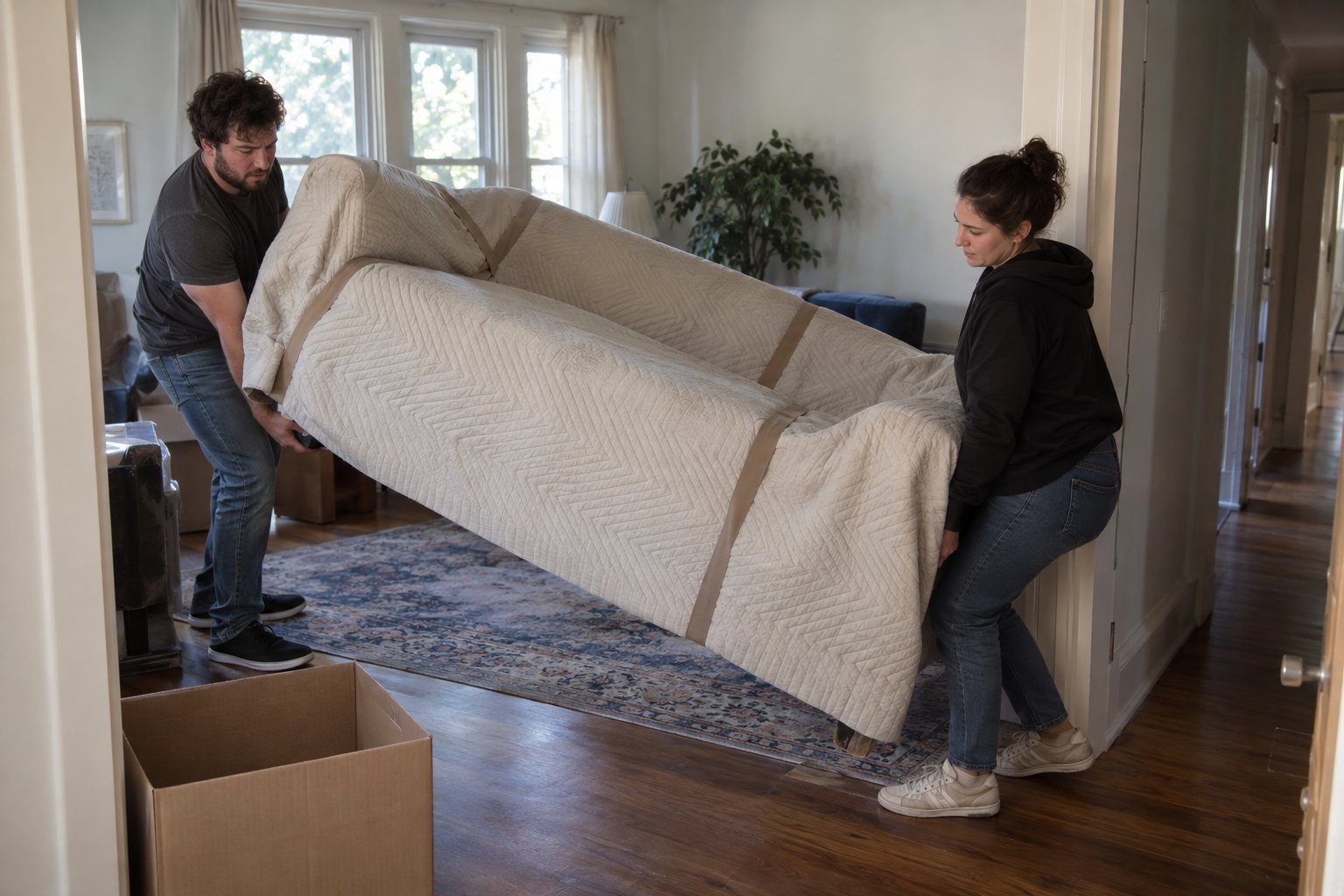
Labor-only crews reduce that risk for the loading and unloading portion specifically, since that's the part of the move where most of the heavy carrying and the tightest doorway or stairwell maneuvers happen. The risk doesn't disappear entirely (you're still packing, driving, and unpacking), but it's concentrated in the stages you control most easily.
A fully DIY move tends to suit smaller moves: a studio or small apartment, a short distance, and a household without much heavy furniture or many stairs involved. It also suits people with a reliable group of helpers and enough time to spread the work over a weekend without a hard deadline.
A DIY move with labor-only help tends to suit larger households, moves with heavy or awkward furniture, homes with stairs or long carry distances to the truck, and anyone on a tighter schedule who can't afford a full day of trial and error. It also suits people who are comfortable packing boxes themselves and handling the driving, but want the loading and unloading done quickly and without risking an injury.
For most households with more than a studio apartment's worth of belongings, bringing in labor-only help for the loading and unloading is the better fit. It keeps your costs flexible since you're still renting your own truck and controlling the schedule, while removing the single part of a DIY move most likely to cause an injury or damage your belongings. If your crew has access to a labor-only assistance service, that combination usually lands closer to the speed of a full-service move without handing over the whole project.
If you're weighing this decision against hiring movers for the entire job, truck included, it helps to look at the broader trade-offs first; our guide on DIY moving versus hiring movers walks through that comparison in more detail.
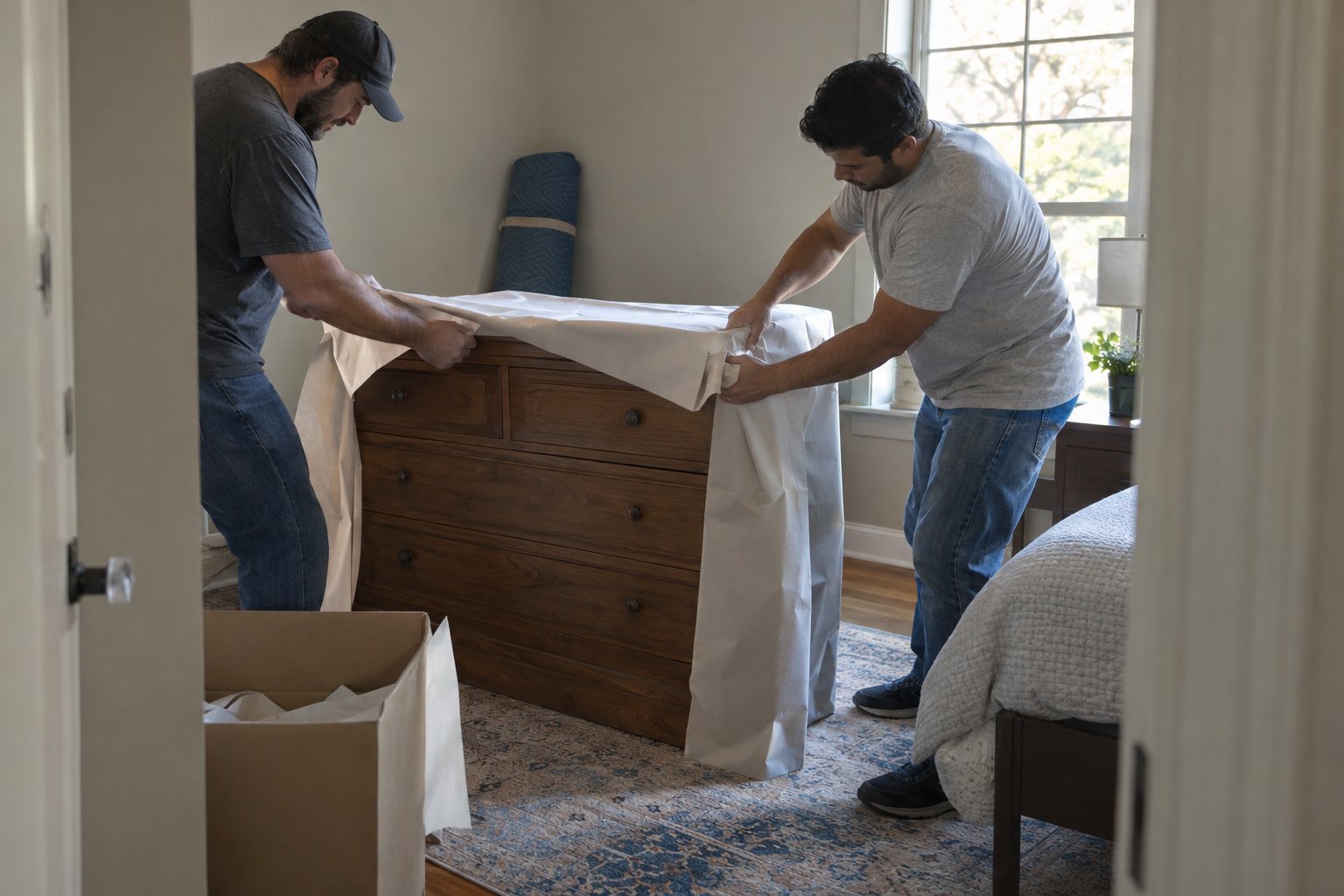
Whichever option you choose, the prep work looks similar: you still need to pack boxes, disassemble large furniture, and have a plan for protecting floors and doorways. If you're bringing in labor-only help, giving the crew a rundown of what's going where (and flagging anything especially heavy or fragile) before they arrive makes the loading faster and safer. Our guide to preparing for movers covers what to have ready before any crew, labor-only or full-service, shows up.
It's also worth checking your new address is on file with the people who need it regardless of which option you pick. The USPS change of address process (filed directly with USPS) takes care of mail forwarding no matter who loads the truck.
Start by counting the heavy items: furniture that takes two or more people, appliances, anything that has to go up or down stairs. If that list is short and your distance is short too, a fully DIY move with a few helpers is reasonable. If that list is long, or you're working around a tight schedule, bringing in labor-only help for just the loading and unloading closes most of the gap without requiring a full-service move.
Many people moving between Aiken, SC and Augusta, GA land on the hybrid option once they factor in stairs, distance to the truck, or a move-out deadline tied to a lease. It's worth getting a written estimate for labor-only help before you commit either way, since that number tells you exactly what you're trading for the reduced physical risk.
Planning your move? Request a quote from Hustle and Muscle Moving.
Yes. Labor-only crews are set up to come in after you've packed your boxes and handle the loading, carrying, and placement in the truck, then meet you at the new address to unload. You just need the boxes and furniture ready to go when they arrive.
It depends on the piece and the crew, so it's worth confirming ahead of time. Beds and large tables are commonly disassembled as part of the service, but telling the crew in advance what needs to come apart helps them plan the loading order.
It depends on how much heavy furniture you have and how many stairs are involved, but a general rule of thumb is one helper per major piece of furniture plus one or two more for boxes and awkward items. Homes with a lot of stairs or long carry distances typically need more hands than a single-story home with a short walk to the truck.
Let them know about any stairs, narrow hallways, or particularly heavy items like a dresser or a large sofa, and point out anything fragile that needs extra care. Giving them a quick walkthrough of the home before they start loading helps them plan the order and move faster.
It can be, as long as you or a driver you hire are handling the truck itself. Many households rent a truck for a long-distance move and bring in labor-only help at both ends, loading at the old home and unloading at the new one, while handling the driving themselves.
Whether it’s a full home move or just a few heavy items, Hustle and Muscle Moving is ready to help you sort it out.