.webp)
Written by:
Pierce J.
Published:
August 21, 2026
Stuck couch in a stairwell? Learn how to measure, angle, and maneuver a sofa through narrow doorways and tight turns without wall or furniture damage.
Moving a couch through tight stairwells usually comes down to angles, not muscle. Most sofas that seem physically impossible to move actually fit through the space when you tilt them on the correct diagonal, pull the right cushions and doors out of the way first, and use a second person to pivot rather than push. Before you call it a lost cause and start looking at window removal, there is almost always a combination of angles you haven't tried yet.
This is the scenario that trips up more people than any oversized piece of furniture: a perfectly normal couch that will not clear a stairwell landing, a 90-degree turn at the top of the stairs, or a doorway that looked wide enough until the couch got stuck sideways in it. Here is how to actually get it through instead of forcing it, scraping the walls, or giving up and buying a new couch for the upstairs.
A couch usually gets stuck not because it's too wide for the doorway, but because the stairwell doesn't give it room to rotate into the right angle before reaching the door. The width of the couch itself is rarely the real problem. The real problem is the diagonal clearance, meaning how much space exists to tilt and turn the piece as it changes direction.
A straight hallway with a door at the end is easy. A stairwell with a landing, a switchback, or a door positioned right at the top of the stairs removes your ability to angle the couch before you need to feed it through the opening. That's why couches that move fine through a garage or patio door get wedged the moment stairs are involved.
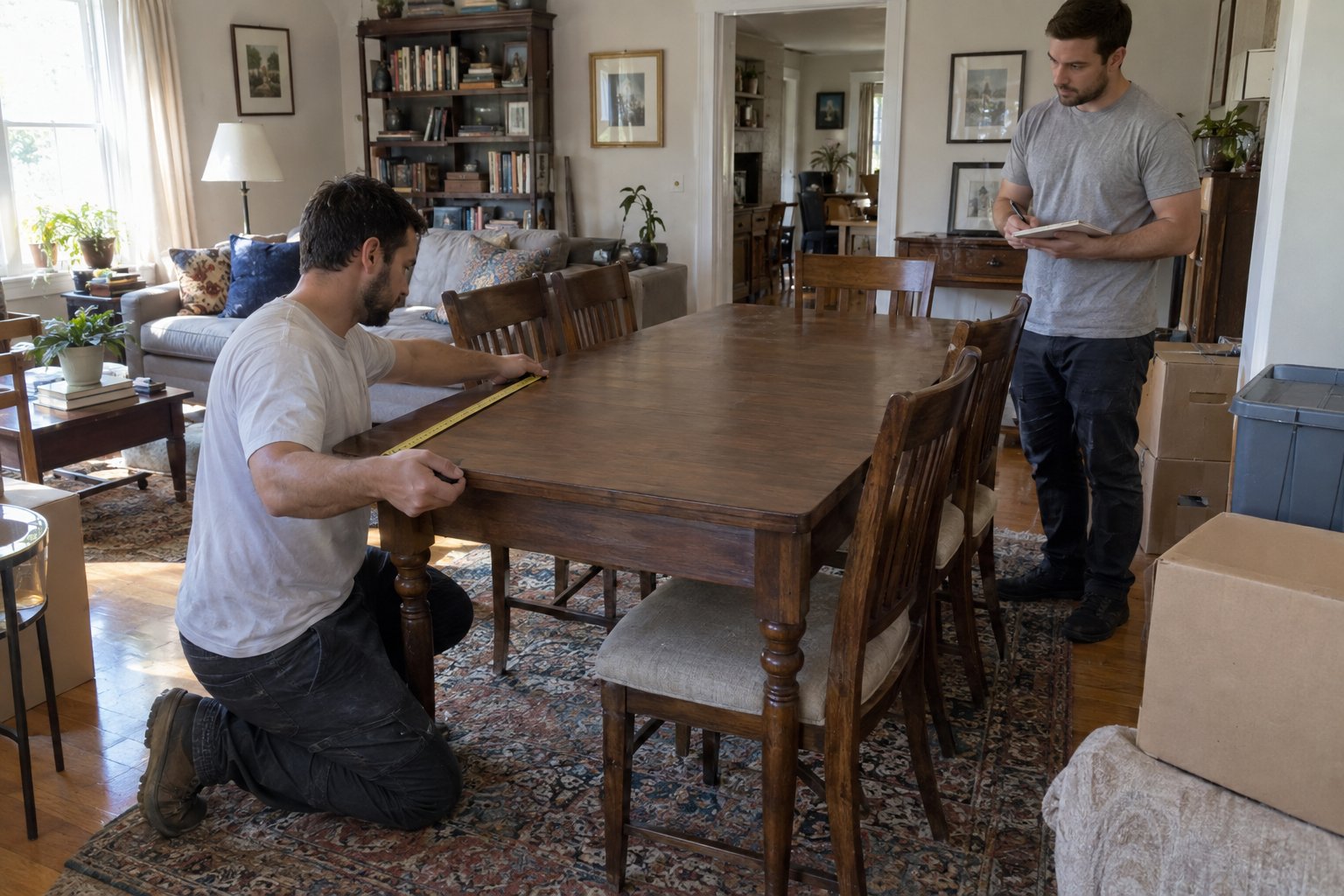
Measure the couch's height, depth, and diagonal distance from one top corner to the opposite bottom corner, then measure the doorway width, ceiling height at the stairwell turn, and the width of the landing. If the couch's diagonal measurement is smaller than the tightest doorway width, it will physically fit through at some angle, even if it doesn't look like it will.
Take these measurements before moving day, not while the couch is already stuck halfway up the stairs:
If the numbers are close, plan on removing doors and hardware ahead of time rather than discovering the problem mid-carry.
Take the doors off their hinges, remove any removable legs or arms from the couch, and pull the couch cushions out completely before you start. Each of these can add two to four inches of usable clearance, which is often the exact margin that separates a stuck couch from one that slides through.
A standard interior door adds surprisingly little clearance just by being open. Lifting it off the hinge pins with a hammer and flathead screwdriver takes a few minutes and removes the door frame's depth entirely, which matters most on a couch angled through a tight turn.
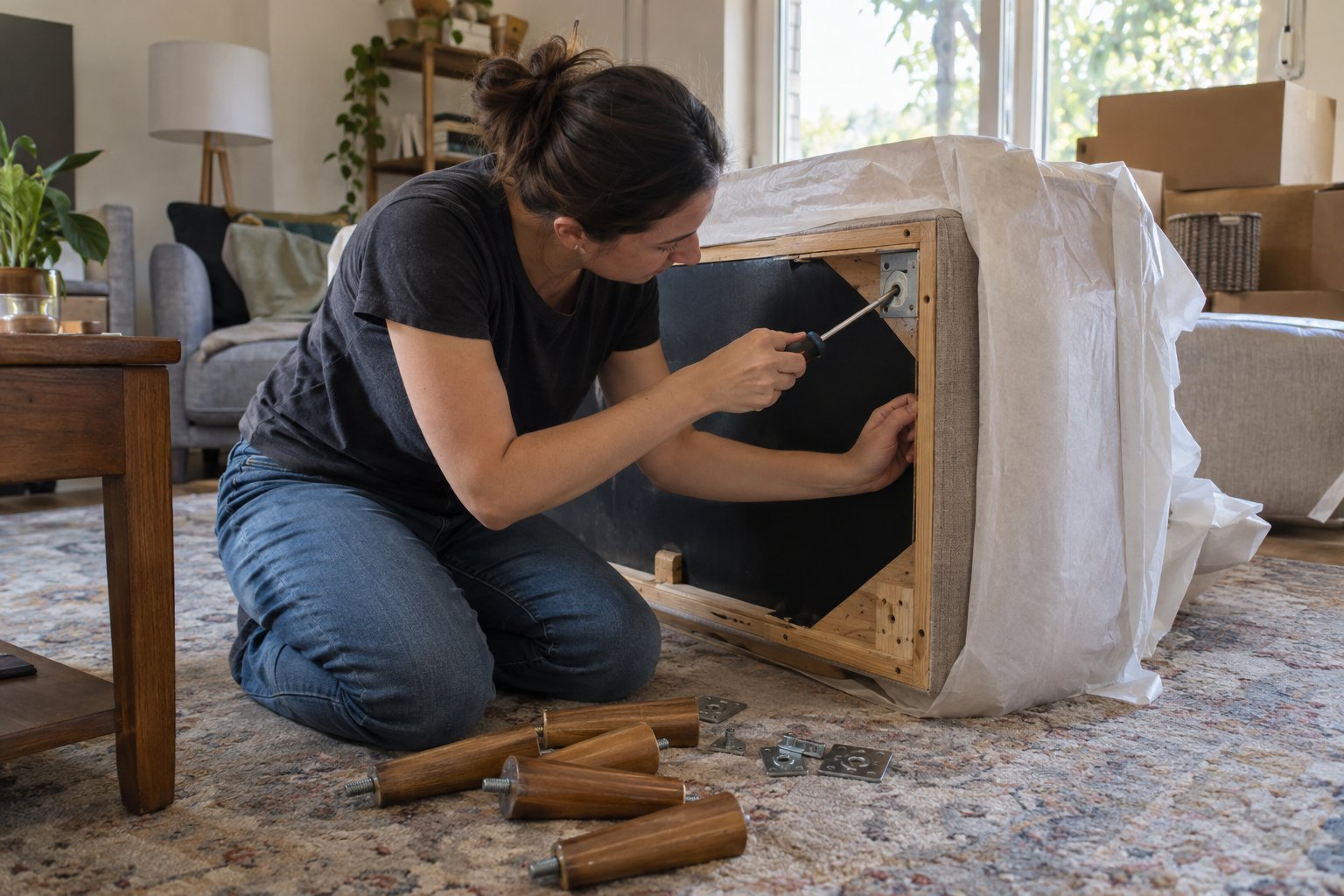
Many sofas have legs that unscrew and some sectionals separate into individual pieces at the seams. Check the underside and back panel for connector bolts before assuming the couch is one solid unit. Moving a sectional in sections is almost always easier than fighting one giant piece around a landing.
Cushions add bulk without adding structural rigidity, so there's no reason to fight them through a doorway attached to the frame. Pull them off, carry them separately, and you'll immediately gain clearance on the frame itself.
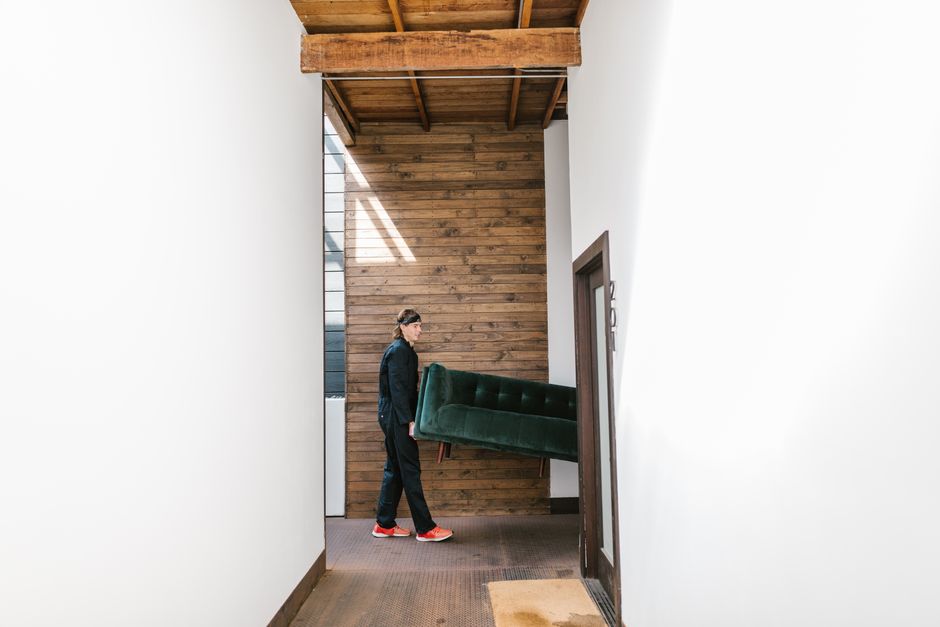
Tilt the couch onto one arm, angle the top corner toward the ceiling of the taller side of the space, and walk it through in a diagonal line rather than trying to keep it level. This "high-low" carry, one end near the ceiling and the other near the floor, uses the full diagonal of the opening instead of just its width.
On stairs specifically, the bottom person should support most of the weight from below while the top person guides the angle rather than pulling. Trying to horse a couch around a landing by pure force is how walls, banisters, and door frames get damaged. A slow, controlled pivot with someone calling out the angle adjustments works far better than speed.
If the couch still won't clear after trying both diagonal directions (tilted toward the wall and tilted away from it), stop and reassess rather than forcing it. At that point it's worth checking whether the couch separates into smaller sections, or whether it genuinely needs to go through a window or exterior opening instead.
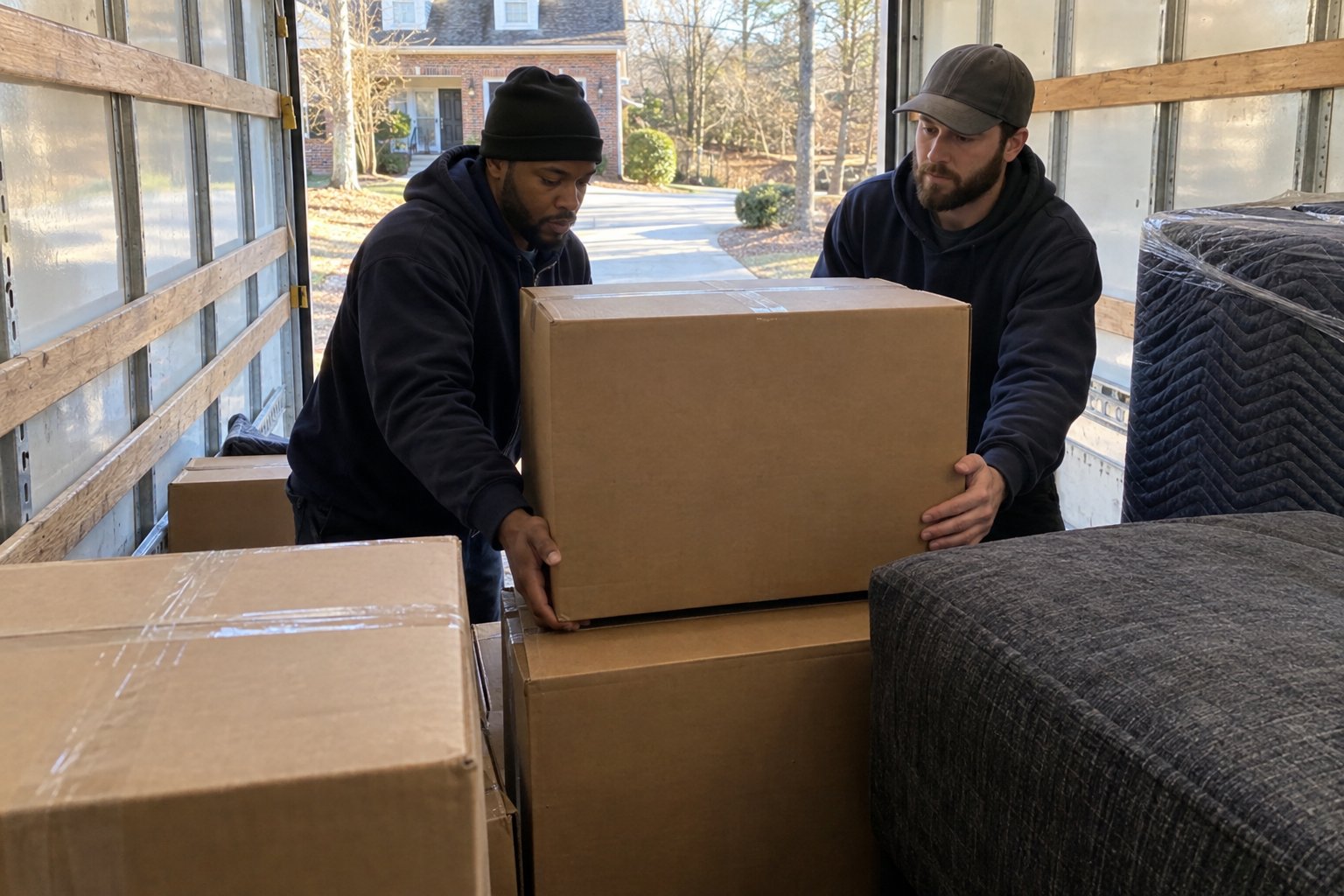
Call in professional movers when the couch has already scraped a wall or gotten stuck once, when the stairwell has a turn tighter than 90 degrees, or when you're moving a heavy sectional alone without a second set of hands. A crew that moves furniture through tight spaces regularly has seen this exact stairwell problem before and can usually spot the right angle faster than a few hours of trial and error.
There's also a real cost to getting this wrong. A gouged wall, a cracked banister, or a couch frame that gets forced and splits at a joint often costs more to fix than hiring help would have in the first place. If you're already unsure the couch will make the turn, that uncertainty is worth outsourcing. Our team handles this kind of tight-space maneuvering as part of our local and long distance moving service, and we also offer labor-only assistance if you just need extra hands and expertise for one difficult piece rather than a full move.
If the couch's diagonal measurement is larger than every doorway and window opening in the space, it won't fit as one piece no matter the angle, and your remaining options are disassembly, a window or balcony removal with rigging equipment, or replacing the piece once it's inside. This is uncommon but does happen with oversized sectionals and large upholstered pieces moved into older homes with narrow stairwells.
Before assuming this is your situation, double check every measurement and confirm the couch doesn't have a hidden disassembly point at the seams or legs. Sectionals in particular are frequently mistaken for one solid piece when they're actually bolted sections. If you've already looked into hardware options and space is still too tight for a standard sofa, a similar clearance problem comes up with oversized sectionals, and our guide on sectional sofa moving costs covers what to expect when a piece needs to be broken down and reassembled on-site.
Getting a couch through a tight stairwell is rarely about strength. It's about clearance, angle, and knowing which parts of the doorway or stairwell are actually flexible. Measure first, remove what you can, and work the diagonal before assuming the piece won't fit. If it still won't budge safely, a crew that does this daily can usually solve it in minutes instead of hours. You can get a moving quote if you'd rather hand off the tight-space guesswork entirely.
Yes, removing a door from its hinges is one of the fastest ways to gain clearance in a tight stairwell or hallway. Use a hammer and flathead screwdriver to tap the hinge pins upward and out, then lift the door away. This removes the door's thickness and frame depth entirely, which can add a few extra inches exactly where you need them.
Tilt the couch onto one arm so one end points toward the ceiling and the other stays low near the floor, then walk it through on that diagonal rather than keeping it level. This uses the full diagonal measurement of the opening instead of just its width, which is usually the difference between a couch that fits and one that gets stuck.
Measure the couch's diagonal corner-to-corner distance and compare it to the tightest width in your stairwell, including any landing or turn. If the diagonal measurement is smaller than the narrowest point, the couch will fit through at some angle even if it looks too large at first glance.
Most sectionals are built from separate sections joined with connector bolts or brackets, often hidden along the back panel or underside. Check for these before assuming the piece is one solid unit, since moving a sectional in individual sections is almost always easier through a tight stairwell than moving it whole.
If the stairwell has a turn tighter than 90 degrees or the couch has already scraped a wall or gotten stuck, hiring help for that one piece is often worth it. A gouged wall or a cracked frame from forcing a stuck couch usually costs more to repair than paying for an hour or two of professional labor.
Whether it’s a full home move or just a few heavy items, Hustle and Muscle Moving is ready to help you sort it out.