Written by:
Pierce J.
Published:
November 18, 2026
A practical moving day supply checklist covering tools, protective materials, and personal essentials to set out before loading starts.
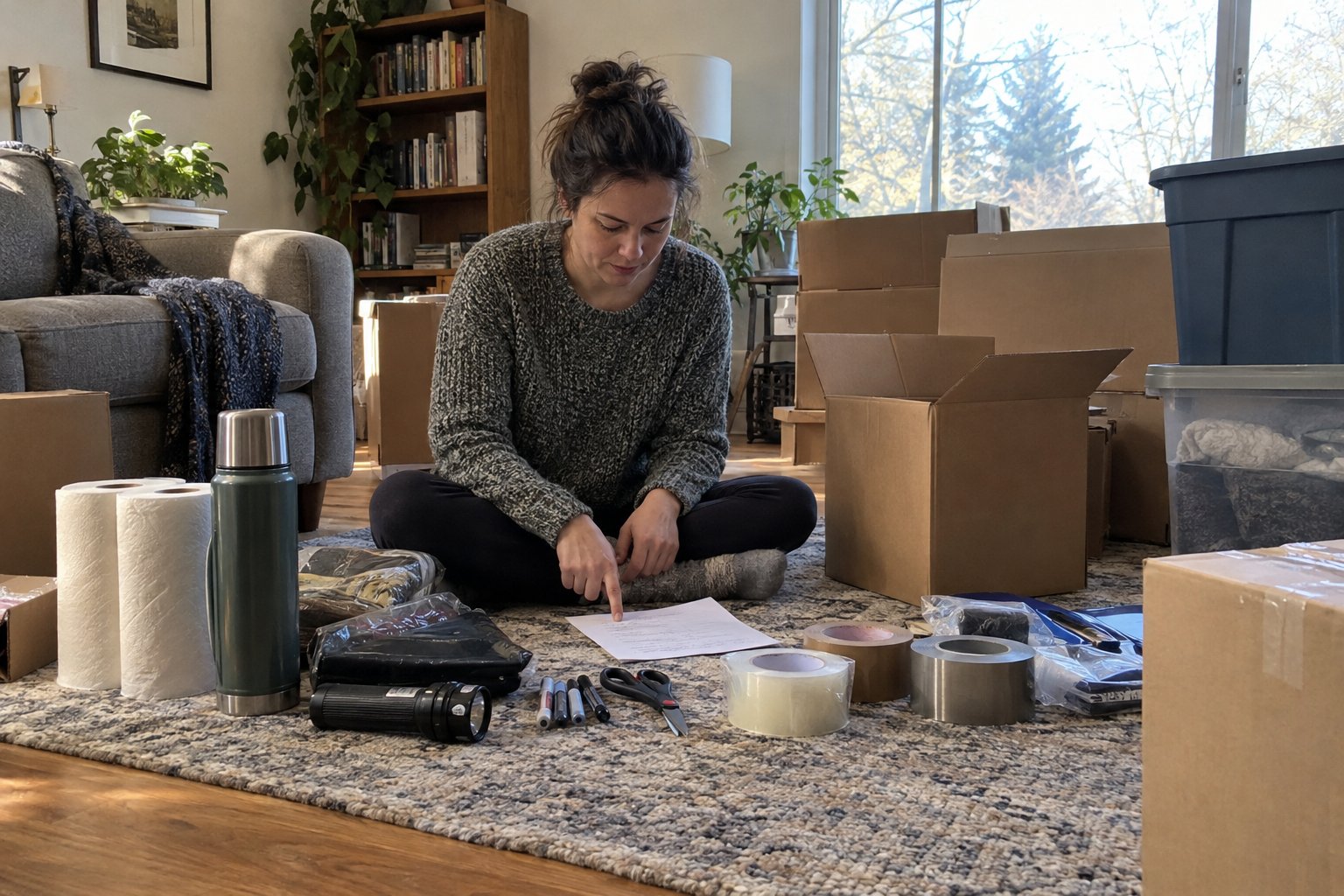
A moving day supply checklist is the short list of tools, protective materials, and personal items you set aside before anyone starts carrying boxes. It is different from your packing list: this is what stays out of the truck and within arm's reach for the hours between the first box and the last. Miss an item on this list and you are the one running to a store mid-move while a crew waits in the driveway.
Most of what belongs here falls into four groups: things that protect your home, things that protect your belongings, things that keep people fed and hydrated, and the paperwork or small essentials you'd regret packing into a box labeled "misc." Here is how to build the list so nothing gets left behind on the one day you can't easily go back for it.
At minimum, set aside floor and doorway protection, basic tools, water and snacks, a box cutter and extra tape, and a folder with any paperwork tied to the move. These are the items people most often realize they need only after the truck is already half loaded.
Each group on the list exists to solve a specific problem that shows up during the physical work of loading and unloading, not just general tidiness. Skipping one doesn't just make the day less organized, it usually costs time or causes a scramble partway through.
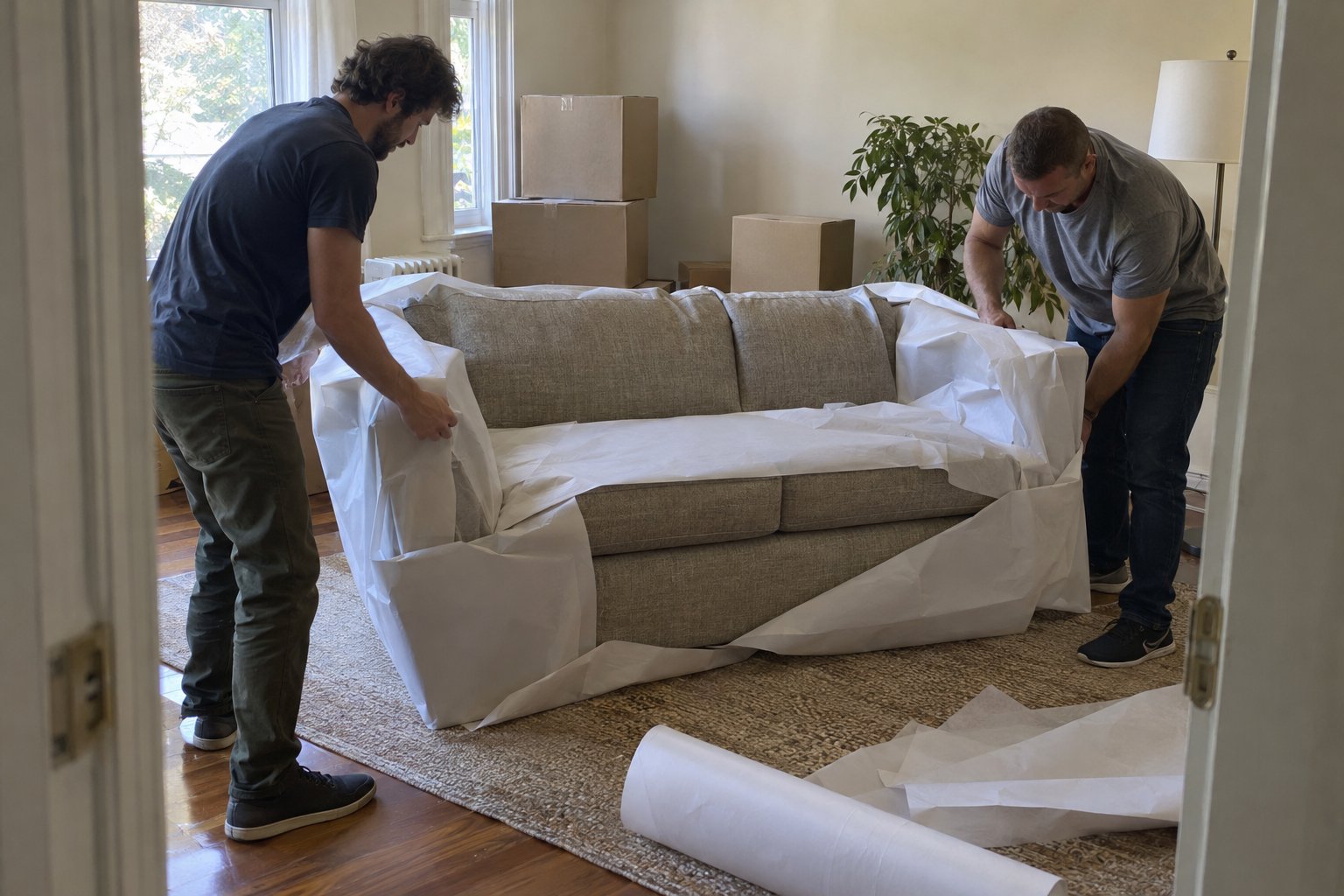
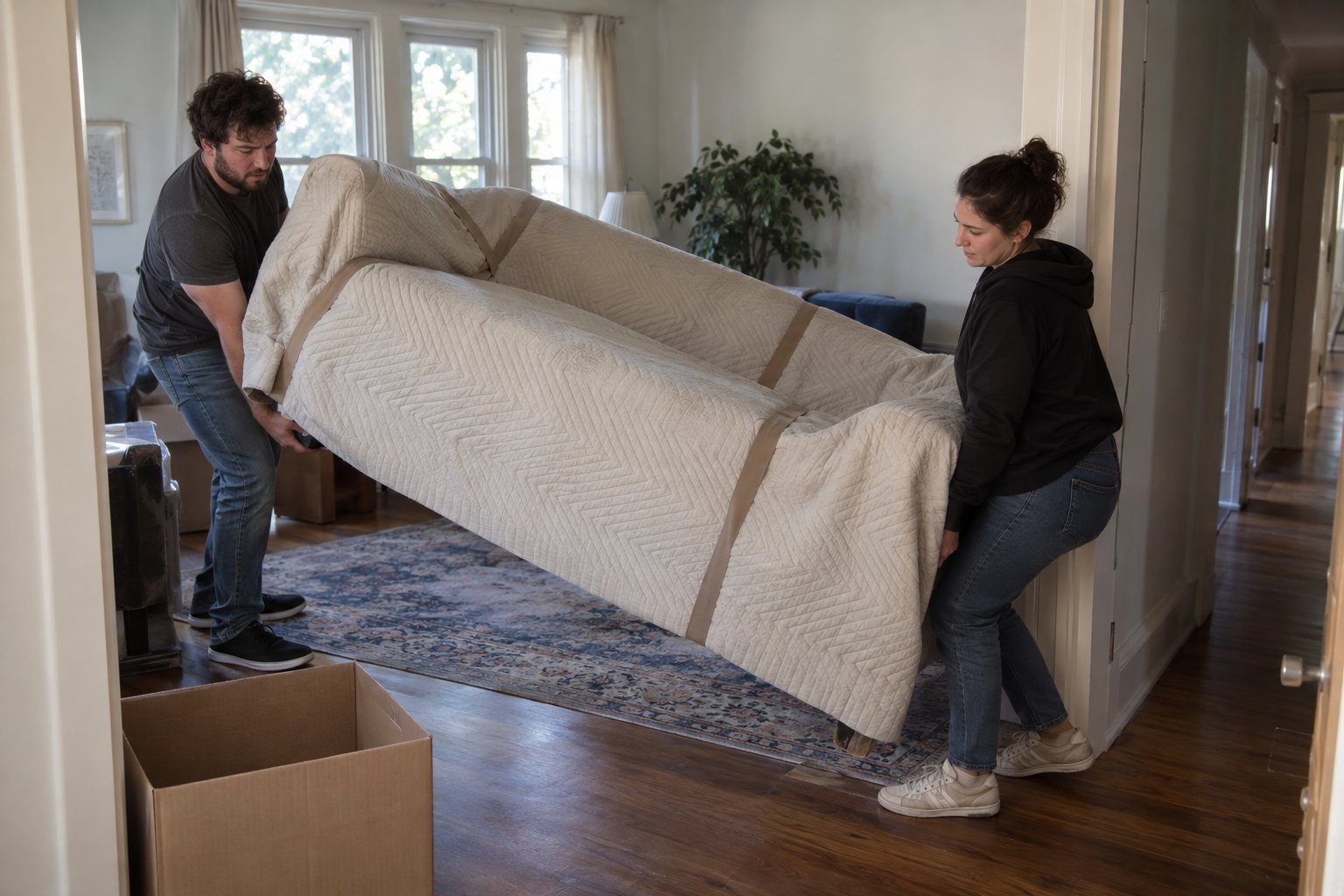
Floor and doorway protection matters because the heaviest traffic of the entire move happens in a few hours, through the same narrow path, over and over. A runner or a flattened box taped down at the door edges keeps grit and scuffed corners off your floors without slowing anyone down. Furniture pads and wrap matter for the same reason: a dresser that bumps a doorframe once is a scuff, but a dresser dragged unprotected through six doorways is a repair. If you want a deeper look at setting up that kind of protection correctly, protecting floors and walls during a move covers it in more detail.
Tools matter because moving day is when you discover a bed frame bolt is stripped or a table leg needs one more turn before it's stable in the truck. Having a kit on hand, rather than packed in a box three layers deep, means a five-minute fix stays a five-minute fix. Food, water, and a charger matter because a long physical day without them slows everyone down gradually, which is harder to notice than it sounds until the whole schedule has slipped.
On the morning itself, do a final walk-through, confirm parking is clear, and put your supply kit somewhere it won't get loaded by mistake. These three steps prevent the most common early delays.
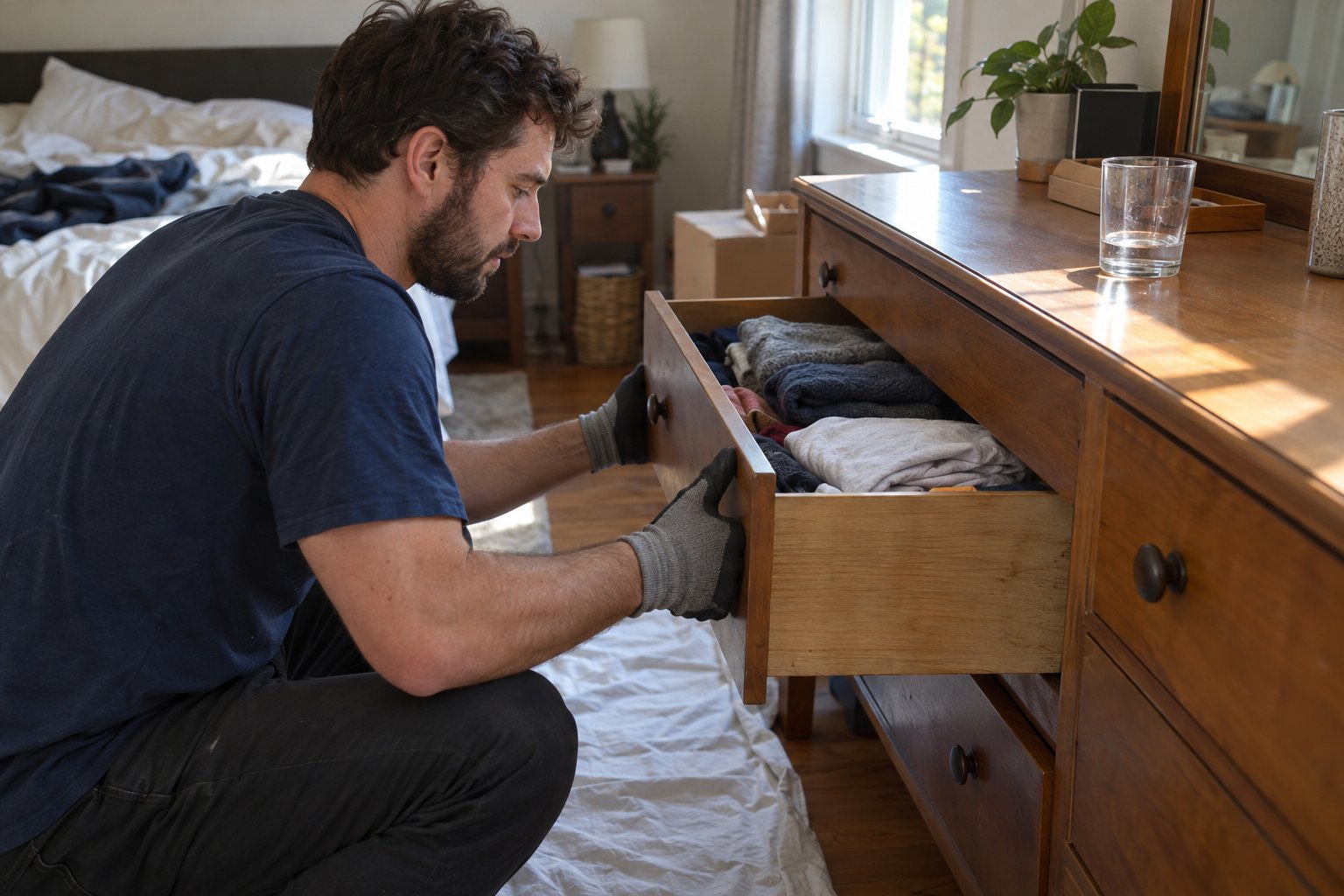
Walk every room before anyone starts carrying anything. Check that drawers you meant to empty are actually empty, that hanging items are bagged, and that anything going in your own car (medications, chargers, a change of clothes) is already set aside, not sitting in a box on the truck. Confirm the path from your door to the truck is clear of planters, hoses, toys, or parked cars, since this is also the moment to flag any tight turns or low doorways so the approach can be planned before the first heavy piece moves.
Keep your supply kit itself in one visible spot, like a single clearly marked box or a tote by the front door, so it doesn't accidentally end up loaded. Many people lose a whole morning's efficiency because their own tape and water bottles got packed first. A rough rule of thumb: plan for loading a typical three-bedroom home to take about half a day with a full crew, so pace your supply kit (snacks, charger, water) to last that long, not just the first hour.
Yes, a long-distance move adds a few items to the list because your belongings may be in transit for more than a single day. Pack a small personal bag as if you were traveling, including any medications, chargers, and a few days of clothing, separate from anything going into the truck.
Add copies of your moving paperwork, any inventory sheet, and contact information in a folder you keep with you rather than in a box. If you're coordinating a move that covers real distance, it also helps to review local and long distance moving logistics ahead of time so you know what documentation and timing to expect, and to confirm pickup and delivery windows in writing before the day arrives.
A personal bag holds anything you'd want within the first hour in a new home, separate from the general supply kit used during loading. Think toiletries, a phone charger, basic kitchen items like a coffee mug and a knife, and any documents you don't want buried in a box.
This bag travels with you, not in the truck, which matters most on days when unloading takes longer than expected or the truck arrives later than planned. If you're also updating your mailing address around the move, USPS change of address and mail forwarding can be set up ahead of time so nothing important gets delayed in the shuffle.
Build your supply kit two or three days ahead, not the night before, so a missing item still has time to be found or bought. Lay everything out in one spot, confirm the tools and protective materials match what your home's layout actually needs (stairs, narrow hallways, tight parking), and keep the kit separate from anything being loaded.
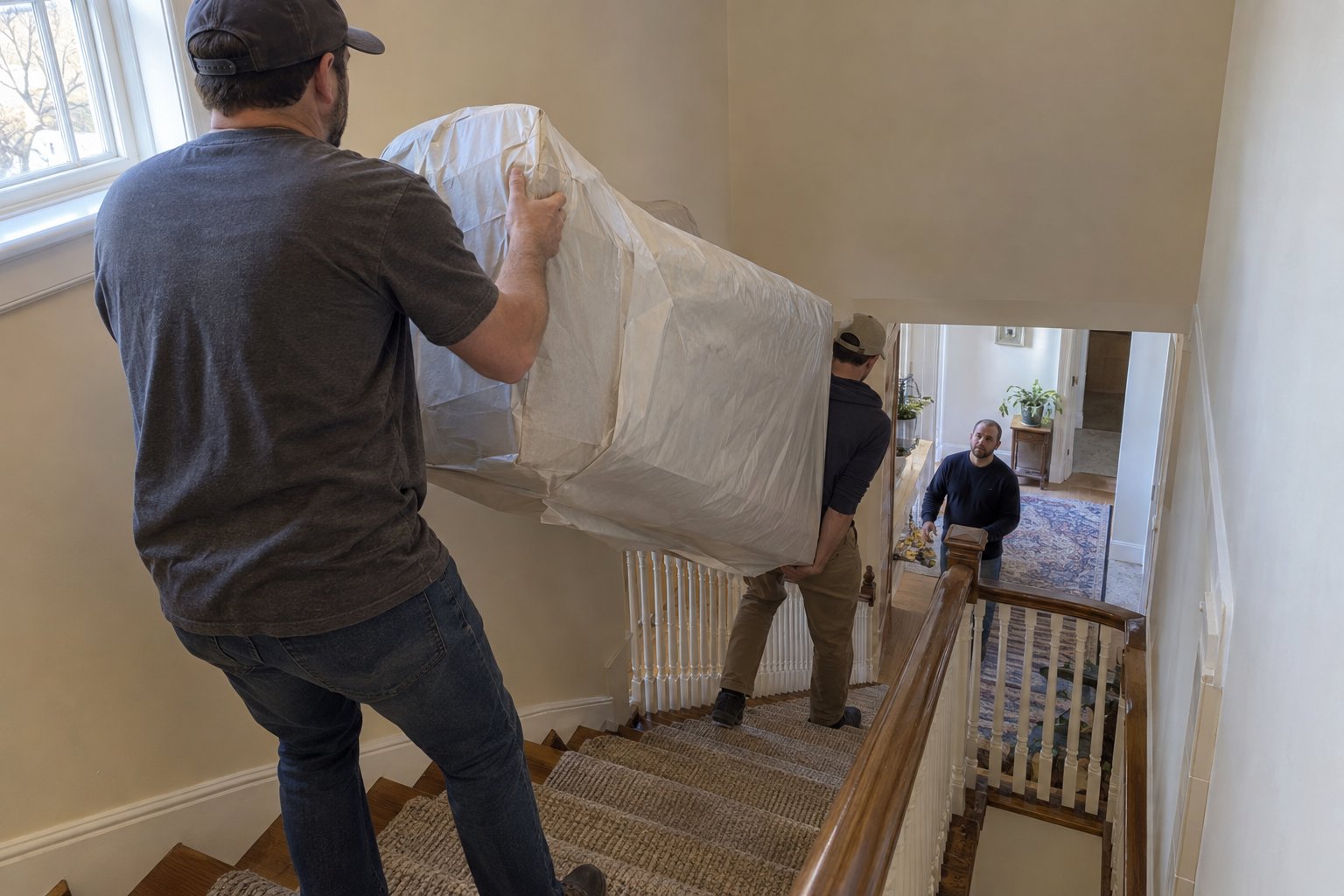
If your home has stairs or a narrow driveway, mention it when you confirm plans with your crew so the right pads and path protection are ready from the first trip. A short supply list done well removes most of the small interruptions that turn a manageable day into a long one.
Planning your move? Request a quote from Hustle and Muscle Moving.
Two to three days before the move is enough time to gather everything and still replace anything missing. Waiting until the morning of often means discovering a gap, like dead batteries in a charger, with no time to fix it.
Keep them together in one clearly labeled box or tote rather than loose, and set that container somewhere it will not get loaded onto the truck by mistake, such as a bathroom or car trunk.
One central kit is usually enough for most homes. Larger homes with multiple floors may benefit from a small secondary kit (tape, marker, trash bags) kept on another level so nobody has to go up and down stairs for small items.
Mention anything that affects the path they'll use: stairs, narrow doorways, tight parking, or a driveway that limits where a truck can park. Flagging this before the first item moves lets the crew plan the route instead of adjusting mid-carry.
Yes, they serve different purposes. The supply kit supports the physical work of loading, while a personal bag holds what you need for yourself, like medication, a charger, and a change of clothes, and should travel with you rather than in the truck.
Whether it’s a full home move or just a few heavy items, Hustle and Muscle Moving is ready to help you sort it out.