.webp)
Written by:
Pierce J.
Published:
August 28, 2026
Learn how to protect floors, walls, and doorframes before and during a move so heavy furniture doesn't leave scuffs, dents, or gouges behind.
Protecting floors and walls during a move means laying down runners or ram board over hard flooring, wrapping doorframes and stair corners with foam or cardboard edging, and clearing tight turns before furniture ever leaves the room. Most of the dents, scuffs, and gouges that show up after moving day happen at predictable choke points: doorways, stairwells, and the first few feet of hallway leading outside. Covering those spots ahead of time takes an hour and saves a security deposit or a repaint.
This is a different problem than protecting the furniture itself. You can wrap a dresser in every blanket you own and still gouge a hardwood floor if nobody thought about what's underneath it. This guide covers the property side: what to put down, what to wrap, and where the damage actually happens so you can get ahead of it before the truck arrives.
Almost all of it comes from three things: dragging instead of lifting, pivoting furniture around a corner without enough clearance, and dolly wheels rolling over unprotected hardwood or vinyl. It is rarely one dramatic drop. It is usually a slow accumulation of small scrapes.
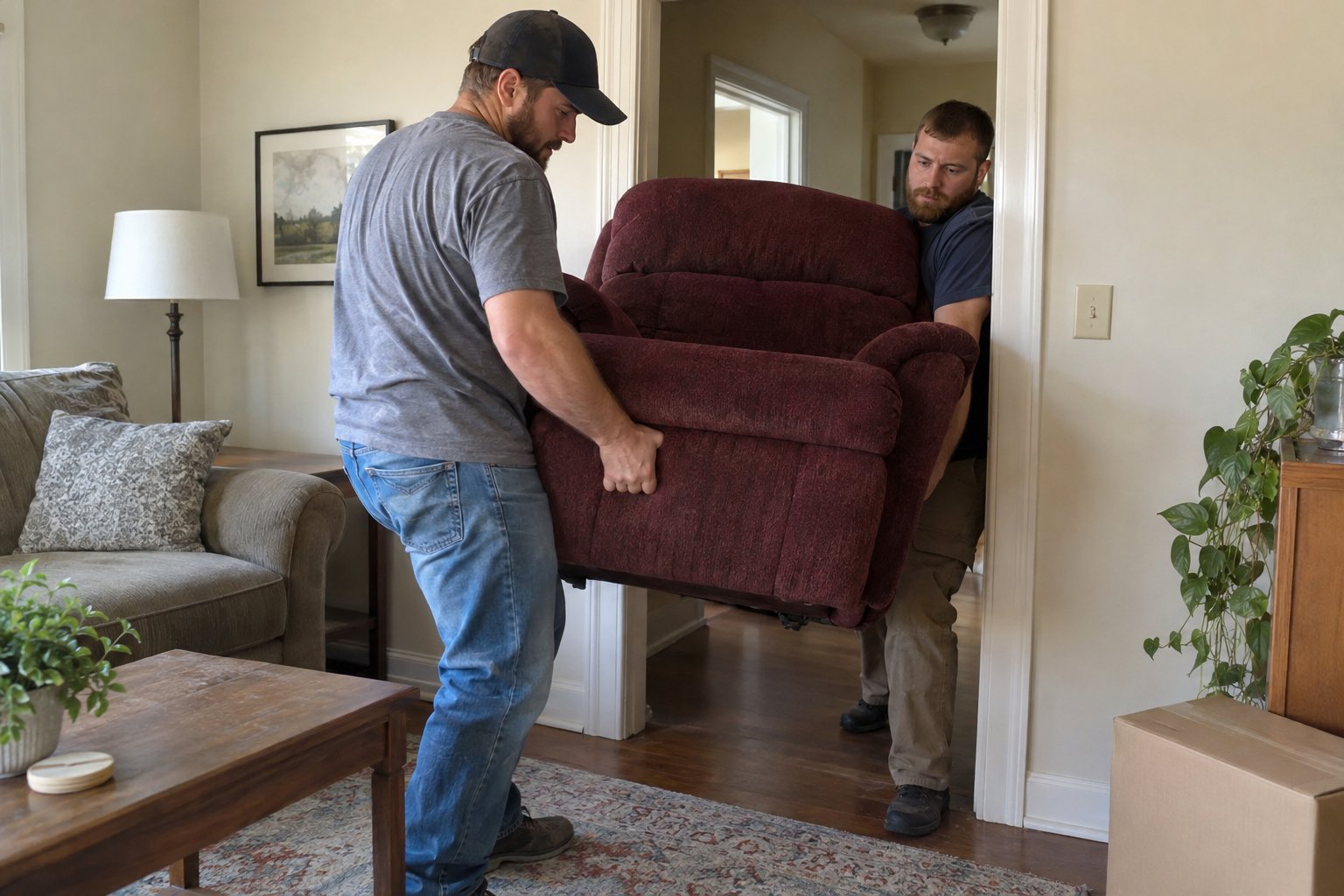
Door frames and stairwell corners take the worst of it because every large item has to pass through the same narrow opening. If you watch a crew move a full house, you'll notice the same three or four spots get grazed over and over: the front door threshold, the turn at the top of the stairs, and whatever hallway leads to the truck. Those are the spots worth protecting first if you're short on time or materials.
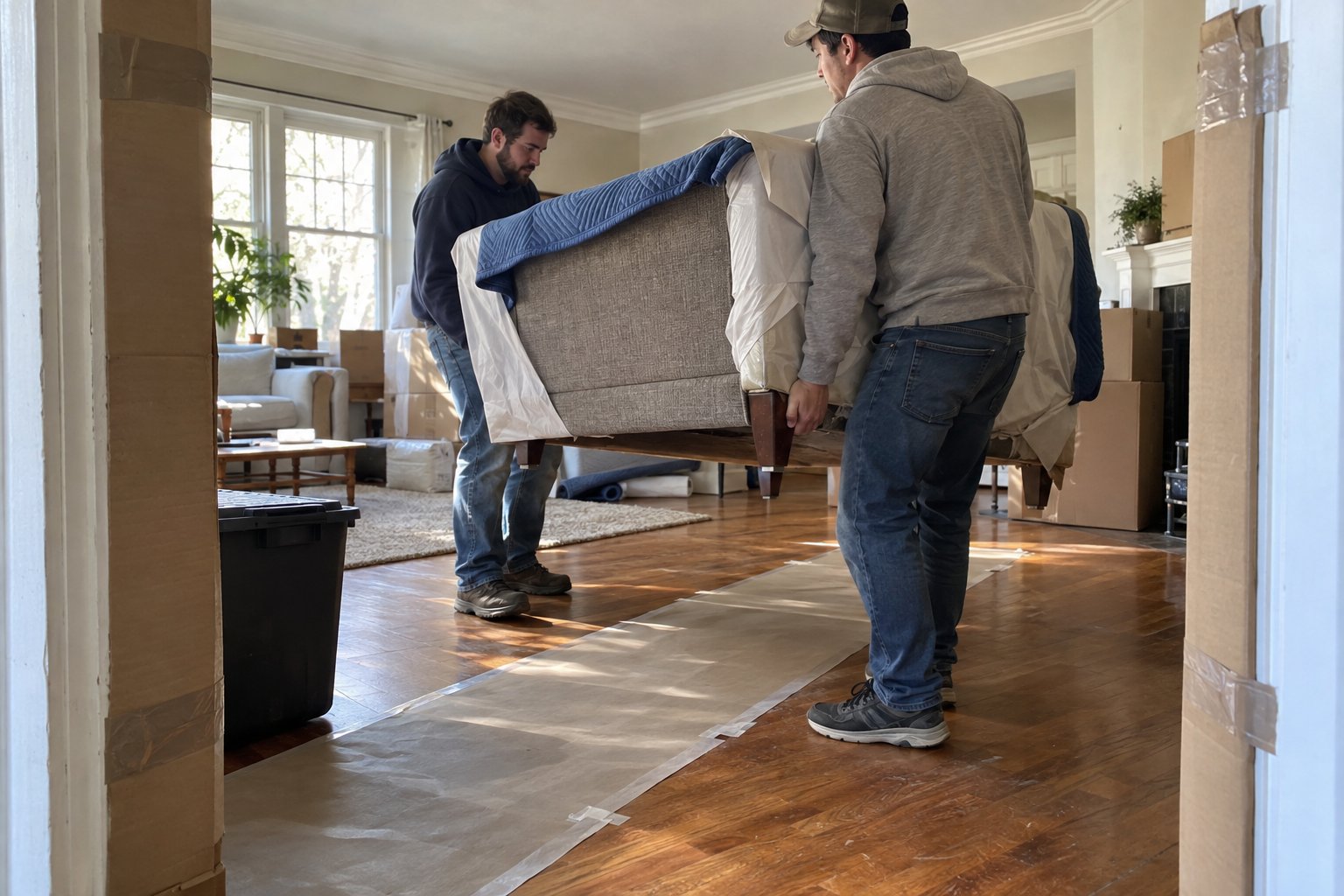
Lay down floor runners, ram board, or thick moving blankets along the entire path furniture will travel, from the room it's leaving to the door it's exiting through. Tape the seams down so they don't slide underfoot and become a trip hazard.
Ram board (a heavy cardboard-and-poly floor covering sold at most hardware and moving supply stores) is worth the cost on hardwood, engineered wood, or tile, especially if you're moving in wet or muddy weather. Rosin paper and standard moving blankets work fine for carpet and short distances. Whatever you use, cover corners and thresholds especially well since that's where dolly wheels tend to catch and skid. If you're using a hand truck or appliance dolly, check the wheels for embedded grit before you start; a single pebble under a wheel can carve a groove into a hardwood floor in seconds.
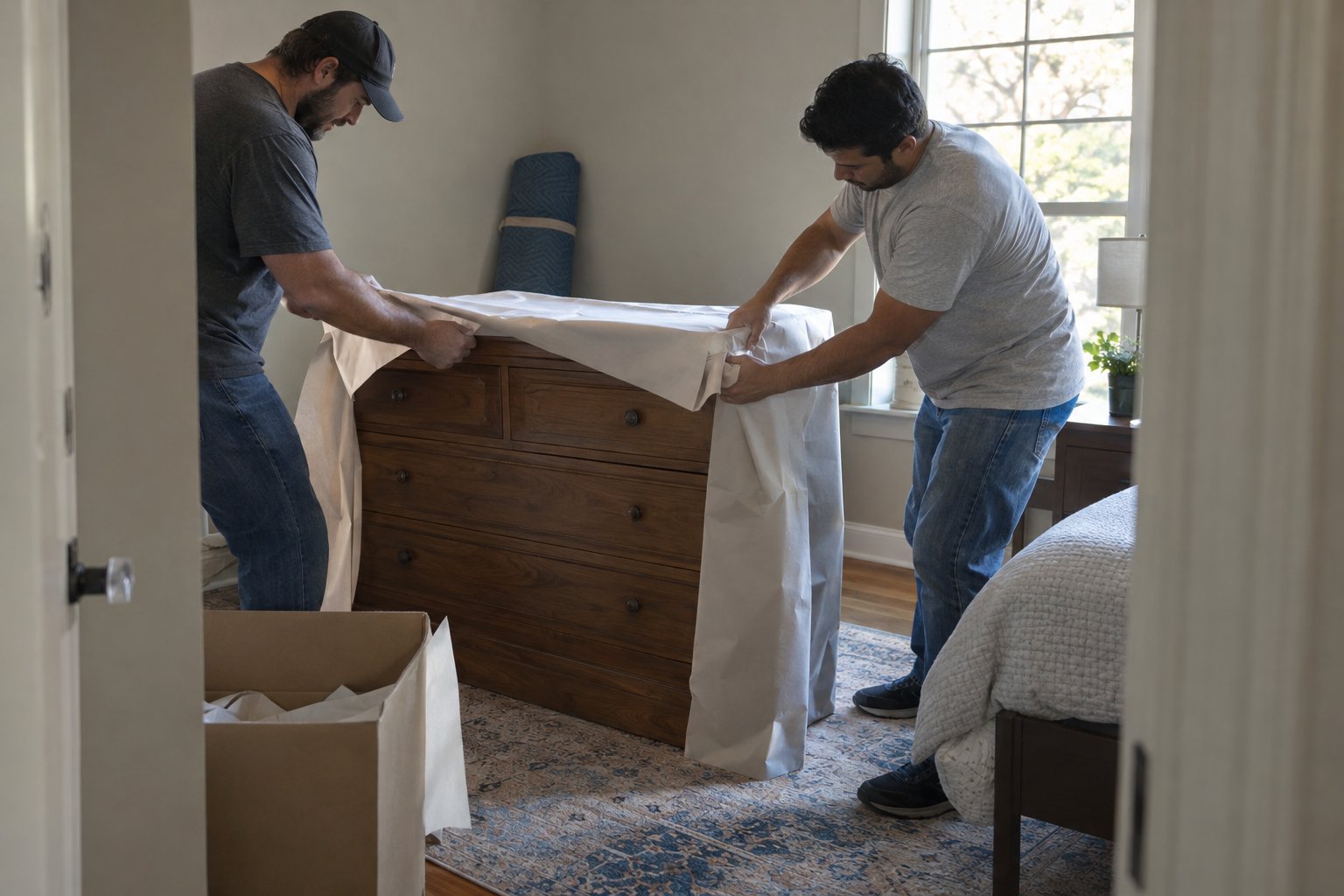
Wrap exposed corners, doorframes, and stair railings with foam pipe insulation, cardboard corner guards, or moving blankets secured with painter's tape before any furniture moves through them. These spots take constant contact from shoulders, dolly handles, and furniture edges, and painter's tape (never packing tape) won't strip paint when you pull it off.
Pay extra attention to freshly painted walls, textured or plaster surfaces, and light switch plates near doorways; those crack or scuff easily and are easy to miss when everyone is focused on the furniture. It also helps to remove anything hanging near the path (mirrors, art, shelf brackets) rather than trusting a crew to squeeze past them with a couch on their shoulders.
Yes. Measuring the width of every doorway, stairwell landing, and hallway turn the furniture has to pass through tells you in advance whether something needs to be tilted, disassembled, or routed a different way, instead of discovering it mid-carry with a couch wedged sideways. A tape measure and five minutes per doorway is the cheapest insurance you can buy.
Compare those measurements against your largest pieces (sofas, mattresses, dressers) before the crew arrives. If a couch is genuinely tight on the diagonal, it's worth deciding ahead of time whether you'll remove cushions and doors first, since fumbling with that decision mid-move is when walls get hit.
Treat the new place exactly like the old one: runners down before anything comes off the truck, corners wrapped, and a clear path from the driveway or loading zone to each room. New homes get overlooked because nobody has "damaged" it yet, but a scraped baseboard on day one is just as real as one at the old address.
If the new home has finishes you haven't lived with yet, like fresh refinished hardwood, new carpet, or a recently painted stairwell, protect those areas even more conservatively than you would your own worn floors. There's no track record yet to tell you how forgiving the finish is.
Experienced moving crews typically bring their own floor runners, door jamb protectors, and furniture pads as standard practice, and they've usually already identified the tight spots in a given layout before a homeowner has. That built-in protection is one of the practical arguments for professional labor over a DIY move with borrowed trucks and friends.
If you're weighing that decision, it helps to know roughly how many people you'll need on the crew to move efficiently and safely, since an undersized team is more likely to rush a tight turn and clip a wall. Our guide to crew sizing breaks down how home size and load affect that number. For moves with a lot of bulky furniture and narrow access points, labor-only assistance can also cover just the loading and carrying, so you get trained hands on the heaviest, most damage-prone parts of the day without booking a full-service move.
Floor and wall damage during a move is almost always preventable, and prevention is cheaper and faster than repair. Cover the path before you start, wrap the corners that take the most contact, measure the tight spots in advance, and apply the same care at the new home that you would at the old one.
If your move involves a lot of narrow hallways, stairwells, or oversized furniture, it's worth reading our guide on how to move furniture without damaging your floors, walls, or back for techniques on lifting and carrying the pieces themselves, since protecting the property and protecting the furniture are two halves of the same job. When you're ready to book help, you can get a moving quote from a crew that already knows where the damage tends to happen.
Ram board or a similar heavy cardboard-and-poly floor covering is the most durable option for hardwood, especially in wet weather. Rosin paper or thick moving blankets work fine for shorter distances or carpeted areas.
Check the dolly wheels for embedded grit or debris before each trip, and lay a protective runner along the entire path the dolly will travel. A single trapped pebble under a wheel can gouge hardwood in one pass.
Most established moving crews bring floor runners, door jamb guards, and furniture pads as standard equipment. It's worth confirming this when you book, since not every crew includes it automatically.
Wrap exposed corners and doorframes with foam padding or moving blankets secured with painter's tape, which won't pull paint off when removed. Avoid packing tape directly on painted surfaces.
Both. New homes get overlooked because there's no prior damage to compare against, but fresh paint, new carpet, or refinished hardwood at a new address can scuff just as easily as older surfaces.
Whether it’s a full home move or just a few heavy items, Hustle and Muscle Moving is ready to help you sort it out.