.webp)
Written by:
Pierce J.
Published:
August 12, 2026
Learn how to move a fish tank without stressing your fish, cracking the glass, or spilling gallons of water on moving day. A practical, step-by-step approach.
If you are wondering how to move a fish tank without losing your fish or your security deposit, the short answer is this: never move a tank with water and fish inside at the same time. The tank gets drained down to a couple of inches, the fish travel separately in sealed bags or buckets with an air gap, and the glass gets supported evenly the entire way, because an empty aquarium is far more fragile than a full one. Skip any of those steps and you risk a cracked seam, a stressed or dead fish, or a soaked moving truck.
Aquariums are one of the most misunderstood items on a moving day checklist. People assume that because the tank looks solid, it can be carried, tilted, or set down like a piece of furniture. It cannot. A full 55-gallon tank weighs close to 500 pounds and the silicone seams are not designed to flex under that kind of shifting weight once it is off its stand. This guide walks through what to do in the days before the move, how to handle the fish themselves, how to pack and transport the tank and equipment, and how to get everything running again on the other end without shocking your fish.
Preparation starts three to five days before moving day, mainly around water changes and equipment shutdown. Stop feeding your fish about 24 hours before the move so they produce less waste while they are confined to travel containers. Turn off and unplug filters, heaters, and lights at least an hour before you start draining, and let equipment cool down before handling it.
Save as much of the existing tank water as you reasonably can, ideally in clean buckets with lids. Reusing this water for the fish's travel containers and for refilling at the new home reduces the chemical shock of a sudden full water change, since it keeps the established bacteria and water chemistry closer to what your fish are used to.
Your gravel, substrate, and filter media hold the beneficial bacteria that keep your tank's nitrogen cycle stable. Scoop gravel into sealed, water-filled bags or containers rather than letting it dry out, and keep filter cartridges or sponges damp in a bag of tank water. Letting this bacteria colony die off during the move is one of the most common reasons tanks "crash" (spike in ammonia or nitrite) after a move.
Fish should travel in individual, well-sealed bags or small containers filled roughly one-third with tank water and the rest with air, then placed inside a sturdy, insulated box or cooler. This limits sloshing, keeps water temperature more stable, and prevents aggressive fish from injuring each other or their tankmates during transit.
For short local moves, doubled plastic bags with a rubber band seal, set upright in a box with towels wedged around them for stability, work fine. For a longer trip, a cooler keeps temperature swings down, which matters more than almost anything else for fish survival. Keep the box out of direct sun and away from truck exhaust vents, and check on the fish whenever you stop.
Large or territorial fish, such as oscars, arowanas, or larger cichlids, may need individual buckets with secure, ventilated lids rather than bags, since bags can be punctured by fins or aggressive movement. If you keep anything unusually sensitive or valuable, it is worth asking a local fish store ahead of time whether they offer temporary boarding during a move, which removes the transport risk entirely for the animals that matter most.
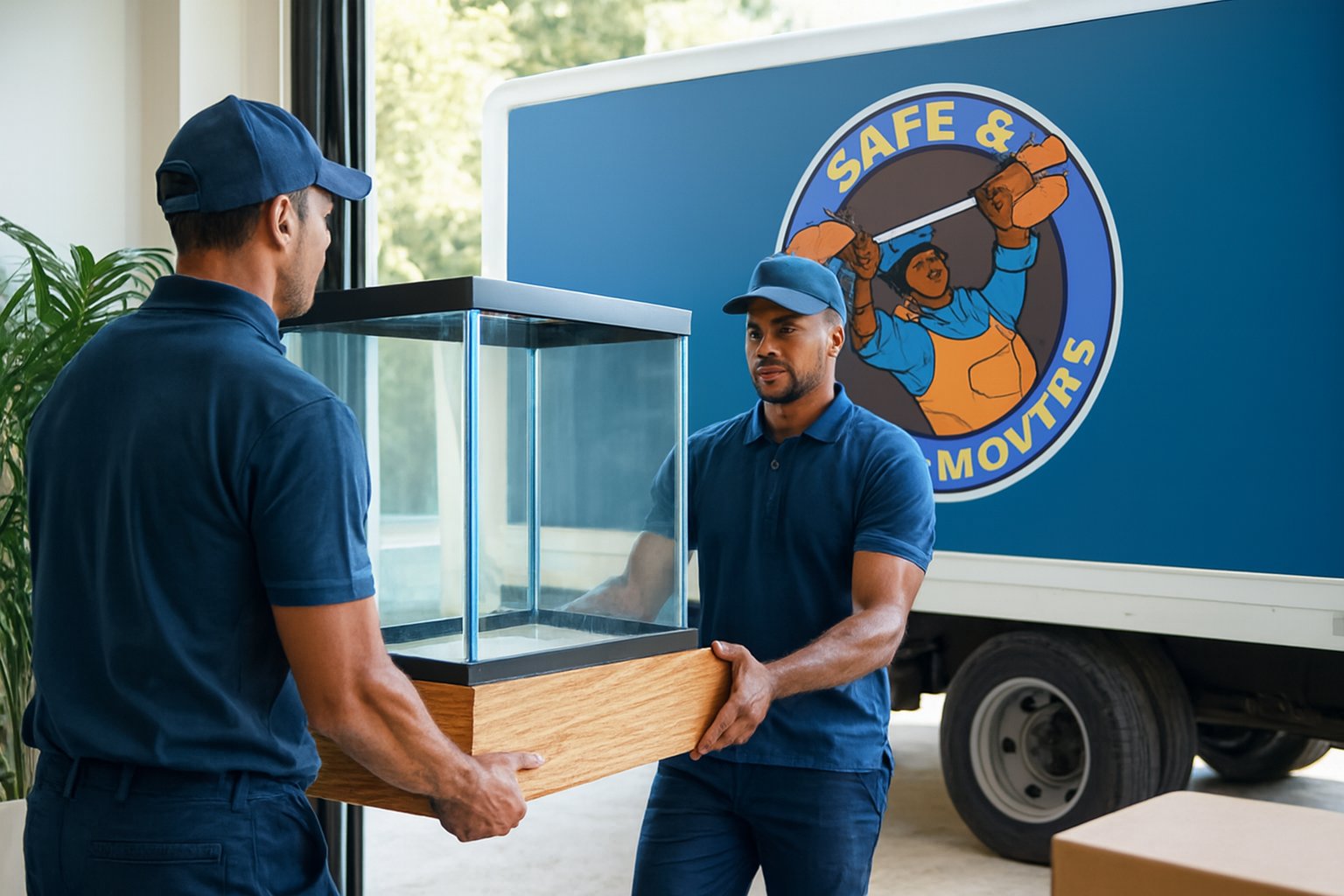
Once it is fully drained, an empty glass or acrylic tank should be wrapped in moving blankets or bubble wrap and carried flat, never tilted on an edge or corner, with support distributed evenly across the base. The base and seams are the weak points, and any twisting pressure while it is empty can crack a seam that held fine for years under water.
Tape an "X" across large glass panels with painter's tape to reduce shatter risk if the glass does crack in transit, though this will not prevent breakage on its own. Load the tank last onto a flat, stable surface in the truck, ideally on the floor rather than stacked, and do not place anything heavy on top of it. Acrylic tanks are lighter and more flex-tolerant than glass but scratch easily, so keep the padding on until it is back in place.
Disassemble the stand if it comes apart, and wrap glass canopy lids separately since they crack easily when packed flat against other glass. Decorations, artificial plants, and heaters can travel in a regular box, but live rock or driftwood with beneficial bacteria should stay damp in a sealed bag, similar to the gravel.
Most healthy fish tolerate two to three hours in a properly sealed, aerated bag or bucket without significant stress, and many can handle longer with care. Local moves rarely push past this window, but if your trip runs longer, plan a mid-route check for temperature and, for very long trips, a partial water exchange using water you saved from the original tank.
For moves stretching past six to eight hours, battery-powered air pumps for the travel containers are worth the small investment, since oxygen depletion becomes the bigger risk once ammonia buildup from waste starts to matter more than travel jostling.
Rebuild the tank in the same order you broke it down: stand, tank, saved gravel and substrate, saved water, then equipment, and let the filter and heater run for at least 30 to 60 minutes before adding fish back in. Match the water temperature to what the fish have been sitting in before you release them, using the same drip or float acclimation method you would use for new fish. Resist the urge to do a full water change or deep-clean the gravel right after setup. The goal is to restore the tank as close as possible to its pre-move condition so the bacteria colony does not have to rebuild from scratch, which is what actually keeps ammonia and nitrite levels safe in the days that follow.
A smaller tank under 20 gallons is usually manageable for one or two people to move carefully, but anything larger, or a tank paired with a heavy stand and stone, benefits from extra hands trained in moving fragile, awkward items. The tank itself is not the only concern: it is the combination of glass, weight, and the fact that you cannot simply set it down wherever is convenient once it is loaded.
If your move includes a large aquarium along with other bulky or delicate belongings, a specialty moving crew that regularly handles oversized and fragile items can take the physical risk off your plate, especially for the stand and the empty tank itself. For moves that also involve a full household of furniture and boxes, pairing that with a local and long distance moving team means the aquarium does not get treated as an afterthought squeezed in around everything else.
Moving a fish tank safely comes down to sequencing: drain before you lift, separate the fish from the water, keep the bacteria alive in saved gravel and media, and rebuild in the same order you took it apart. None of the individual steps are difficult, but skipping the order they need to happen in is what leads to cracked seams, dead fish, or a tank that never quite stabilizes at the new address.
If you would rather not manage fragile glass and live animals on top of everything else on moving day, get a moving quote and ask about specialty handling for your aquarium setup specifically.
No, not safely over any real distance. Even a partially full tank puts uneven, shifting pressure on the seams and base that they are not built to handle once off a stable stand, and the risk of a crack or seam failure goes up sharply. Drain it down to a couple of inches at most, and drain it fully for anything beyond a short in-home relocation.
Use sealed bags or buckets filled about a third with saved tank water and the rest air, keep them insulated against temperature swings, and add a battery air pump for trips longer than a few hours. Checking on them periodically and avoiding direct sun or extreme temperatures in the vehicle matters more than the container itself.
It can if you dump the old gravel, filter media, and water and start over with all-new supplies. Saving your gravel, filter media, and as much original water as possible preserves the beneficial bacteria colony, which significantly lowers the chance of an ammonia or nitrite spike after setup.
Usually not. Most glass and acrylic tanks survive a move fine if they are fully drained, wrapped, and carried flat with even support. Replacement is really only worth considering if the tank already has a hairline crack, a compromised seam, or is a very old glass tank you were already planning to retire.
Live plants and driftwood with established bacteria should stay damp in a sealed bag of tank water rather than being allowed to dry out. Artificial decorations and hardware like heaters can go in a regular box since they do not carry a living bacteria colony that needs protecting.
Whether it’s a full home move or just a few heavy items, Hustle and Muscle Moving is ready to help you sort it out.