.webp)
Written by:
Pierce J.
Published:
September 11, 2026
Learn how to move antique furniture without cracking veneer, loosening joints, or tanking its value, plus when to call in a specialty moving crew.
Moving antique furniture safely means treating age and construction as bigger risk factors than size or weight. Old joinery, dried-out veneer, and original finishes can fail in ways modern furniture simply doesn't, so the right approach protects the piece's structure and its resale or appraisal value at the same time. This guide covers what actually goes wrong with antiques in transit and how to prevent it.
Antique furniture is riskier to move because the materials have had decades to dry out, shrink, and weaken at exactly the points that take the most stress: glued joints, veneer edges, and old hardware. A piece that looks solid can have hairline separations you won't notice until it's tilted onto a hand truck.
Hide glue, common in furniture made before the mid-20th century, becomes brittle with age and can let go under vibration even if the joint looks tight. Veneer applied with old adhesives lifts at the corners first, often invisibly, until a bump pops it loose. Original finishes like shellac are also more sensitive to humidity swings and abrasion than modern polyurethane, so wrapping materials matter as much as the moving technique itself.
Loose veneer edges, wobbly joints, cracked finish, and any past repairs are all signals to slow down. If you can flex a drawer front or hear a faint creak when you rock the piece gently, treat it as fragile even if it's a heavy solid-wood item.
Pack antique furniture by padding it in layers that don't touch the finish directly, securing any moving parts, and avoiding tape or plastic wrap on painted or finished surfaces. The goal is cushioning against impact and vibration without trapping moisture or pulling off finish when it's removed.
Disassemble an antique only when it was designed to come apart, such as a bed frame with removable rails or a table with a separate top and base. Forcing apart a piece that was built as one unit, especially anything held with old pegs, dowels, or hide glue, risks cracking joints that were never meant to be separated again.
If you're unsure whether a joint is original construction or a later repair, it's safer to move the piece intact with extra padding and a larger crew than to test a joint that might not survive being taken apart and reassembled. When disassembly is appropriate, keep every screw and bracket in a labeled bag taped to the piece itself, not loose in a toolbox, so nothing gets lost or mismatched on the other end.
Lift antique furniture by its structural frame, never by an arm, handle, or decorative element, and always with enough people to keep the piece level. Tilting or dragging concentrates weight on a single leg or joint, which is exactly where old furniture is weakest.
Carry case pieces like dressers and cabinets upright whenever the doorway allows it. Laying a tall piece on its back or side shifts internal weight onto the back panel or a drawer runner that was never built to bear it. In the truck, antiques should ride on the outside wall (never stacked under other items) and be strapped to the truck's frame, not to each other, so shifting cargo can't crush a delicate piece in transit.
Bring in specialty movers when a piece is a family heirloom, professionally appraised, structurally unstable, or simply too awkward for two people to control safely on stairs or through tight doorways. The cost of a specialty crew is almost always smaller than the cost of restoring or replacing a damaged antique.
At Hustle and Muscle Moving, our specialty moving service is built around exactly this kind of judgment call: knowing when a piece needs a different wrapping approach, a different lift technique, or simply more hands than a standard move calls for. If you're moving several fragile or oversized pieces at once, it's worth asking about full packing services so the padding and boxing is handled by people who do it daily rather than improvised the morning of the move.
If your antique furniture is only part of a larger move, our guide to packing a moving truck covers how to position fragile items relative to everything else so nothing gets stacked against them. And if you're weighing whether to move heavy, delicate pieces yourself at all, our breakdown of DIY moving versus hiring movers walks through the tradeoffs in more detail.
Getting an antique through a narrow hallway or stairwell safely usually comes down to angle, not force. Measure the piece and the doorway before moving day, and know in advance whether it needs to go through on its side, at a diagonal, or with a door removed from its hinges.
Never push or twist an antique to force it through a gap. A stuck piece almost always needs a different angle or an extra set of hands, not more pressure. If a hallway or stairwell is genuinely too tight, it may be worth removing a door or a piece of trim rather than risking the furniture itself.
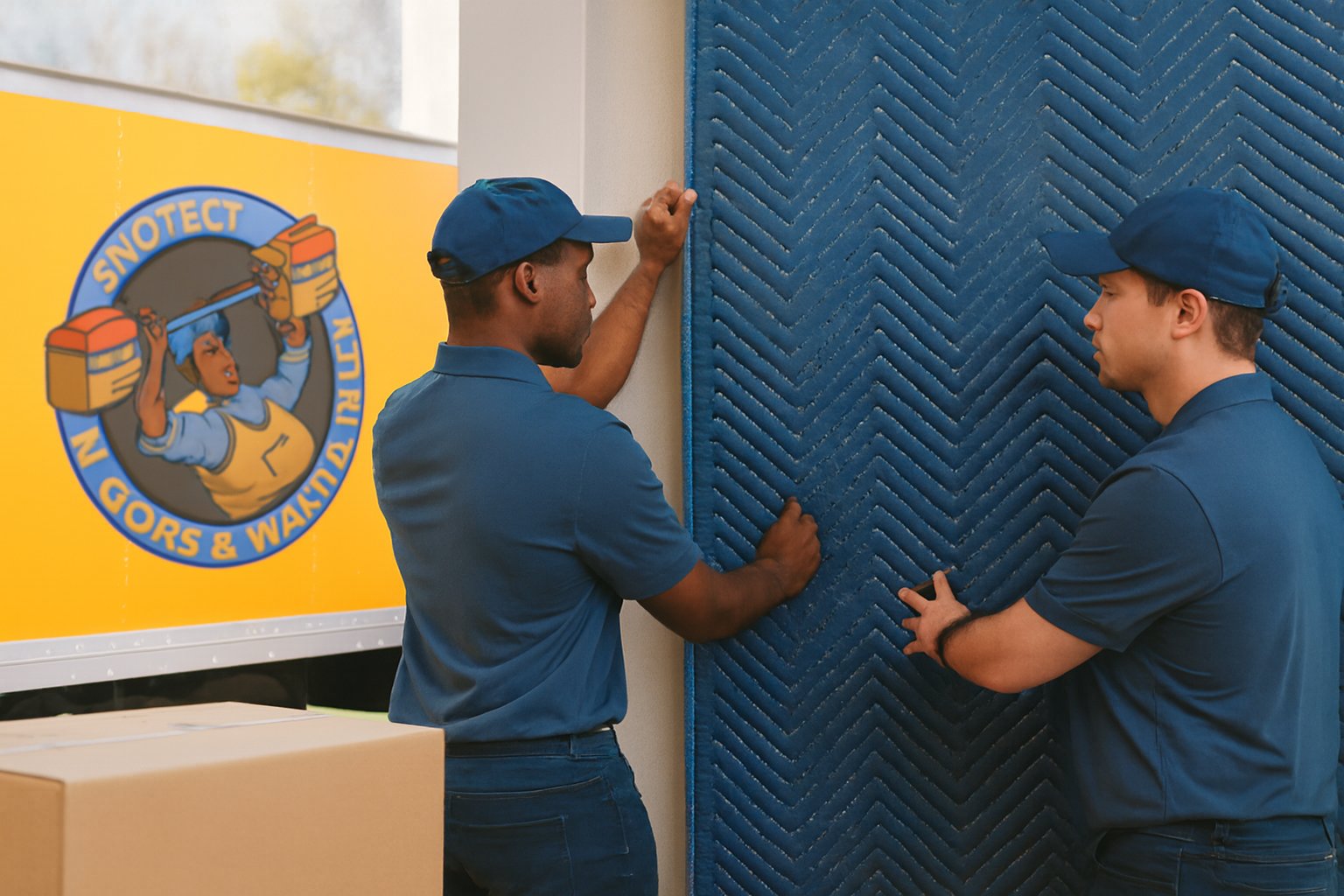
Plastic wrap should go over a layer of moving blankets, never directly against finished wood. Direct contact can trap humidity, cause the finish to bloom or haze, and sometimes pull off original shellac or lacquer when removed.
Remove the mirror from the dresser if it detaches, wrap it separately in blankets and cardboard, and pad the exposed brackets on the dresser. Mirrors attached to case furniture are one of the most common breakage points because they flex independently of the frame during transit.
Extreme temperature swings can stress old glue joints and finishes, so avoid leaving antiques in an unheated truck overnight or in direct summer sun during loading. Moderate, climate-stable conditions are best whenever the move schedule allows it.
If a piece has been appraised or has significant sentimental or resale value, ask your moving company about valuation coverage beyond standard liability protection, since basic mover liability is usually based on weight, not the item's actual worth.
Yes. Antiques generally need thicker, cleaner padding and more attention to corners and joints because older finishes and adhesives are more easily damaged by abrasion and moisture than modern factory finishes.
Whether it’s a full home move or just a few heavy items, Hustle and Muscle Moving is ready to help you sort it out.