.webp)
Written by:
Pierce J
Published:
July 4, 2026
Learn how to move a dining room table safely — from disassembly and protection to navigating tight spaces, loading the truck, and reassembling at your destination.
If you're trying to figure out how to move a dining room table, you're dealing with one of the most awkward and underestimated pieces of furniture in your home. Dining tables come in all shapes and sizes — from a compact two-person bistro table to a 10-foot farmhouse slab that seats twelve — but they share a common set of challenges. They're heavy, they're wide, and the table surface is almost always the most vulnerable part of the whole piece. A single scrape against a doorframe can ruin a finish that took years to develop. Glass tops shatter. Extension leaves get lost or cracked in transit. And pedestal-base tables often can't be tilted without cracking the base joint that holds everything together.
The good news is that dining table moves go smoothly when you work through the right sequence. This guide covers everything: how to measure and plan before moving day, how to disassemble the table correctly, what equipment you'll need, how to protect the tabletop and base, how to navigate tight spaces and stairs, how to load and secure the table in the truck, and how to reassemble it at your destination. Whether you're moving a round pedestal table or a rectangular extension table with six chairs, these principles apply.
The most common dining table moving mistake is assuming it will fit through doorways and hallways without checking. A dining table that looked perfectly reasonable in your open-plan living space can become an immovable obstacle in a 32-inch doorway. Take measurements before moving day, not during it.
Measure the table's full length, width, and height. For extension tables, measure both the collapsed and fully extended dimensions — you'll want to know whether removing the leaf shortens the table to a manageable size. For round tables, measure the diameter. Write every number down and compare them against every obstacle on the path between the table and the moving truck: doorways (width and height), hallways (width and any corners), stairwells (width and ceiling clearance at the turn), and the truck's cargo door opening.
Walk the exact path the table will travel. Note any tight corners, threshold lips, or narrow stretches that will require repositioning. If the table can be tilted or turned on its side to clear a doorway, identify where that needs to happen and how many people you'll need at each point. Doing this walkthrough in advance — not while you're holding one end of a 200-pound table — makes the actual move dramatically easier.
Most dining tables can and should be at least partially disassembled before a move. Disassembly reduces the overall footprint, makes the pieces lighter and easier to carry, and protects the joints and hardware that would otherwise bear stress during transit.
On most rectangular and oval dining tables, the legs bolt or screw into metal mounting plates or apron rails underneath the tabletop. Flip the table carefully onto a moving blanket — never onto the finished surface unprotected — and locate the leg fasteners. Most use bolts or screws that can be removed with a standard socket wrench or Allen key. Remove each leg, label it (Front Left, Back Right, and so on), and keep all hardware in a labeled zip-lock bag taped to one of the legs or stored in a clearly marked box. For a guide to keeping hardware organized across the whole move, see our post on how to pack boxes like a pro.
Extension leaves are flat, easy to lose, and almost impossible to replace if they're damaged or separated from the table. Remove them before the table moves, wrap each leaf individually in moving blankets or furniture pads, and transport them flat — never standing on an edge. If you have a self-storing leaf that lives inside the table, extend the table, remove the leaf, collapse the table, and then transport the leaf separately. Label each leaf so you know which end faces which direction when reinstalling.
Pedestal-base tables — round or oval tables with a single central column — present a specific challenge. The joint between the pedestal column and the base, and between the column and the tabletop, is often a wood-to-wood glue joint or a single bolt connection that is not designed to handle torque or lateral stress. Do not try to carry a pedestal table by the column. Disassemble the base from the column and the column from the top if the design allows it. If the pedestal is a single non-removable piece, keep the table upright during the entire move — tilting a pedestal table sideways puts severe lateral force on the column joint and can crack or split it.
The tabletop is the most expensive, most visible, and most damage-prone part of a dining table. Scratches, dents, chips, and pressure cracks can all happen during a move that wasn't properly protected — and many of these damages are permanent on wood, glass, or lacquered surfaces.
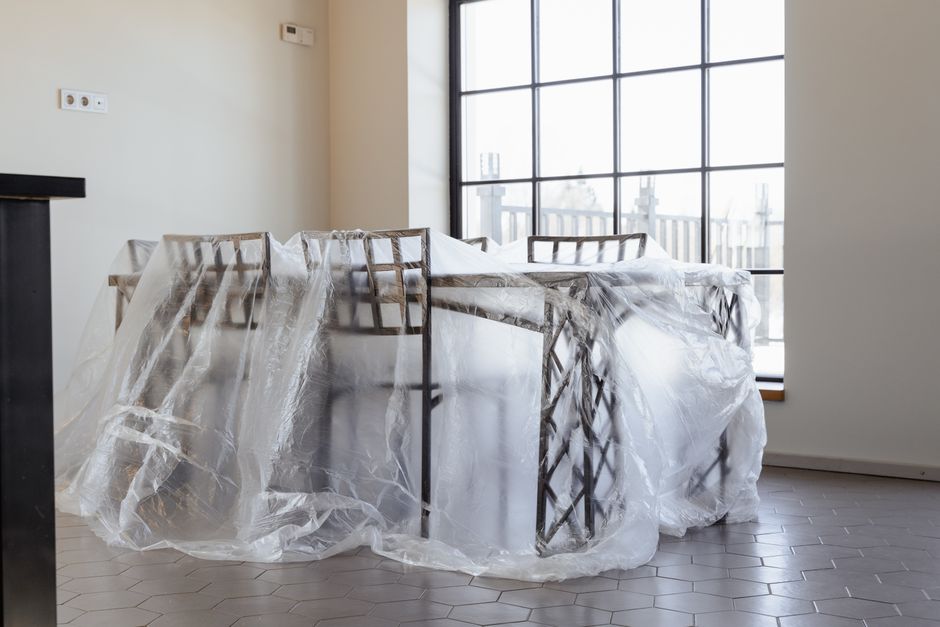
Start with at least two moving blankets over the top surface, securing them with stretch wrap or packing tape on the underside only — never let tape touch the finished surface directly. The goal is complete coverage: every corner, every edge, and the entire flat face of the top. Corners are the most vulnerable point on any tabletop because they take the most impact from doorframes and contact during loading. If you have particularly fragile or antique furniture, add a layer of bubble wrap under the moving blanket for extra cushioning.
If your dining table has a glass top, remove it from the base before moving anything. Glass tabletops must be transported vertically — standing upright — not laid flat. A flat glass panel is far more prone to shattering from vibration and point pressure than a vertically oriented one. Wrap the glass in moving blankets, secure it with stretch wrap, and mark it clearly on both sides as FRAGILE / GLASS. Transport it in the truck standing upright and braced between padded surfaces so it cannot shift or tip. For guidance on loading fragile items into a truck correctly, see our post on how to pack a moving truck like a pro.
Dining chairs are smaller than the table but just as prone to damage. Stack chairs carefully — not by jamming four chairs into a corner and hoping for the best. Upholstered chairs should be wrapped in moving blankets or plastic stretch wrap to protect the fabric. Wooden chairs should have their legs protected from contact with hard surfaces. If you're stacking chairs, place a moving blanket between each one. Never stack more chairs than you can safely carry together, and keep chair legs from pointing outward where they can catch on walls and doorframes.
Moving a dining table without the right equipment means unnecessary strain, unnecessary risk, and a much higher chance of damage. Get these items before moving day.
With the table disassembled and protected, the carrying phase is more manageable — but it still requires clear communication and smart technique.
A dining table top is almost always wider than a standard interior doorway when carried flat. In most cases, you'll need to tilt the tabletop up onto one edge and carry it vertically to fit through doorways and hallways. Before doing this, confirm the table's height when on edge is shorter than the doorframe height — tall tables turned vertically can catch on the top of the doorframe. Two people on opposite ends of the top control the tilt and carry; do not attempt this with one person.
If your move involves stairs, assign one person to lead (facing down the stairs, walking backward) and one to follow (facing up). The person going down first sets the pace and is responsible for calling out each step. The person following watches for obstacles above and behind. Use moving straps on stairs to take the weight off your hands and distribute it across your shoulders and hips. Never rush on stairs — a steady, controlled pace is far safer than trying to move quickly.
How you load the table into the truck determines how it survives transit. Furniture that isn't properly secured will shift, slide, and impact other items during every turn and stop.
The tabletop should stand vertically in the truck — on edge — whenever possible, braced between a padded wall and another large piece of furniture or a vertical board. A flat tabletop loaded horizontally is a shelf for other items, which concentrates point pressure on the surface and risks cracking or scratching even through blankets. If you must load it flat, ensure nothing heavy is stacked on top and that it is supported evenly across its entire surface, not just at the corners.
Use ratchet straps or rope tied to the truck's anchor points to secure the tabletop, legs, and leaves so nothing can shift during transit. The table's bulk means it will move significantly if unsecured — and when it does, it takes other items with it. Every piece should be braced, padded, and strapped before the truck doors close.
Reassembly is straightforward if you kept your hardware organized. Retrieve your labeled zip-lock bags, identify each leg by its label, and reattach in the reverse order of disassembly. Hand-tighten all bolts first to confirm alignment before applying full torque. Reinstall extension leaves and verify the table surface is level once it's standing — uneven floors at the new home are common, and adjustable feet (if present) can compensate for minor variations. Do a final inspection of the finished surface for any scratches or dings that occurred during the move, and address them promptly with furniture touch-up markers or a professional refinisher before the damage sets.
In most cases, yes — at least partially. Removing the legs reduces the overall size and weight significantly, making it far easier to carry through doorways and load into a truck. Extension leaves should always be removed and transported separately to prevent cracking or loss. Pedestal tables may have removable base sections. Whether or not full disassembly is required depends on your specific table's design and the width of the doorways and hallways on your moving route — measure both before deciding.
Wrap the entire tabletop in at least two moving blankets, paying extra attention to the corners, which are the most vulnerable to impact damage. Secure the blankets with stretch wrap on the underside — never apply tape directly to a finished wood or lacquered surface, as it can lift the finish when removed. For glass tops, wrap in moving blankets and transport vertically (on edge), not flat. Mark glass pieces clearly as FRAGILE on both sides.
For most standard dining tables, you need at least two people — one on each end. For large, heavy farmhouse-style tables or tables being moved down stairs, three people is safer: two carrying and one guiding. Attempting to move a full dining table alone is not recommended — the combination of weight, awkward size, and the need to tilt and maneuver through doorways makes solo handling a significant injury and damage risk.
The key is to keep the table upright throughout the entire move — do not tilt a pedestal table on its side if the pedestal is non-removable, as this puts severe lateral stress on the column joint and can crack or split it. If the base is removable, disassemble it into its components before moving. Carry the tabletop separately (on edge through doorways), and carry the column and base as individual pieces. Protect all components in moving blankets and reassemble carefully at the destination.
Consider hiring professional movers when the table is an antique, heirloom, or high-value piece where the risk of damage is too costly; when the move involves stairs with limited clearance; when the table is exceptionally large and heavy and you don't have enough people to carry it safely; or when the table is part of a larger move with many other heavy or complex items. If you need help with the heavy lifting but are handling your own truck, labor-only moving assistance can be a cost-effective option — you get professional movers for the difficult pieces without paying for full-service moving.
Whether it’s a full home move or just a few heavy items, Hustle and Muscle Moving is ready to help you sort it out.