.webp)
Written by:
Pierce J
Published:
June 24, 2026
Moving with kids doesn't have to be chaotic. This practical guide covers how to prepare your children for a move, keep them involved, and reduce stress on moving day.
If you're trying to figure out how to move with kids, you already know this isn't just a logistics problem. Moving is one of the more disruptive experiences a family can go through — and while adults can rationalize the stress, children often can't. They feel the uncertainty without having the context to make sense of it. The result, if you're not prepared, is a move that's harder on everyone: anxious kids underfoot on moving day, emotional meltdowns at exactly the wrong moment, and a settling-in period that drags on far longer than it needs to.
The good news is that moving with children goes dramatically better when you treat their experience as a real part of the plan — not an afterthought. This guide walks through how to talk to kids about an upcoming move, how to keep them involved in age-appropriate ways during the packing process, how to structure moving day so children aren't a source of stress, and what to do in the first weeks at your new home to help them settle in quickly. Whether you have a toddler, a grade-schooler, or a teenager who's convinced their life is over, the principles here apply.
The single biggest mistake parents make is waiting too long to tell their children about a move, or softening the news so much that kids feel blindsided when packing starts. Children handle transitions better when they have time to process — and when they feel like they were told the truth rather than managed.
Break the news as soon as you have confirmed plans, not weeks after you've already mentally committed. Use language that's honest and age-appropriate: you don't need to explain every detail of a job relocation or a financial decision to a seven-year-old, but you do need to tell them where you're going, when it's happening, and what will stay the same.
Young children — toddlers and early elementary age — are most concerned with the concrete, immediate things in their world. Focus on what their daily life will look like: they'll still have their room, their toys, their routines. They'll still go to school. You'll still have dinner together. Reassurance about the familiar matters more to this age group than explanations of why the move is happening.
Older children and tweens tend to care deeply about friendships and social belonging. Acknowledge that leaving friends is genuinely hard — don't minimize it. Talk about how they can stay in touch with people they're leaving behind, and frame the new place as an opportunity to build something new rather than just a loss of what they had.
Teenagers deserve more honesty about the reasons for the move, and they may need more space to be frustrated about it before they're ready to engage constructively. Pushing them toward forced optimism usually backfires. Let them have their feelings, stay consistent about the timeline, and look for small ways to give them input — like letting them have more say in how their new bedroom is set up.
Packing is stressful for adults, but for children it can feel threatening — watching their belongings disappear into boxes can trigger anxiety even in kids who seemed fine with the move announcement. The antidote is involvement. Kids who participate in packing, even in small ways, feel more in control of the process and less like things are being done to them.
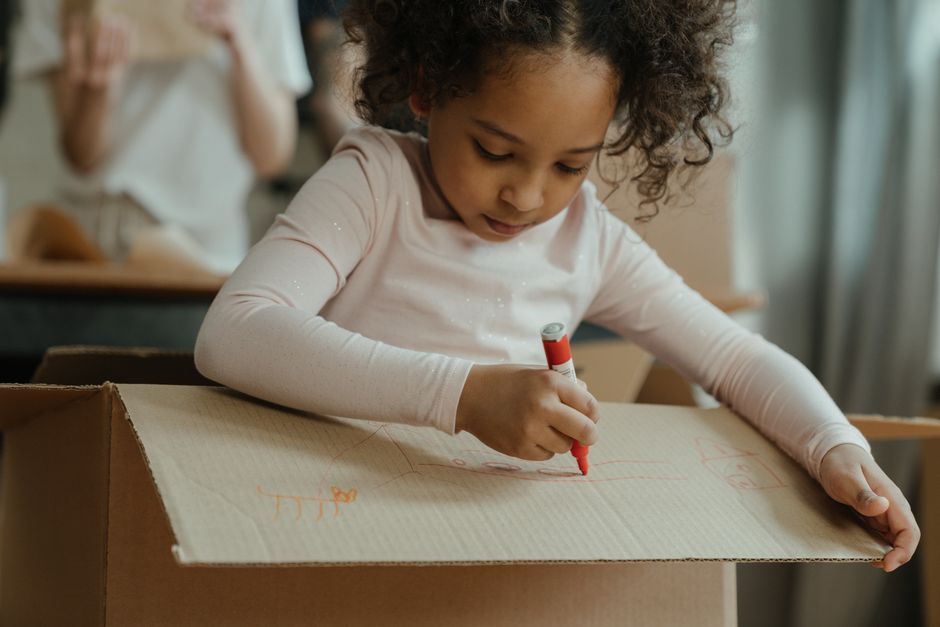
Young children can sort through toys and decide which stuffed animals go in their special box — the one that rides in the car with them, not on the truck. Grade-schoolers can pack their own books, label boxes with stickers, or help wrap non-fragile items. Teenagers can take full ownership of packing their own room, which also gives them a sense of autonomy at a time when a lot of things feel out of their control.
For practical tips on how to pack efficiently alongside this process, our guide on how to pack boxes like a pro covers the techniques that keep everything protected in transit — including how to handle the items kids care most about.
Downsizing before a move often means getting rid of things, and that includes items that belong to your kids. Involve them in that process rather than sorting through their belongings while they're at school. A child who feels heard about what to keep and what to donate is far more cooperative than one who comes home to discover their things were sorted without them. For general guidance on this process, our downsizing guide covers a practical four-category sort that works room by room — including kids' spaces.
Moving day with young children in the house is genuinely difficult. Professional movers are carrying heavy items through doors, boxes are stacked everywhere, and the environment is both physically unsafe and deeply overstimulating for small kids. The professional crew also works faster and more efficiently when they're not navigating around children who are upset, curious, or underfoot.
The best-case scenario for moving day with young children is having them somewhere else entirely — at a grandparent's house, with a trusted family friend, or in the care of another adult who can keep them engaged and away from the chaos. If that's not possible, designate a specific room that gets loaded last (often a bedroom) as a safe zone where a supervising adult stays with the kids until the crew is mostly done.
Older children and teenagers can stay on-site more comfortably, but give them a clear role — whether that's managing the essentials bag, doing a final room sweep, or keeping younger siblings occupied — so they feel useful rather than anxious. A detailed breakdown of how to structure moving day from start to finish is covered in our moving day checklist guide, which pairs well with this approach.
Just as adults should have an essentials bag with medications, chargers, and a change of clothes, children need their own version. This bag should ride in the car — never on the truck — and contain everything they'll need for the first 24 to 48 hours: a favorite stuffed animal or comfort item, a change of clothes, any medications, a snack they like, and something to keep them occupied during transit (a tablet, a book, a small activity kit). The goal is that no matter how the rest of moving day unfolds, their immediate needs are always accessible.
The move itself is only part of the transition. What happens in the first two to four weeks in a new home has an enormous impact on how quickly children — especially younger ones — start to feel at home. Stability, routine, and small gestures of familiarity go a long way.
If you read our guide on how to unpack after a move, you'll know that bedrooms are typically the first priority — and this is doubly true when children are involved. A child's bedroom that looks familiar as quickly as possible sends a powerful message that things are going to be okay. Get their bed assembled, put their favorite items in visible spots, and if they have a particular way they like their room arranged, try to honor that. The room doesn't need to be perfect — it needs to feel like theirs.
Routines are how children experience stability. Bedtimes, mealtimes, after-school schedules — the sooner these return to normal, the faster kids regulate. It's tempting to let routines slip during the chaos of moving in, and some flexibility is warranted in the first couple of days. But the longer routines stay disrupted, the harder the adjustment becomes. Even small signals — making the same breakfast you always make, doing the same bedtime reading ritual — signal to kids that this new place is becoming home.
Explore the neighborhood together. Find the nearest park. Let them pick a restaurant for the first family dinner in the new home. These small experiences start building positive associations with the new location and give children things to look forward to rather than only things they left behind. It won't fix everything immediately — some adjustment takes weeks — but it builds momentum in the right direction.
Moving mid-school year adds a layer of complexity that summer moves don't have. Children lose their established classroom community, often mid-friendship, and have to navigate both the academic and social aspects of a new school at the same time. A few things help:
One of the most practical things you can do when moving with children is reduce the total amount of work landing on you. The more physical and logistical tasks you can hand off to professionals, the more bandwidth you have to manage your family's emotional experience of the move.
Professional packing services are particularly valuable for families — having a crew pack your home in a day or two frees you up to focus on your kids rather than managing boxes. Likewise, a full-service local or long-distance move with a crew you trust removes the heavy lifting entirely, so you're not exhausted and stressed before the real work of settling in even begins. When you're moving with children, your energy is a resource — spend it wisely.
As soon as you have confirmed plans — regardless of your child's age. Young children benefit from more time to adjust, not less. Waiting until the last minute to break the news, or keeping it vague until moving day approaches, tends to increase anxiety rather than protect kids from it. Use age-appropriate language, be honest about what's changing and what's staying the same, and answer their questions as they come up over the following weeks.
Start by validating their feelings rather than immediately trying to fix them. Children who feel heard are more willing to engage with the transition. Acknowledge that it's genuinely hard to leave friends, a school, or a neighborhood they love. From there, focus on things within their control — how their new room will be set up, activities they might try, ways to stay in touch with friends from the old place. If a child's distress seems persistent and severe, speaking with their pediatrician or a child counselor can be helpful.
Ideally, no — especially for toddlers and young children. Moving day involves heavy equipment, constant through-traffic, and a chaotic environment that is both physically unsafe and emotionally overwhelming for small kids. If possible, arrange for young children to spend moving day with a trusted family member or friend away from the house. If that's not possible, designate one adult to stay with the children in a specific room that gets loaded last, and keep them away from the main work areas.
Every child is different, but most children begin to feel comfortable in a new home and school within four to eight weeks, with younger children often adjusting faster than older ones. Teenagers may take several months to build new friendships and feel genuinely settled. Restoring routines quickly, exploring the new neighborhood together, and staying patient with the process all help shorten the adjustment period. If a child is still showing significant distress after two to three months, it may be worth consulting a professional.
A kids' essentials bag should travel in the car — never on the moving truck — and contain everything your child needs for the first 24 to 48 hours: a comfort item like a favorite stuffed animal, a change of clothes, any medications, toiletries, snacks they like, and something to keep them occupied during travel or downtime. For school-age children, a small activity kit, book, or tablet with downloaded content works well. Having this bag packed and accessible from the moment you leave your old home means their immediate needs are always met, regardless of how the rest of the move unfolds.
Whether it’s a full home move or just a few heavy items, Hustle and Muscle Moving is ready to help you sort it out.